
Three-striped fruit fly
Zeugodacus trilineatus
Description
How to identify
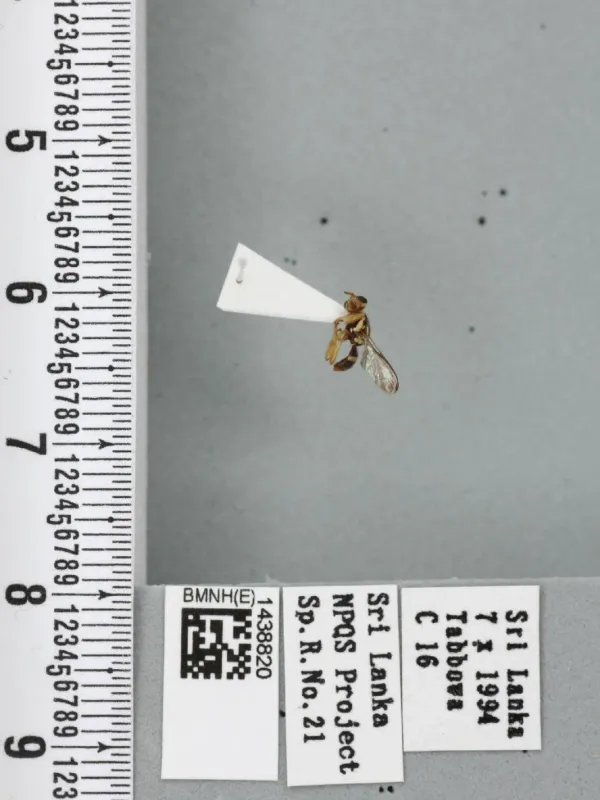
The three-striped fruit fly (lat. Zeugodacus trilineatus) belongs to the Tephritidae family, order Diptera. This insect resembles a common fruit fly but possesses a distinctive thorax pattern featuring three longitudinal dark stripes.
Adults exhibit characteristic wings marked with dark spots or bands, which serves as a primary diagnostic trait for field identification of the pest.
The larvae are typical of the family: legless, cream-colored, and tapering toward the anterior end. They develop internally within host fruits, complicating early detection.
Mature females are equipped with a well-developed ovipositor, adapted for piercing the skin of various fruits to deposit their eggs safely.
The life cycle involves complete metamorphosis, including egg, larval, pupal, and adult stages, with the adult stage being most active during the harvest ripening period.
What it damages
This pest prefers infesting succulent fruits across a wide variety of agricultural crops, including both tropical and subtropical plant species.
The primary damage is caused by the larval stage, which feeds on the fruit pulp, leading to rapid softening and subsequent decay of the produce.
Infested fruits suffer from reduced market value and become unsuitable for human consumption or processing due to secondary bacterial and fungal infections.
Widespread infestations can lead to significant yield losses, as affected fruits often abscise and fall from the tree prematurely.
In regions where this fly is endemic, it poses a severe threat to commercial fruit production, necessitating stringent phytosanitary protocols.
When it appears
The activity of adult three-striped fruit flies is directly governed by climatic conditions and the phenological development stages of their host plants.
The peak activity period aligns with fruit maturation, when adults migrate into orchards to locate suitable sites for egg-laying.
High humidity and moderate temperatures promote faster metamorphosis and lead to rapid population growth throughout the growing season.
In warmer climates, the pest can produce several generations per year, making control efforts difficult due to overlapping life cycles.
Overwintering typically occurs in the pupal stage within the soil beneath tree canopies or in plant debris, allowing the species to survive harsh conditions.
Signs of infestation
The first indicator of an infestation is the presence of tiny sting-like punctures on the fruit surface, created by females during the oviposition process.
Discoloration or darkening of the skin around these puncture sites is common, often accompanied by soft rot spots that expand as the larvae feed inside.
Cutting open an infested fruit usually reveals feeding tunnels and the presence of larvae, confirming the active infestation.
Premature yellowing and fruit drop, appearing otherwise normal, are frequent indicators of hidden internal larval activity.
- Darkening of the fruit skin.
- Small puncture holes on the surface.
- Rotting patches on the fruit.
- Internal tunnels filled with larval frass.
- Massive premature fruit drop.
Control measures
A fundamental management strategy is the regular collection and disposal of fallen fruit, which destroys larvae before they enter the soil to pupate.
The use of pheromone traps helps monitor adult population levels and allows for timely application of chemical control agents.
Systemic or contact insecticides are effective during the adult flight phase, provided that harvest safety intervals are strictly observed.
Biological control measures, such as the use of natural parasitoids or predators, can help reduce pest populations through natural ecological interactions.
Strict adherence to phytosanitary regulations regarding the import of fresh produce is essential to prevent the introduction of this pest into new growing areas.
Taxonomy
- Latin name
- Zeugodacus trilineatus
- Order
- Diptera (flies)
- Family
- Tephritidae
- EPPO code
- ZEUDTL
Discussion
No discussions yet — be the first.