
Tau fruit fly
Zeugodacus tau
Description
How to identify
The Tau fruit fly (Zeugodacus tau) is a significant agricultural pest belonging to the Tephritidae family, known for its destructive impact on various horticultural crops.
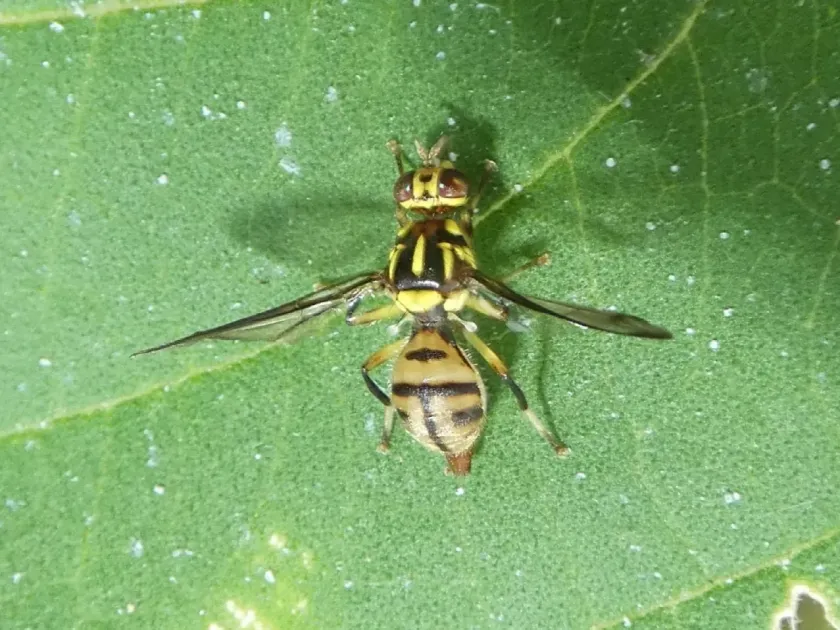
Adult flies are typically yellow-brown with distinct black markings on the thorax and abdomen, which serves as a key feature for field identification by specialists.
The female possess a well-developed ovipositor, allowing them to puncture the skin of developing fruits to deposit their eggs directly into the plant tissue.
Larvae pass through three distinct instars, feeding internally on fruit pulp and causing severe structural degradation that often leads to total fruit loss.
Monitoring is typically conducted using specialized lures or chemical traps, which attract adult flies and allow for accurate assessment of population density.
What it damages
This pest primarily attacks members of the Cucurbitaceae family, including cucumbers, melons, pumpkins, watermelons, and squash, causing significant economic damage.
Larvae tunneling through the flesh destroy the structural integrity of the fruit, making them highly susceptible to rapid decay and secondary fungal or bacterial infections.
Fruit damage often manifests as tissue collapse, skin discoloration, and premature ripening, rendering the produce unmarketable and unsuitable for consumption.
In high-infestation scenarios, the Tau fruit fly is capable of causing total crop failure, leading to substantial financial losses for farmers and commercial growers.
Besides cucurbits, the species is polyphagous, occasionally infesting crops such as tomatoes and eggplants when preferred hosts are scarce or absent.
When it appears
The activity and lifecycle of the Tau fruit fly are heavily dependent on warm temperatures and high humidity, which are optimal for their rapid development.
Multiple generations can occur within a single growing season, allowing for quick population build-up if environmental conditions remain favorable.
Development from egg to adult can take approximately three to four weeks, meaning that a constant vigilance is required throughout the active growing period.
The flies overwinter as pupae in the soil or protected areas, emerging as adults in the spring to start a new cycle of infestation as soon as host fruits become available.
Peak infestation levels usually coincide with the fruit-setting stage of cucurbit crops, which provides the necessary nutritional resources for the larvae.
Signs of infestation
Early signs of infestation include small, dark puncture marks on the surface of the fruit where the female has laid her eggs.
Discoloration, softening, or sunken areas around the puncture site are common indicators that larvae are actively feeding beneath the epidermis.
Infested fruits often drop prematurely or develop a rotting smell due to the breakdown of internal tissues caused by larval feeding and associated bacteria.
When an infested fruit is cut open, live larvae are usually present within the flesh, accompanied by discolored channels and decaying plant matter.
Presence of adult flies on leaves or in pheromone traps is a clear warning sign that immediate control actions are required to protect the crop.
Control measures
Management of the Tau fruit fly requires an integrated pest management (IPM) strategy that combines physical, cultural, and chemical control methods.
Cultural practices, such as the rapid removal and destruction of infested fruits and crop debris, are essential to break the fly's lifecycle and reduce population pressure.
Physical exclusion methods, such as netting or bagging individual fruits, can be effective in smaller-scale setups or organic farming to prevent oviposition.
Chemical control using baits or systemic insecticides should be applied based on monitoring results to target adult flies before they successfully lay eggs.
- Use of pheromone or protein bait traps for monitoring.
- Deep soil cultivation to destroy pupae overwintering in the ground.
- Implementation of strict quarantine regulations to prevent regional spread.
Taxonomy
- Latin name
- Zeugodacus tau
- Order
- Diptera (flies)
- Family
- Tephritidae
- EPPO code
- BCTRTA
Discussion
No discussions yet — be the first.