
Zeugodacus strigifinis
Zeugodacus strigifinis
Description
How to identify
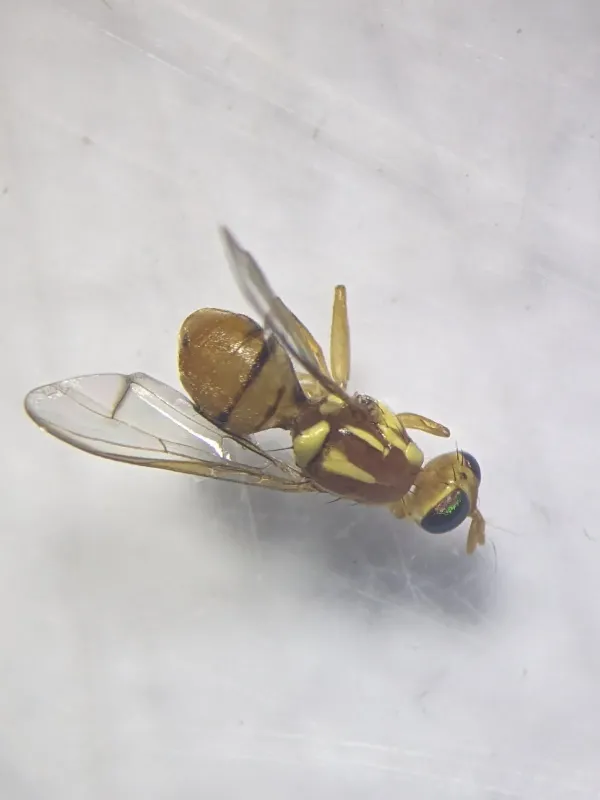
Zeugodacus strigifinis belongs to the Tephritidae family (fruit flies) within the order Diptera. It is a specialized fruit fly species, morphologically similar to other members of the genus, characterized by specific wing patterns and abdominal coloration.
Adults exhibit the typical body structure of fruit flies. They lead a cryptic lifestyle, and their development is closely tied to the formation of host plant fruits, within which the larvae feed and develop.
Identification of the species often requires professional entomological analysis, as the insect can be visually confused with other species of the Zeugodacus genus distributed across Southeast Asian regions.
The larvae are whitish and worm-like, typical of all members of the Tephritidae family. They lack a distinct head and possess a mouthpart adapted for consuming the pulp of fruits.
The life cycle includes four stages: egg, larva, pupa, and adult. The metamorphosis process usually concludes in the soil or inside the damaged fruit, depending on specific environmental conditions.
What it damages
This pest is a specialized phytophage that primarily attacks fruits of plants from the Cucurbitaceae and Solanaceae families. In its natural range, it causes significant damage to commercial plantations.
The larvae are the primary damaging stage. After hatching from eggs laid by the female under the fruit skin, they begin feeding intensively on the pulp, leading to the rapid destruction of the fruit's internal structure.
As a result of larval activity, fruits lose their marketability and become unsuitable for consumption or processing. Often, the damaged areas become entry points for secondary infections.
Secondary infections caused by fungi and bacteria penetrate through the galleries created by the larvae, leading to the decay of the entire fruit and making it completely unmarketable.
Economic losses arise not only from direct crop reduction but also from the costs of quarantine measures and export restrictions imposed on products from affected zones.
Signs of infestation
The primary sign of infestation is the presence of small punctures on the fruit surface, created by the female during oviposition. Slight depressions or spots are often observed around these sites.
With progressive damage, the fruit pulp begins to soften, and the skin color changes due to rot. Fruits often drop prematurely, which is a common indicator of internal larval damage.
Dissecting the fruit reveals larval galleries and the presence of whitish larvae within the flesh. This confirms the presence of the pest in vegetable plantings.
The presence of adults in the crop can be detected using specialized pheromone or food-based traps. Monitoring is a mandatory procedure for effective population control.
The gradual loss of fruit firmness and premature yellowing or discoloration also signal hidden infestation, requiring immediate attention from an agronomist.
Control measures
The primary control method is strict adherence to quarantine regulations to prevent the introduction of the pest into new territories through imported plant products.
Agrotechnical measures include the regular collection and deep burial or heat treatment of fallen fruit, which often harbors larvae or pupae of the insect.
Using traps with attractants allows for the effective reduction of adult populations during their active flight period, minimizing the number of eggs laid.
Chemical control involves the use of insecticides during periods of peak insect activity; however, their application must be strictly regulated to preserve beneficial entomofauna.
Biological methods, including the use of entomopathogenic fungi or natural enemies (parasitoids), are currently being studied and utilized within integrated pest management systems.
Taxonomy
- Latin name
- Zeugodacus strigifinis
- Order
- Diptera (flies)
- Family
- Tephritidae
- EPPO code
- ZEUDST
Discussion
No discussions yet — be the first.