
Scutellate fruit fly
Zeugodacus scutellatus
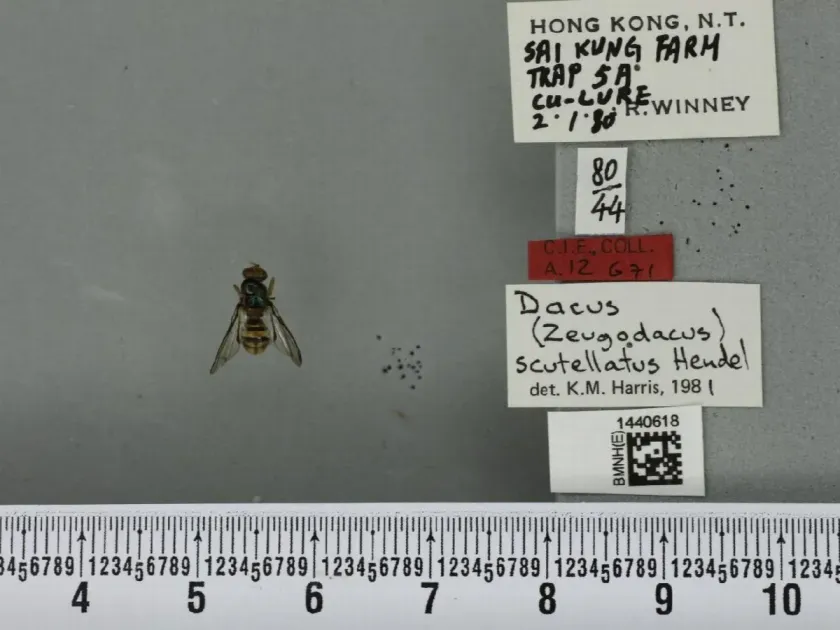
Description
How to identify
The scutellate fruit fly (Zeugodacus scutellatus) is a member of the Tephritidae family, order Diptera. This species is recognized as a significant agricultural pest, particularly in regions where cucurbits are grown.
Adult flies are relatively small, characterized by specific morphological features, including the structure of the scutellum on the thorax, which provides the common name for the species.
The life cycle involves complete metamorphosis, consisting of four stages: egg, larva, pupa, and adult. Each stage is adapted to thrive in specific environmental conditions associated with the host plants.
Identification often requires careful inspection of the insect's wing pattern and the physical characteristics of the adult, often assisted by expert entomological verification.
Understanding the biology of Zeugodacus scutellatus is essential for developing monitoring protocols that help farmers detect the presence of the fly before it reaches infestation levels.
What it damages
This pest primarily infests plants in the Cucurbitaceae family, including crops such as cucumbers, pumpkins, squashes, and melons. The damage caused by the larvae makes the fruit unsellable.
Adult females use their ovipositor to pierce the skin of young or developing fruits, depositing eggs directly into the soft tissue. This action creates entry points for various secondary pathogens.
As the larvae hatch, they begin to feed on the fruit interior, tunneling through the flesh. This consumption results in internal tissue degradation and premature rotting of the fruit.
Heavily infested fruits often drop from the vine prematurely, leading to substantial yield losses that can be devastating for commercial vegetable production.
Beyond direct destruction, the presence of these larvae lowers the quality of the produce, rendering it unmarketable due to the risk of rot and microbial contamination.
When it appears
The activity of the scutellate fruit fly is highly dependent on climate conditions. Warmer temperatures generally accelerate the fly's development and increase the number of generations per season.
Adult flies emerge when environmental conditions become suitable for reproduction, which typically aligns with the flowering and fruiting period of host crops.
Summer months, characterized by high temperatures and adequate humidity, provide the most conducive environment for the fly to complete its life cycle rapidly.
As the season progresses towards autumn, the population growth usually slows. The pupal stage is often the overwintering phase, allowing the species to survive colder months in the soil.
Proactive monitoring during the early stage of the fruit-bearing season is crucial for limiting the impact of the first generation of flies on the total crop yield.
Signs of infestation
The earliest signs of infestation are small puncture marks on the surface of the fruit, often accompanied by faint discoloration or small, wet patches on the skin.
As larvae develop inside, the fruit may exhibit deformities, such as uneven growth or stunted development. In some cases, localized soft spots appear on the outer surface.
A foul odor or an exit of fluid from the puncture wounds may indicate that the internal tissues have been compromised and that secondary fungal or bacterial rot has set in.
An abnormal rate of fruit drop, especially of small or underdeveloped fruits, is a major indicator that the fly may have established itself within the planting area.
Upon cutting open an infested fruit, one will typically observe larvae and tunnels created within the pulp, proving the internal infestation of the pest.
Control measures
Effective management of this pest requires an integrated approach that combines cultural practices, chemical interventions, and biological monitoring.
Sanitation is a critical control measure. Promptly collecting and destroying infested fruits prevents larvae from pupating in the soil and reduces the population for the next cycle.
The use of attractant-based traps is highly recommended to monitor the adult fly population and to provide data for the timely application of insecticide treatments.
Chemical control should be applied strictly according to regional guidelines, ensuring that applications target adult flies before they have the chance to lay eggs.
- Rotate crops to minimize the build-up of the fly population in the soil.
- Use fine mesh netting to protect individual fruits in high-value garden settings.
- Practice thorough soil cultivation after harvest to expose pupae to predators and environmental stress.
- Implement quarantine protocols to prevent the transport of infested produce between regions.
Taxonomy
- Latin name
- Zeugodacus scutellatus
- Order
- Diptera (flies)
- Family
- Tephritidae
- EPPO code
- BCTRSC
Discussion
No discussions yet — be the first.