
Zeugodacus diversus fruit fly
Zeugodacus diversus
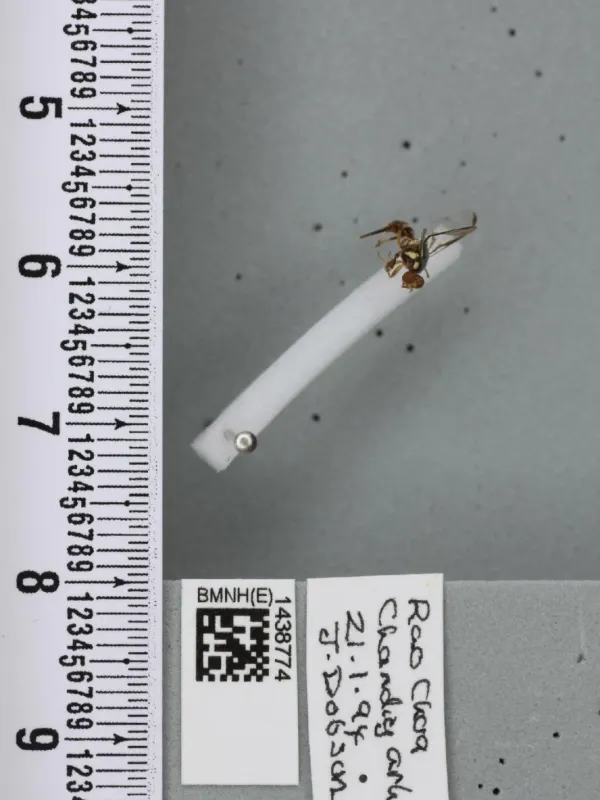
Description
How to identify
Zeugodacus diversus belongs to the order Diptera and the family Tephritidae. These insects possess typical morphological features of fruit flies, including a slender body, distinct wing patterns, and a prominent ovipositor in females.
Adults exhibit significant pigmentation, which helps distinguish them from other species within the Bactrocera or Zeugodacus genera during field monitoring. Taxonomic identification usually requires detailed analysis of wing venation.
Larvae are typical tephritid maggots—legless, creamy-white, and specialized for boring into fruit tissues. They are rarely observed until substantial damage has occurred within the fruit.
The life cycle follows complete metamorphosis: egg, larva, pupa, and adult. Pupation typically occurs in the soil beneath the host plant, a critical detail for planning soil treatments.
This species is native to tropical and subtropical climates, having evolved to exploit a wide array of host plants under favorable thermal conditions.
What it damages
As a polyphagous pest, this fruit fly targets a variety of agricultural crops. Susceptible hosts include cucurbits, various melon species, and several fruit-bearing tree crops.
The larvae feed on the pulp, creating internal tunnels. This feeding activity leads to rapid tissue breakdown and secondary rot caused by opportunistic pathogens introduced during oviposition.
Infested produce loses market value, becomes deformed, and is unsuitable for transport or long-term storage. In severe outbreaks, yield losses can reach 90% if left unmanaged.
The concealed nature of the larval stage makes early detection difficult, often resulting in discovery only after the fruit has begun to rot from the inside out.
Long-distance dispersal is primarily driven by the movement of infested fruits, making rigorous quarantine and phytosanitary inspections essential for prevention.
When it appears
Adult activity begins when temperatures become favorable, typically between 22 and 30 degrees Celsius. Adults are most active during the cooler parts of the day, such as early morning or late afternoon.
The duration of the life cycle is highly dependent on ambient temperature and humidity. Multiple generations can occur within a single growing season, leading to exponential population growth by late summer.
The peak egg-laying period coincides with the ripening stage of the host fruit, which is when crops are most vulnerable to initial infestation.
Overwintering occurs either as pupae in the soil or as adults in sheltered environments, depending on the geographical region and local climate conditions.
High humidity levels during the development stage promote faster larval growth and accelerate the destruction of fruit tissue.
Signs of infestation
The primary indicator of an infestation is the presence of oviposition punctures on the skin of the fruit, which may be surrounded by darkened or sunken tissues.
Premature ripening, yellowing, or fruit drop in apparently healthy-looking plants is a strong indicator of internal larval activity. Cutting open such fruit usually reveals larvae inside.
Exudation of sap or fluid from the fruit surface can indicate that larvae are actively feeding and destroying internal structural integrity.
A foul, fermented, or rotten odor emanating from a fruit that appears intact often suggests advanced internal decay caused by larval infestation.
- Surface skin punctures or sting marks.
- Deformities or bumps on the fruit surface.
- Soft, darkened areas of rot spreading from the puncture sites.
- Tiny exit or entry holes, typically 1–2 mm in diameter.
Control measures
Monitoring with pheromone-based traps is the primary method for detecting population spikes and timing control interventions effectively.
Cultural control, such as deep tillage under host plants after harvest, is crucial to disrupt the pupation cycle and destroy overwintering stages in the soil.
Sanitation practices—specifically the immediate removal and deep burial or incineration of fallen and infested fruit—are essential to suppress population growth.
Chemical control using bait sprays or cover sprays is applied during the adult flight period, targeting the population before eggs can be laid.
Integrated Pest Management (IPM) programs increasingly rely on a combination of trapping, biological control using natural enemies, and precise chemical application.
Taxonomy
- Latin name
- Zeugodacus diversus
- Order
- Diptera (flies)
- Family
- Tephritidae
- EPPO code
- DACUDI
Discussion
No discussions yet — be the first.