
Zeugodacus decipiens
Zeugodacus decipiens
Description
How to identify
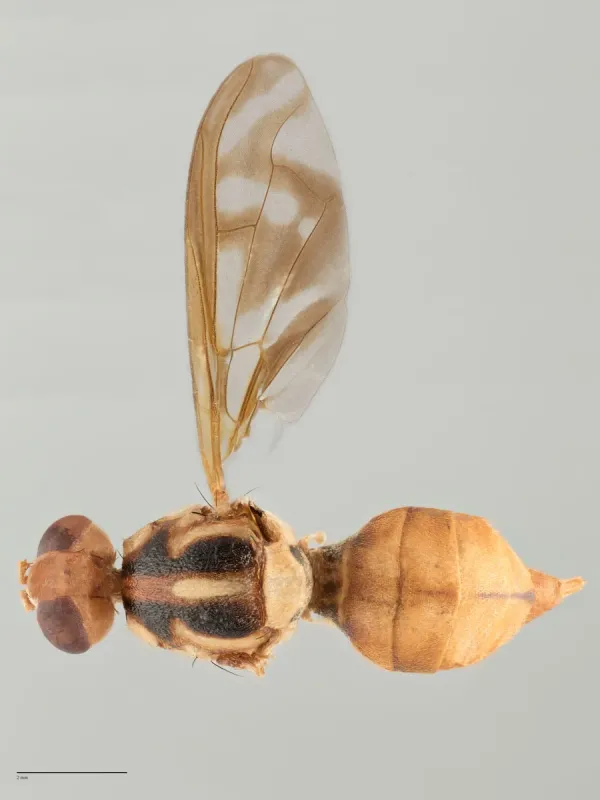
Zeugodacus decipiens belongs to the Tephritidae family, also known as fruit flies. It is a specialized pest that targets the fruit of various tropical and subtropical plant species.
Adult flies have distinctive markings that aid in camouflage on leaves and fruit surfaces. Females possess a specialized ovipositor designed to penetrate fruit skin and deposit eggs deep within the pulp.
Larvae develop internally, feeding on the fleshy tissues of the fruit. They are typically legless, creamy-white maggots, which is characteristic of the Tephritid life cycle.
The life cycle is closely synchronized with the availability of ripening fruit. In regions with warm climates, the pest can complete multiple generations in a single year.
Accurate identification of this species often requires professional morphological analysis, as it shares many physical characteristics with other members of the Zeugodacus genus.
What it damages
This pest is a significant polyphagous insect, causing severe damage to a wide range of vegetable crops, particularly those in the Cucurbitaceae family like cucumbers, melons, and squashes.
Beyond vegetable crops, it also affects various citrus species and numerous exotic fruits. This infestation renders crops unsuitable for market sale or human consumption.
The damage caused by Zeugodacus decipiens leads to substantial economic losses for farmers due to reduced yield quality and direct crop destruction.
Oviposition punctures create entry points for secondary infections. Bacterial and fungal pathogens often colonize the damaged area, causing rapid rot and complete tissue degradation.
Massive infestations can result in total yield failure if left unmanaged, posing a serious threat to both commercial agricultural operations and home gardens.
When it appears
Adult activity is primarily driven by the phenology of host plants and local temperature patterns. High temperatures and humidity significantly accelerate the life cycle.
In favorable conditions, the developmental time from egg to adult is shortened, allowing for rapid population build-up throughout the growing season.
The pest typically overwinters in the pupal stage, residing in the soil or within fallen fruit remnants. In protected greenhouse environments, the lifecycle may continue year-round.
The peak of damage coincides with the ripening period of host plants. Monitoring with pheromone or protein bait traps is critical during these months.
Adult flies are capable of dispersal across significant distances, allowing them to invade new areas whenever suitable hosts become available.
Signs of infestation
Early signs of infestation include tiny punctures on the fruit's epidermis, often surrounded by small areas of discoloration or softened tissue.
When the fruit is cut open, one can observe larval tunneling and the presence of maggots within the pulp, often accompanied by early stages of decay.
- Darkened, softened patches on the fruit skin at oviposition sites.
- Premature yellowing and dropping of young, developing fruit.
- Presence of internal larvae during inspection.
- Oozing of fluid from the punctures in the fruit rind.
- Unpleasant odors resulting from internal rotting and decay.
Visual inspections combined with trap monitoring are the most effective ways to detect the presence of Zeugodacus decipiens before visible damage spreads.
Control measures
Cultural practices form the backbone of control. It is essential to collect and destroy all fallen or infested fruit immediately to break the life cycle and prevent pupation.
Chemical insecticides are effective only when targeted at adult flies before they successfully oviposit into the fruit. Spraying must be scheduled during critical ripening windows.
Mechanical protection, such as bagging individual fruits or using fine-mesh netting to cover plants, provides a safe and effective way to exclude the pest from valuable crops.
Biological control initiatives, including the use of parasitoid wasps or entomopathogenic fungi, are being explored as sustainable methods to suppress population numbers.
Adhering to strict quarantine regulations regarding the movement of produce is vital to prevent the spread of this pest into previously non-infested geographic regions.
Taxonomy
- Latin name
- Zeugodacus decipiens
- Order
- Diptera (flies)
- Family
- Tephritidae
- EPPO code
- ZEUDDC
Discussion
No discussions yet — be the first.