
Melon fly
Zeugodacus cucumis
Description
How to identify
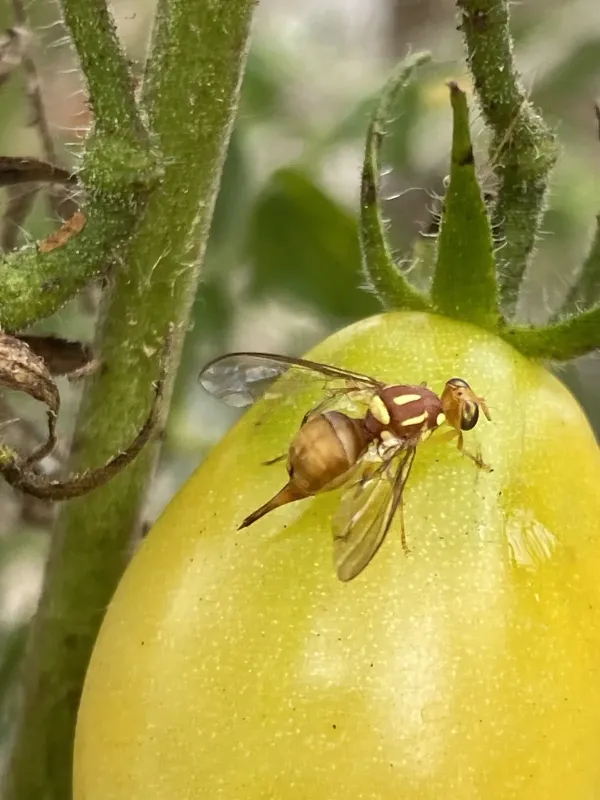
The melon fly Zeugodacus cucumis is a significant agricultural pest belonging to the Tephritidae family. Adult flies are characterized by transparent wings with distinct dark markings and yellowish stripes on the thorax.
They generally measure between 6 to 8 mm in length. The females possess a prominent ovipositor, an organ specifically adapted for piercing the skin of developing fruit to deposit eggs internally.
The lifecycle encompasses four distinct stages: egg, larva, pupa, and adult. Each stage is heavily dependent on ambient temperature and moisture levels, which influence the speed of development.
Melon flies are particularly active during warm, humid conditions. In subtropical climates, they can breed continuously, leading to multiple overlapping generations throughout the growing season.
Pupation primarily occurs in the soil beneath or near the host plant. This makes soil health and surface management critical components of an integrated pest management (IPM) strategy.
What it damages
This pest primarily attacks members of the Cucurbitaceae family, including melons, watermelons, cucumbers, pumpkins, and various types of squashes, causing severe economic losses.
Damage is primarily caused by the larvae, which tunnel through the succulent pulp of the fruit. This feeding behavior breaks down the fruit tissues and leads to rapid decay and fermentation.
Infested fruits often show signs of deformation and premature ripening. In many instances, the damaged fruit will abort from the vine well before it reaches its marketable or edible stage.
The internal environment created by larval tunneling provides a perfect breeding ground for secondary pathogens, such as bacteria and fungi, which cause the fruit to rot completely.
High infestation rates can lead to total crop failure. The presence of these flies often necessitates strict quarantine measures in certain agricultural regions to prevent further spread.
Signs of infestation
Early signs of infestation include small, needle-like punctures on the surface of young fruit. These sites may exhibit minor sap exudation as the plant attempts to seal the wound.
Internally, the presence of maggots is indicated by soft, discolored patches on the skin. Upon opening, one may find active, white, legless larvae feeding within the fruit's interior.
The fruit may emit a distinct foul or sour odor as the tissues break down and decay. If the infestation is advanced, the fruit might become mushy and collapse upon slight pressure.
Stunted growth or sudden yellowing of the fruit is a common visual indicator for farmers. These symptoms often appear shortly after the female fly has laid her eggs.
The presence of adult flies in the field can be confirmed using yellow sticky traps or specialized lures that contain chemical attractants, which help identify the pest before heavy damage occurs.
Control measures
Cultural control, such as strict crop rotation, is essential. Avoid planting susceptible cucurbit crops in the same area for at least two consecutive seasons to disrupt the fly's lifecycle.
Sanitation is paramount: all damaged, fallen, or infested fruit must be collected promptly and destroyed, preferably by burning or deep burial, to prevent larvae from pupating in the soil.
Chemical control can be effective if timed correctly. Insecticides should be applied during the adult flight stage, strictly following safety labels and pre-harvest intervals to ensure consumer safety.
Biological monitoring using traps is highly recommended. By tracking the number of captured adults, growers can determine the optimal timing for intervention, reducing unnecessary chemical applications.
Deep soil cultivation after harvest can help expose and destroy pupae residing in the upper layers of the soil, significantly reducing the potential population pressure for the next season.
Taxonomy
- Latin name
- Zeugodacus cucumis
- Order
- Diptera (flies)
- Family
- Tephritidae
- EPPO code
- DACUCM
Discussion
No discussions yet — be the first.