
Zeugodacus caudatus
Zeugodacus caudatus
Description
How to identify
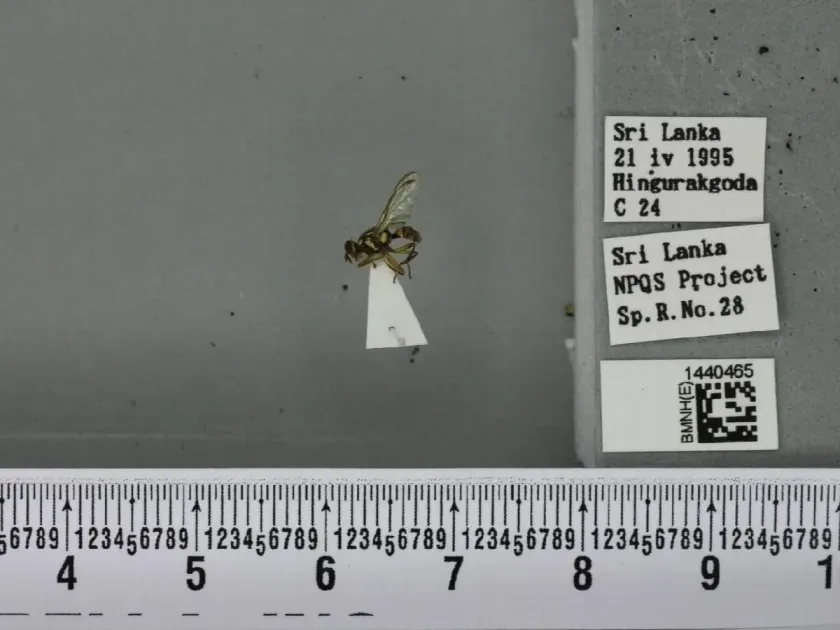
Zeugodacus caudatus belongs to the Tephritidae family, order Diptera. Adults are medium-sized flies characterized by yellow-brown body coloration and transparent wings with distinct dark patterns at the tips.
This species is distinguished by an elongated ovipositor in females, which allows them to penetrate deep into fruit tissues. The larvae are typical fly maggots, legless, cream-colored, and can reach up to 10 mm in length during the final larval stage.
Field identification is often performed using pheromone traps that attract males. Examination of morphological features under a microscope is essential to differentiate this species from closely related fruit flies of the Bactrocera genus.
Pupation primarily occurs in the soil or in dry plant debris beneath the host plant. The pupae are barrel-shaped (puparia) and colored in dark brown or reddish tones, making them difficult to detect within the substrate.
This species is a typical representative of tropical and subtropical fauna, with its distribution limited by temperature regimes in its native range. High specialization allows it to adapt quickly to new types of fruit in regions of introduction.
What it damages
The primary damage is caused by the larval stage, which feeds on the internal pulp of the fruit. Through the action of larval enzymes, the tissue rapidly softens and decays, rendering the produce completely unsuitable for sale or human consumption.
The host range includes primarily Cucurbitaceae (cucumbers, squashes, pumpkins) and certain tropical fruit species. In some cases, damage to Solanaceae and other succulent vegetables has been reported.
The economic impact of Zeugodacus caudatus is rated as high, as in outbreak areas, the fly can destroy 30% to 80% of the crop. Infested fruits often become entry points for secondary fungal and bacterial infections.
Fruit infestation leads to deformation, premature dropping, and loss of commercial value. In intensive agriculture, this causes not only direct economic losses but also triggers restrictions on the export of agricultural products.
A particular danger lies in the larvae's concealed lifestyle, which complicates the detection of infestation until the fruit is almost entirely destroyed. This necessitates consistent phytosanitary surveillance throughout the growing season.
Control measures
The primary control strategy is an integration of agrotechnical and chemical protection methods. Regular removal and destruction of fallen and infested fruits can significantly reduce the population of the pest in gardens or fields.
Insecticide applications must be strictly regulated based on the period of adult activity. The use of attractant lures allows for both monitoring of population levels and targeted elimination of adult flies.
Quarantine control plays a vital role when moving fresh produce between regions. The prohibition of importing contaminated materials serves as the primary barrier to preventing the spread of the fly into new agro-climatic zones.
Biological control methods include the use of natural enemies, such as parasitic wasps that attack the fly larvae and pupae. This approach is becoming increasingly prioritized within the framework of sustainable and organic farming.
- Implementation of crop rotation to break the pest's development cycle.
- Installation of fine-mesh netting over vulnerable crop plantings.
- Deep soil cultivation to destroy overwintering puparia.
Taxonomy
- Latin name
- Zeugodacus caudatus
- Order
- Diptera (flies)
- Family
- Tephritidae
- EPPO code
- ZEUDCA
Discussion
No discussions yet — be the first.