
Thistle gall fly
Xyphosia miliaria
Description
How to identify
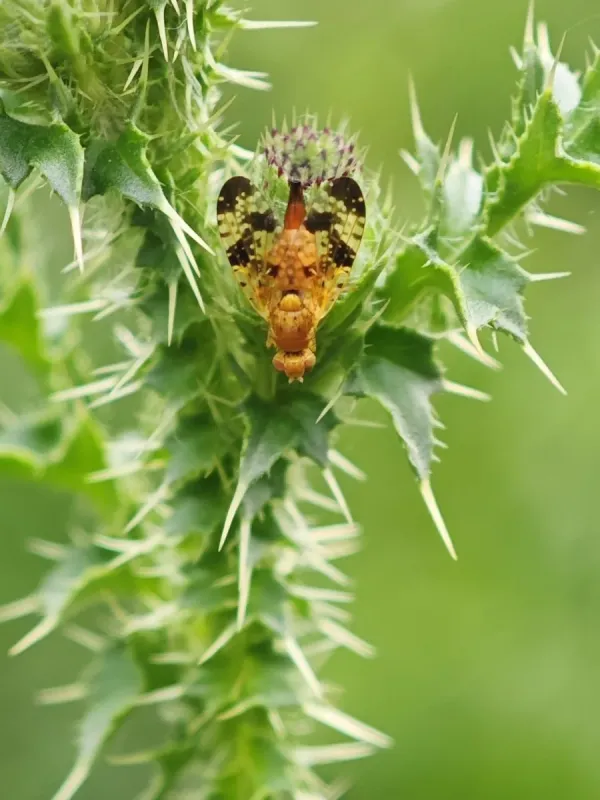
The thistle gall fly (Xyphosia miliaria) is a species belonging to the Tephritidae family, in the order Diptera. These insects are easily recognized by their distinctively patterned wings.
Adult flies measure approximately 5–7 mm in length. They typically exhibit a yellowish-brown or brownish coloration, which provides excellent camouflage while resting on host plants.
The wings feature intricate dark patterns, often consisting of reticulated or banded markings. The head is large, and the eyes often display a metallic or iridescent reflection.
Larvae of this species are legless and typical for fruit flies, with a whitish or yellowish body measuring up to 6–8 mm. They develop entirely within plant tissues.
Pupae are frequently found within the dried flower heads of the host plant, where they remain in a state of diapause until environmental conditions are favorable for adult emergence.
What it damages
The primary hosts for this fly are plants from the Asteraceae family, particularly members of the Cirsium genus, such as the creeping thistle and the common thistle.
This pest is generally not considered a threat to agricultural crops, as it primarily targets thistle weeds, which often leads to a decrease in the weed's seed viability.
In cases of high infestation, the insect might occasionally affect related ornamental Asteraceae species, causing cosmetic or structural damage to their flower heads.
Larvae consume the tissues of the receptacle and the developing seeds, effectively hindering the reproduction process of the infested plant.
Because of this feeding habit, the thistle gall fly is sometimes studied as a potential biological control agent for invasive thistle species.
When it appears
The life cycle of the thistle gall fly is closely synchronized with the phenology of its host plants. Adult activity peaks during the first half of summer, from June through August.
Mating occurs on the thistle flower heads, followed by oviposition, where the female inserts her eggs directly into the buds or young flower baskets.
Larval development takes place within the flower heads and lasts for approximately 3 to 5 weeks, depending on temperature and moisture levels.
The species overwinters either as a pupa or a late-instar larva, staying inside the withered thistle head or within the soil litter layer.
The species completes one generation per year, a biological constraint that limits its spread but allows for a stable presence within the host population.
Signs of infestation
The primary indicator of the fly's presence is the occurrence of deformed, stunted, or improperly opened thistle flower heads.
Upon dissecting the flower head, one can observe tunnels created by the feeding larvae, alongside frass, which confirms active colonization.
- Presence of small exit holes in the flower head bracts.
- Premature browning or wilting of the thistle flowers.
- Reduced seed production or total destruction of achenes within the head.
- Presence of brown puparia tucked inside the dried flower tissues at the end of the season.
Control measures
Specific protective measures against the thistle gall fly are rarely necessary in agriculture, as it does not pose a direct economic threat to major crops.
Standard weed management practices, such as deep plowing and mowing thistles before they reach the flowering stage, effectively eliminate populations of this insect.
Biological control is often encouraged, as the flies play a natural role in limiting the spread of aggressive weed species in the field.
Broad-spectrum insecticide applications intended for other crop pests will inadvertently reduce the gall fly population, though this is not a recommended control strategy.
Maintaining a balanced agroecosystem through proper crop rotation is sufficient to keep any populations of incidental phytophagous insects well below economic threshold levels.
Taxonomy
- Latin name
- Xyphosia miliaria
- Order
- Diptera (flies)
- Family
- Tephritidae
- EPPO code
- XYPHMI
Discussion
No discussions yet — be the first.