
Xenolechia aethiops
Xenolechia aethiops
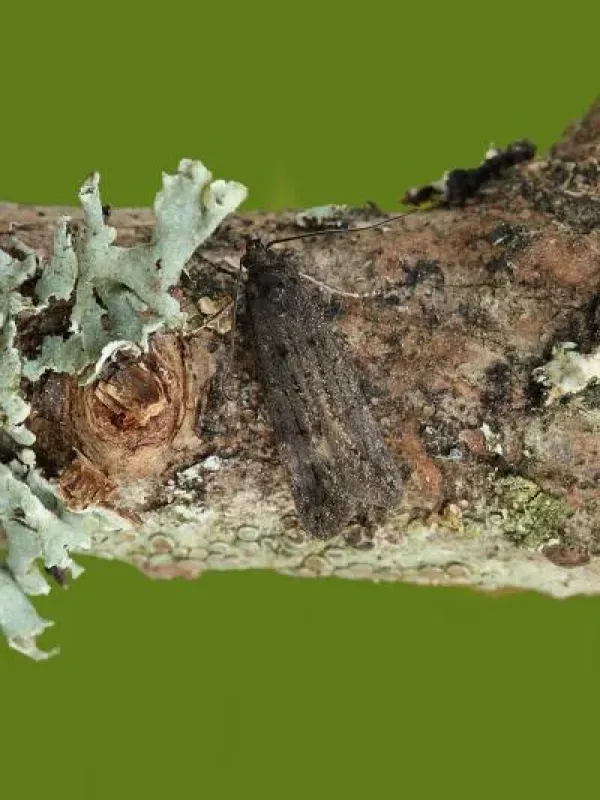
Description
How to identify
Xenolechia aethiops is a moth belonging to the Gelechiidae family within the order Lepidoptera. The adults are small insects characterized by their dark-colored wings, which help them blend in with the foliage of their host trees.
The life cycle of this species is tightly linked to pine trees (Pinus), where the insects undergo their development from egg to adult. The insect's biology is adapted to the harsh conditions of forest ecosystems.
The larvae, or caterpillars, progress through several instars while actively consuming needles. They are known for their concealed feeding habits, often creating webs between needles.
This moth is considered a specialized pest of conifers. Due to its size and cryptic behavior, it is often difficult to detect during the early stages of a population outbreak.
Environmental conditions play a major role in the population dynamics of this pest. Hot and dry seasons can sometimes trigger significant increases in their numbers, affecting large forest areas.
What it damages
The primary hosts of Xenolechia aethiops are various pine species. The larvae feed on the needles, causing significant physiological stress to the tree during its active growth period.
Young pine plantations and nurseries are particularly vulnerable to this pest. Repeated feeding by caterpillars can lead to stunted growth and, in severe cases, the death of young seedlings.
Large-scale defoliation reduces the photosynthetic capacity of the trees, which significantly lowers the annual timber increment and overall forest productivity.
Weakened trees become highly susceptible to secondary attacks from bark beetles or fungal pathogens, which can exacerbate the initial damage caused by the moth.
- Growth suppression in young pine trees
- Increased mortality rates in forest nurseries
- Reduced commercial value of timber plantations
When it appears
The activity of Xenolechia aethiops is highly synchronized with the growth cycle of pine trees. Adult emergence typically occurs in late spring to coincide with the budding phase.
Larval feeding is most intensive during the late spring and early summer when the needles are softest and most nutrient-rich for the developing caterpillars.
By mid to late summer, most larvae reach maturity and prepare for pupation. The timing of this phase can vary slightly based on the local climate and temperature gradients.
Winter survival is crucial for the continuation of the cycle, with the species usually over-wintering as pupae or early-stage larvae in protected locations like bark crevices.
Effective scouting for this pest is best performed in the spring, as this allows forest managers to implement control strategies before the larvae cause substantial damage.
Signs of infestation
Visual identification of an infestation includes the presence of small frass (excrement) pellets found near the needles and webbed clusters of needles.
Needles that appear yellowed or discolored at the tips are a key symptom. In more severe infestations, these needles may drop prematurely, leaving branches thin.
Silk webbing is a hallmark of this species, connecting individual needles and protecting the larvae as they feed on the internal tissues of the pine foliage.
Upon closer inspection of the crown, one can often find the larvae themselves, which are usually small and may drop to the ground or hide when disturbed.
Consistent monitoring of tree vitality is essential, as subtle changes in the color and density of the canopy often precede widespread damage symptoms.
Control measures
Integrated Pest Management (IPM) is recommended to control Xenolechia aethiops. This includes maintaining healthy forest stands through proper spacing and tree vitality management.
Chemical control should be reserved for cases where thresholds are exceeded. Insecticides are most effective when applied during the early larval stages when the pests are actively feeding.
Biological control methods, such as the application of Bacillus thuringiensis, provide an effective and environmentally friendly alternative to traditional synthetic chemicals.
Enhancing the presence of natural predators, such as insectivorous birds and parasitic wasps, can help keep the pest population below the economic injury level.
Regular monitoring using pheromone traps can provide early warning of adult flights, allowing for the precise timing of any necessary intervention measures.
Taxonomy
- Latin name
- Xenolechia aethiops
- Order
- Lepidoptera (butterflies)
- Family
- Gelechiidae
- EPPO code
- XENLAE
Discussion
No discussions yet — be the first.