
Xanthaciura
Xanthaciura
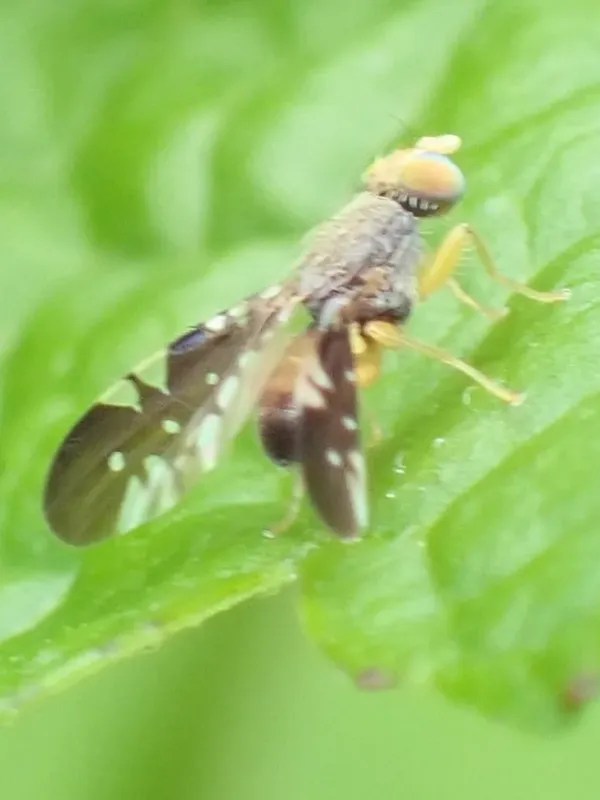
Description
How to identify
Xanthaciura is a genus of tephritid fruit flies (family Tephritidae). These insects are recognized by their distinct wing patterns, which often feature complex yellowish or brownish markings characteristic of the family.
Adult flies are relatively small and highly active during the daylight hours, particularly when searching for host plants to deposit their eggs.
Taxonomically, this genus includes several species that require expert microscopic examination of their morphology, especially wing venation and genitalia, to distinguish between them.
The life cycle follows complete metamorphosis, comprising egg, larval, pupal, and adult stages, each specifically adapted to environmental niches.
These flies are specialized phytophagous insects that maintain a close evolutionary relationship with their host plants, particularly those within the Asteraceae family.
What it damages
Damage is caused by the larvae, which bore into the flower heads (capitula) of host plants to feed on developing floral tissues and seeds.
The primary hosts include various members of the Asteraceae family, including certain ornamental flowers and medicinal crops susceptible to tephritid infestations.
Feeding larvae destroy the reproductive organs of the plant, preventing normal seed maturation and causing severe deformation of the flower heads.
In addition to direct feeding, the resulting wounds serve as entry points for secondary pathogens like bacteria and fungi, accelerating the decay of the floral tissues.
Economic damage is most significant in seed production fields and nurseries where the market value of the flowers or seeds is highly dependent on their integrity.
When it appears
Adult activity typically begins during the late spring and summer months, coinciding with the budding and flowering phenophases of the host plants.
The generation time is highly temperature-dependent, with warmer climates potentially allowing for multiple generations per growing season.
Winter survival is typically achieved through pupal diapause in the soil or within dry plant debris, providing protection against adverse conditions.
Emergence in the spring is triggered by rising soil temperatures, which signal the start of the life cycle for the new generation of adults.
The timing of adult emergence is synchronized with the availability of suitable floral host structures, ensuring optimal conditions for larval survival.
Signs of infestation
Early signs of infestation include small punctures or lesions on the floral bracts where the female has inserted her ovipositor to lay eggs.
As larvae develop, the flower heads may show signs of premature browning, wilting, or asymmetrical growth due to internal tissue damage.
Fecal matter (frass) may be visible around the exit holes on the flower head, indicating internal feeding and active larval development.
Infected plants often display arrested development of the flower stalk, and in severe cases, the flower head may collapse or drop prematurely.
Presence of adult flies hovering around flowers during sunny weather is a critical behavioral sign that active colonization is occurring.
Control measures
Cultural control is the most effective approach, emphasizing the prompt removal and destruction of crop residues to eliminate overwintering pupae.
Deep plowing or soil cultivation after harvest can significantly reduce the overwintering population by exposing pupae to environmental stress and predators.
Yellow sticky traps are recommended for monitoring adult populations to determine the optimal timing for intervention and to mass-trap flying adults.
- Crop rotation with non-host species to disrupt the pest's cycle.
- Sanitation measures to control wild Asteraceae weeds acting as reservoirs.
- Application of targeted insecticides during the bud stage, if thresholds are exceeded.
Integrated Pest Management (IPM) practices should be employed to ensure effective long-term suppression of the Xanthaciura population in agricultural systems.
Taxonomy
- Latin name
- Xanthaciura
- Order
- Diptera (flies)
- Family
- Tephritidae
- EPPO code
- XANRSP
Discussion
No discussions yet — be the first.