

Pest · Lepidoptera (butterflies) · affects Apple, Tomato, Fodder beet
Especially harmful
Oriental fruit moth
Grapholita molesta
Description
How to identify
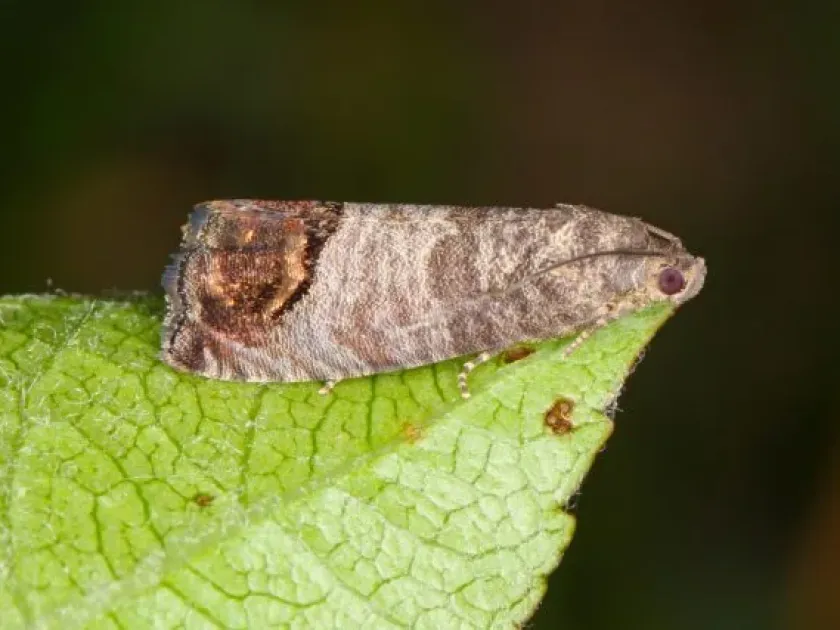
The Oriental fruit moth (Grapholita molesta) belongs to the Tortricidae family of the order Lepidoptera. It is a small moth with a wingspan of approximately 12–15 mm, characterized by brown-grey wings with subtle patterns that provide excellent camouflage against tree bark.
The larvae are typically white or pinkish with a dark brown head capsule. During their development, they transition through several instars before forming a protective silken cocoon in sheltered areas such as bark crevices or soil debris.
What it damages
This pest is highly polyphagous, targeting a wide range of fruit-bearing plants. It is particularly devastating to peach, nectarine, plum, apple, pear, and quince orchards, where it causes significant economic losses.
Furthermore, it has been observed attacking diverse crops under certain conditions, including soybean, industrial hemp, cucumber, melon, cabbage, and even winter barley, highlighting its ability to adapt to non-traditional hosts.
When it appears
The number of generations per year varies from 3 to 5 depending on the climatic zone. The species overwinters as fully grown larvae in diapause within well-protected silken cocoons.
Adult emergence typically coincides with the bud break or blossom period of host fruit trees. They are primarily crepuscular and nocturnal, with females depositing eggs on the undersides of leaves near new shoot terminals or directly on the fruit.
Signs of infestation
The primary symptom of infestation in young trees is the "flagging" or wilting of shoot terminals. Larvae tunnel into the tender stems, causing the tissue to die back and wither within a few days of penetration.
Fruit infestation is characterized by entry holes, often accompanied by gumming on the skin of stone fruits. Once inside, the larvae feed around the seed core, often causing the fruit to ripen prematurely, drop, or decay due to secondary infections.
Control measures
Integrated Pest Management (IPM) strategies are essential for controlling the Oriental fruit moth. This includes mechanical removal and destruction of infested twigs and fallen fruit to disrupt the insect's life cycle.
Monitoring populations using pheromone traps is critical for timing insecticide applications effectively. Targeted chemical interventions should be applied during periods of peak egg-hatching to ensure maximum efficacy while minimizing the impact on beneficial insects.
In brief
24
Damages crops
Content graph
Damages crops · 24
Content graph
Connections · Oriental fruit moth
Most often together:
Marketplace
Products · 11


Puska
Три Дельта Компані Інтернешнл, Гонконг, Китай.
Insecticides
1
0
·
1.9K
1 offer
7.76 €per 1 l
Buy


Raut
Три Дельта Компані Інтернешнл, Гонконг, Китай.
Insecticides
0
0
·
753
2 offers
0.89 €per 1 l
Buy


Biology
Taxonomy
- Latin name
- Grapholita molesta
- Order
- Lepidoptera (butterflies)
- Family
- Tortricidae
- EPPO code
- LASPMO
Community
Discussion
No discussions yet — be the first.