
Grape root borer
Vitacea
Description
How to identify
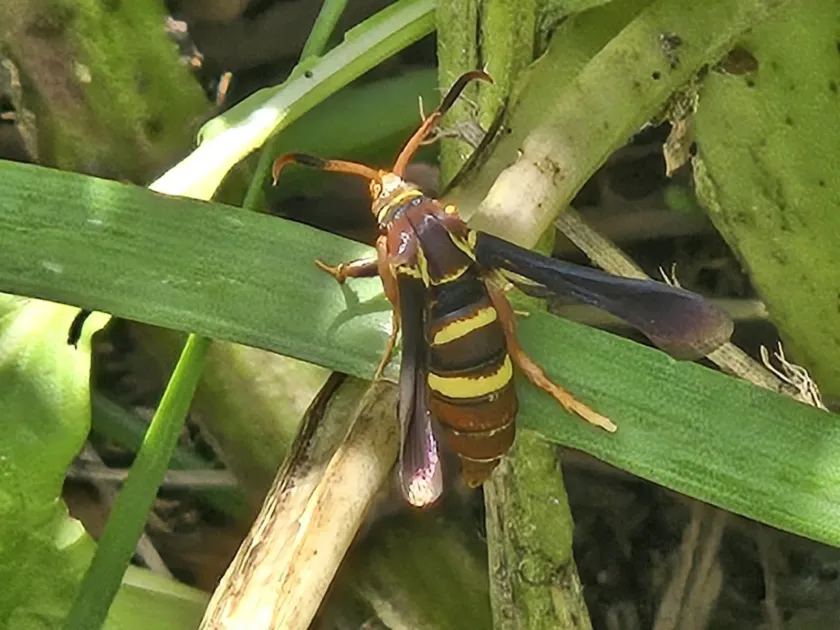
The Grape root borer (Vitacea polistiformis) is a moth in the family Sesiidae. Adults are clear-wing moths that strongly resemble paper wasps in color and body structure.
The adult moth has a wingspan of approximately 30–40 mm. Its body is adorned with bright yellow bands, which is a form of mimicry used to deter potential predators.
The larval stage is a creamy-white caterpillar with a brown head, growing up to 40 mm long. The larvae spend their entire life cycle feeding inside the plant tissue.
The life cycle typically takes two years to complete in many regions. Development rates are highly sensitive to environmental factors like soil temperature.
Female moths lay their eggs primarily on the bark of grape vines or on the soil surface near the vine trunk. Eggs hatch into larvae that move toward the roots.
What it damages
This pest is a significant threat to viticulture, primarily targeting grape roots and the lower trunk area. The larvae feed on the cambium and xylem tissues.
By boring into the crown and roots, the larvae disrupt the vascular system of the vine, leading to reduced water and nutrient uptake.
Infested vines show signs of decline, including stunted shoot growth, chlorotic leaves, and overall yield reduction. Severely damaged plants may eventually collapse.
The root system's destruction makes vines extremely vulnerable to drought stress, secondary diseases, and winter injury, eventually leading to vine death.
Damage is often cumulative, meaning an infested vineyard may show significant decline over several seasons as the population of larvae increases.
When it appears
Adult moths typically emerge in mid-summer, spanning from July to August. This is the period when they mate and search for oviposition sites.
After egg-laying, the incubation period lasts for a few weeks depending on climatic conditions. Larvae hatch and seek immediate entry points into the roots.
The larvae remain active within the root tissues throughout the fall and spring months, progressively feeding and creating larger galleries in the wood.
Larvae overwinter inside the tunnels they have excavated in the roots or the crown of the grape vine, remaining inactive during freezing temperatures.
Pupation occurs in the spring or early summer within the galleries. After pupation, the adult moths emerge from the soil near the base of the vine.
Signs of infestation
The most visible sign of infestation is the presence of frass (larval waste) at the base of the vine trunk, often resembling sawdust or brown pellets.
Plants often exhibit an uneven growth pattern or look "tired" compared to healthy neighbors. Leaf yellowing and early defoliation are common indicators.
Empty pupal cases, left by the moths after they emerge, can often be found sticking out of the soil or near the crown of the vine in late summer.
If the bark is carefully pulled away from the crown, one can observe larval tunnels or signs of tissue decay caused by the pest’s feeding activity.
Severe infestations often result in the breaking of the vine at the soil level during high winds due to the structural damage caused by the tunnels.
Control measures
Integrated pest management is essential for controlling this pest. Cultivation practices such as hilling up the base of the vines can help prevent egg-laying.
Chemical control is difficult because the larvae are hidden inside the root system; therefore, timing applications to coincide with adult emergence is crucial.
Biological controls, including the use of entomopathogenic nematodes applied to the soil, have shown promise in reducing larval populations in the root zone.
Monitoring the vineyard using pheromone traps is the most effective way to determine the timing of adult activity and plan necessary interventions.
- Mound soil around the vine base
- Use pheromone traps for monitoring
- Apply entomopathogenic nematodes
- Remove and destroy heavily infested vines
- Maintain vine vigor through irrigation
Taxonomy
- Latin name
- Vitacea
- Order
- Lepidoptera (butterflies)
- Family
- Sesiidae
- EPPO code
- VITASP
Discussion
No discussions yet — be the first.