
Vermileo vermileo
Vermileo vermileo
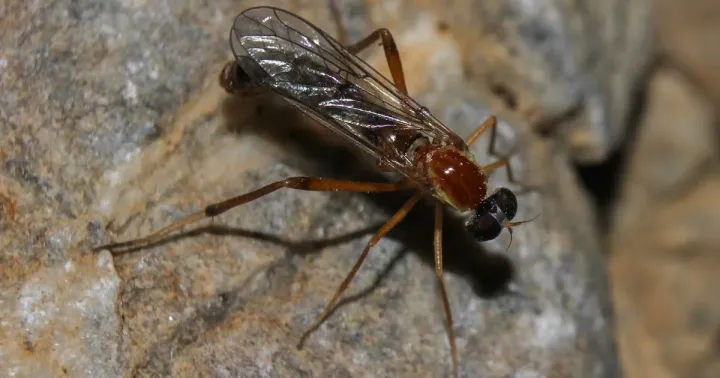
Description
How to identify
Vermileo vermileo belongs to the Vermileonidae family (order Diptera). These insects are commonly known as wormlions because their larvae mimic the behavior of antlions, creating pits in dry sand.
The adult fly resembles a snipe fly. It is characterized by a slender, elongated body and a specialized proboscis, which it uses to feed on nectar during its short adult lifespan.
The larva is the most distinctive stage. It has a long, fleshy, cylindrical body that is perfectly adapted for living and moving backward through loose, granular sand or soil.
Development involves complete metamorphosis. Before pupation, the larva constructs a hardened pupal case using sand grains cemented together, which protects it during the final stages of its development.
They are primarily found in xeric environments, preferring warm, dry, and sheltered locations where the soil remains loose and free of moisture for extended periods.
What it damages
The wormlion is generally not considered a major agricultural pest of field crops, but it can be problematic in specific environments such as greenhouses and nurseries.
The primary concern is the physical disturbance of the soil surface in pots or seedling trays, which can cause excessive drying around the root collar of young plants.
Being opportunistic predators, they may interfere with biological control programs by consuming beneficial soil-dwelling insects that would otherwise help control other pests.
In high densities, the constant digging activity of larvae can lead to the instability of the substrate, causing stress to delicate root systems of young horticultural stock.
While they do not directly feed on plant tissues, the indirect impact on the soil micro-environment can be detrimental to the health of highly sensitive ornamental plants.
Signs of infestation
The most obvious sign of infestation is the presence of small, funnel-shaped pits in dry, dusty soil or sandy areas of the nursery.
If you observe the pits closely, you may see the mandibles of the larvae waiting for prey just below the center of the cone-shaped depression.
Plants located in areas with high wormlion activity may appear stunted, often due to the drying out of the growing medium caused by the frequent displacement of soil.
The adults are sometimes seen resting on walls or structures near the infested sand, especially in warm, sunny weather during their active breeding season.
Empty pupal casings found on the surface of the sand are a clear indicator that the lifecycle has been successfully completed in that area.
Control measures
Management is straightforward because the larvae are highly dependent on specific soil conditions, specifically dry, loose sand that is free from excessive water.
The most effective cultural control is regular irrigation. Keeping the soil surface moist prevents the larvae from building or maintaining their hunting pits.
For nursery production, switching to soil substrates that have better water-holding capacity and structure makes the environment unsuitable for Vermileo vermileo.
Physical disturbance, such as raking or leveling the soil surface, will destroy existing traps and force larvae to relocate or perish due to lack of food.
- Maintain adequate moisture levels in growing media.
- Use potting mixes that are not purely sandy or dusty.
- Regularly rake or flatten the surface of soil in greenhouse beds.
- Avoid leaving dry sand patches in sheltered areas of the nursery.
Taxonomy
- Latin name
- Vermileo vermileo
- Order
- Diptera (flies)
- Family
- Rhagionidae
- EPPO code
- VERMEV
Discussion
No discussions yet — be the first.