
Lampromyia
Lampromyia
Description
How to identify
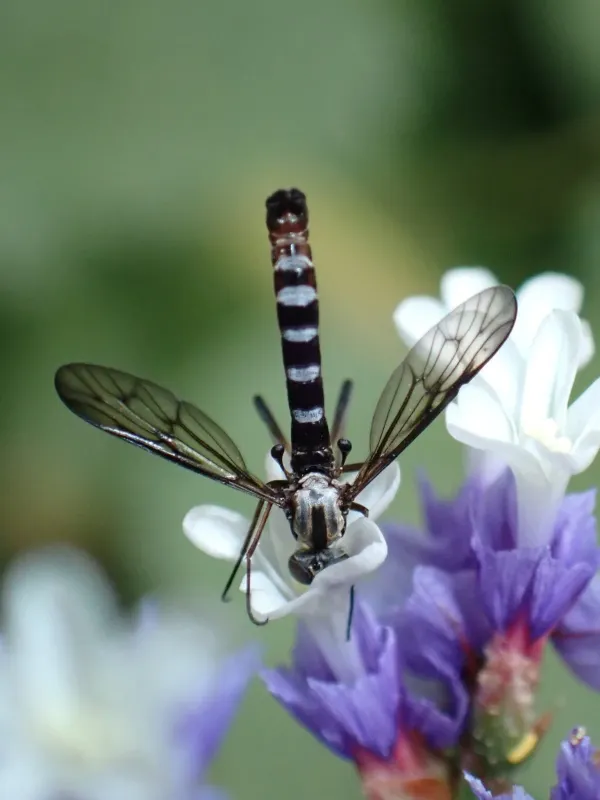
Lampromyia is a genus of insects belonging to the family Vermileonidae, within the order Diptera. These insects are biologically fascinating due to their behavioral resemblance to antlions.
Adult specimens possess a slender body with long legs and a specialized head structure adapted for feeding on nectar. Their external morphology often masks their relationship to the predatory larval stage.
The larvae of Lampromyia have a unique body structure, capable of curling into a loop, and are equipped with powerful mandibles designed for capturing prey within the soil substrate.
Identification of the species in the field is challenging due to the cryptic lifestyle of the larvae, which spend most of their existence hidden in the soil.
Detection of this pest in an agricultural plot typically involves identifying characteristic pitfall traps or observing specific damage to plant roots in dry soil conditions.
What it damages
While Lampromyia is not typically classified as a major agricultural pest, its larvae can cause damage in nurseries and orchards characterized by light, sandy soil.
The primary damage is inflicted by larvae that actively hunt small invertebrates living in the rhizosphere of young plants.
During the hunting process, the larvae may inflict mechanical injury upon delicate seedling roots, which leads to plant stress and secondary fungal infections.
The most vulnerable crops include nursery saplings and vegetable starts grown in sandy or loamy-sand substrates.
The damage is usually localized; however, in cases of high population density, significant stand reduction and seedling mortality may be observed.
When it appears
The development cycle of Lampromyia is strictly dictated by soil temperature and moisture levels, as the larvae thrive in arid conditions.
Larval activity increases during the warm spring and summer months when the soil temperature rises and prey insects become more active.
Pupation occurs in protected soil locations, followed by the emergence of adult flies, which typically have a short lifespan focused on mating and reproduction.
Adult flies are most commonly observed during the flowering periods of local flora, as they rely on nectar to maintain their physiological functions.
Monitoring for this pest should be prioritized during hot, dry months when larvae are actively constructing their hunting pits in loose sand or topsoil.
Signs of infestation
The main visual indicator of Lampromyia larval presence is the appearance of perfectly conical pits on the surface of dry, loose soil.
Plants infested or damaged by these larvae may show signs of sudden wilting despite adequate irrigation, signaling compromised root system integrity.
Inspection of the root collar may reveal minor mechanical lacerations, marks left by the larvae's mandibles as they hunted for soil-dwelling mesofauna.
In the vicinity of larval hotspots, one may observe tiny chitinous fragments of prey insects consumed by the Lampromyia larvae.
During systematic monitoring in greenhouses or nurseries, these larval pits become noticeable even if the topsoil structure is only slightly disturbed.
Control measures
The most effective control strategy involves disrupting the larval habitat by maintaining moderate soil moisture and firming the top layer of the soil.
Regular cultivation and hoeing of the soil in nurseries effectively destroy hunting pits, preventing the larvae from feeding and forcing them to relocate or perish.
The application of biological insecticides based on entomopathogenic fungi can significantly reduce larval populations within the soil strata.
The use of dense mulching materials hinders the construction of hunting pits and alters the soil microclimate, creating an environment unsuitable for this insect species.
Chemical soil treatments are justified only in extreme cases of severe infestation, always adhering strictly to safety regulations and recommended dosages.
Taxonomy
- Latin name
- Lampromyia
- Order
- Diptera (flies)
- Family
- Rhagionidae
- EPPO code
- LMPYSP
Discussion
No discussions yet — be the first.