
Rhagio scolopaceus
Rhagio scolopaceus
Description
How to identify
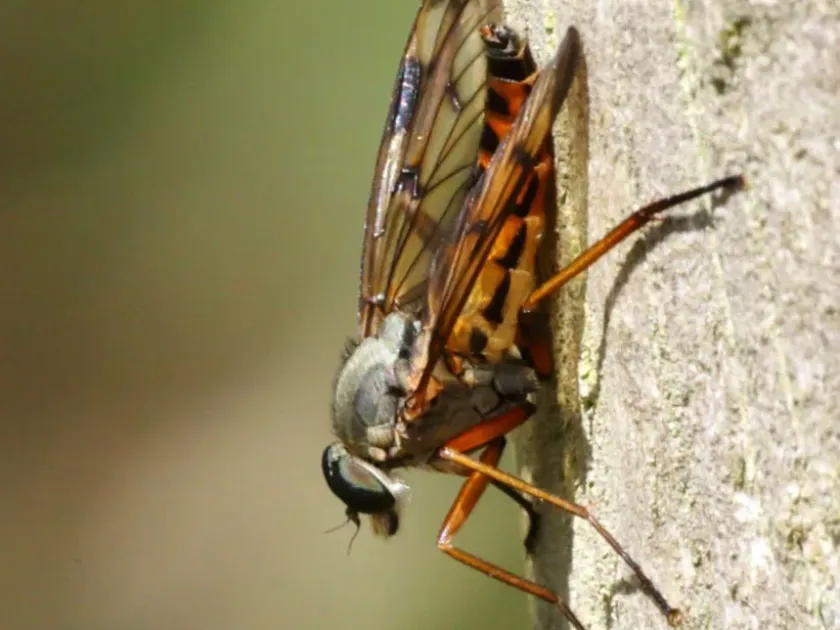
Rhagio scolopaceus, commonly known as the down-looker fly, belongs to the Rhagionidae family within the Diptera order. These flies are easily identified by their characteristic resting position on tree trunks, where they sit facing downwards.
The adult fly features a slender body with distinct mottled patterns on its wings. Its coloration typically ranges from brownish to yellowish-gray, allowing it to blend seamlessly into tree bark and foliage.
The larvae, which are of primary interest to agronomists, are cylindrical, legless, and possess a tough, protective exoskeleton. They reside primarily in soil and leaf litter, adapting to the subterranean environment.
The life cycle undergoes a complete metamorphosis, including egg, larval, pupal, and adult stages. The larval stage is the most prolonged and is often associated with the root zones of various plants.
Recognizing the adult flies is relatively simple due to their unique behavior of waiting for prey while perched head-down on vertical surfaces, making them a visible indicator of their presence in the area.
What it damages
While adult flies are beneficial predators that consume other small insects, the larvae can behave as opportunistic pests. They are known to inhabit soil rich in organic matter, where they may occasionally feed on young roots.
The larvae cause mechanical damage to plant roots and seedlings, which can significantly weaken the plant's structural integrity. This damage is particularly problematic during the early stages of plant development.
These root lesions often serve as entry points for various soil-borne pathogens, including bacteria and fungi, which can lead to secondary rot and the eventual death of the plant.
Crops grown in damp or poorly drained soils, as well as nursery seedlings, are at the highest risk. The larvae's presence in high density can lead to patchy growth and visible thinning of crop rows.
Agronomists often observe these pests as secondary factors in crop failure, exacerbated by poor field drainage and an abundance of un-decomposed organic matter in the soil.
When it appears
The flight period for Rhagio scolopaceus typically begins in late spring and continues through the summer months. Peak activity is usually observed in May and June, corresponding with the initial growth phase of many crops.
The egg-laying process is extended, resulting in multiple larval age classes present in the soil simultaneously. Overwintering occurs primarily in the larval stage, deep within the soil profile.
Spring reactivation of the larvae is synchronized with the germination of agricultural crops, which creates a critical window for potential root damage that requires monitoring.
Soil temperature and moisture are the primary factors influencing population density. A warm, humid spring environment significantly enhances the survival rate of the larvae as they progress to pupation.
Monitoring for adults via light traps or visual counts on nearby tree trunks is a recommended practice for predicting the density of the next larval generation in a given growing season.
Signs of infestation
Plants infested with Rhagio scolopaceus larvae often exhibit stunted growth and wilting, which does not improve with standard irrigation. This is a primary sign of underlying root damage.
Careful excavation around the root zone reveals larval tunnels and the larvae themselves, which appear as pale, cylindrical organisms in the top 5 to 10 centimeters of soil.
Secondary signs of infestation include the development of necrotic spots or bacterial rot on the roots, which directly result from the physical wounds inflicted by the larvae during feeding.
In cases of high infestation, one might notice a lack of uniformity in plant height across a field or garden bed, with affected plants showing signs of nutrient deficiency despite balanced fertilization.
Observing a high number of adults on vertical surfaces around the field is an early-warning signal that the soil may be hosting a substantial population of larvae.
Control measures
Effective management begins with rigorous crop rotation to break the pest's developmental cycle. Deep plowing of the soil is highly recommended as it exposes the larvae to predators and desiccation.
Improving soil drainage is essential, as the larvae thrive in moist, oxygen-poor soils. Reducing soil moisture levels is one of the most effective long-term preventative measures.
Biocontrol agents, such as entomopathogenic nematodes or specialized fungi, can be applied to the soil to manage population numbers without negatively impacting the surrounding ecosystem.
Chemical intervention should be reserved for scenarios where larvae numbers exceed the economic threshold for the specific crop, ensuring that the use of insecticides does not disrupt beneficial soil fauna.
- Implement regular tillage to disturb the soil habitat of the larvae.
- Remove crop residues promptly to prevent favorable conditions for egg-laying.
- Use organic soil amendments sparingly if a history of infestation is present in the field.
Taxonomy
- Latin name
- Rhagio scolopaceus
- Order
- Diptera (flies)
- Family
- Rhagionidae
- EPPO code
- RHGISC
Discussion
No discussions yet — be the first.