
Vermileo
Vermileo
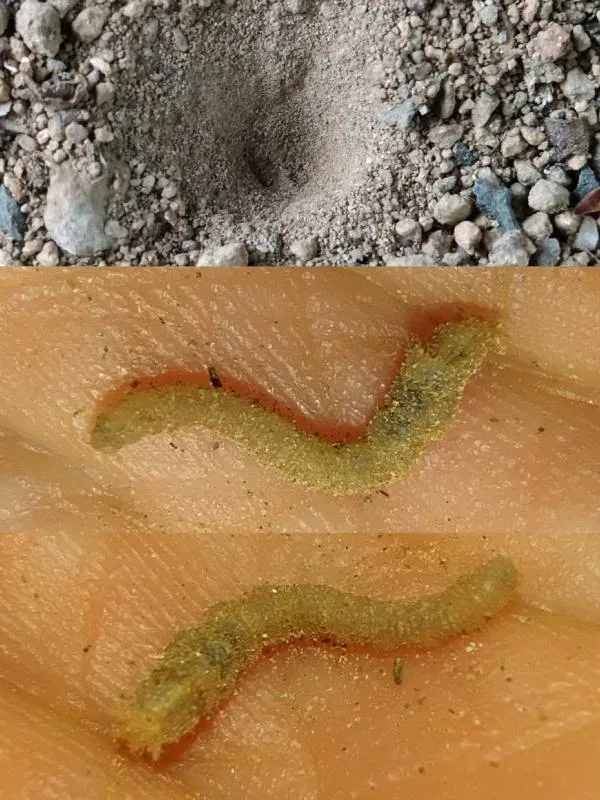
Description
How to identify
The genus Vermileo belongs to the family Vermileonidae, which is part of the Diptera order. Adults are delicate, fly-like insects often characterized by their slender bodies and long, thin legs adapted for specific environments.
The larvae are specialized predators known for their unique behavior of building funnel-shaped traps in dry, loose sand or dusty soil. They possess sickle-shaped mandibles used to capture small arthropods that fall into their trap.
The life cycle undergoes complete metamorphosis, including egg, larva, pupa, and adult stages. They thrive in xeric habitats where soil moisture is minimal and the surface remains dry.
Identification of the genus is primarily based on the presence of these distinctive pits or funnels in the ground, which serve as the primary site for larval feeding.
Unlike many other soil insects, Vermileo larvae are highly sensitive to soil moisture, which dictates their distribution in agricultural fields and greenhouses.
What it damages
Vermileo is not a plant-feeding pest; therefore, it does not directly damage plant tissues. Its presence is generally considered neutral for plant health.
However, the predatory activity of the larvae may reduce the number of beneficial soil-dwelling organisms, including natural enemies of actual crop pests.
Constant movement of sand into the pits can sometimes interfere with the root development of very young seedlings or newly germinated seeds.
In extremely high densities, the structural disturbance of the soil surface by the larvae can be undesirable for high-value agricultural plots.
Overall, the economic impact of Vermileo is considered negligible compared to true phytophagous insects that attack crops directly.
When it appears
Activity is dictated by the thermal regime and moisture levels of the soil surface. They are most active during dry, hot weather when sand remains loose.
Adult emergence typically occurs in the late spring or early summer, providing optimal conditions for mating and subsequent egg-laying.
Larval activity spans the entire summer period, during which they constantly maintain their pits to maximize prey capture opportunities.
As autumn approaches and temperatures drop, larvae prepare for overwintering, often deeper in the soil profile to survive freezing temperatures.
The duration of the larval stage can vary significantly based on food availability and the persistence of dry conditions in the habitat.
Signs of infestation
The hallmark sign of presence is the appearance of perfect circular pits in dry sandy soil, often resembling those of antlions.
These funnels are usually small in diameter but are highly visible due to the clear contrast they create against the surrounding flat soil surface.
Observation of debris or insect parts at the bottom of the pit indicates a successful capture by the larvae hidden beneath the sand.
Disturbed soil around the base of a plant is often the only physical sign that these insects are operating within the root zone.
There are no foliar symptoms, such as wilting or discoloration, as the damage mechanism does not involve plant vascular or structural systems.
Control measures
Control measures are rarely necessary, but if they are required to protect delicate seedlings, simple cultural techniques are the most effective.
- Increasing soil moisture to collapse the larval pits and make the substrate unsuitable.
- Regular surface cultivation or raking to destroy the structural integrity of the traps.
- Applying organic mulch to retain soil moisture and prevent the dry, dusty surface conditions required by larvae.
Chemical control is strongly discouraged as it is unnecessary and poses a risk to beneficial soil microorganisms and non-target beneficial insects.
Environmental management remains the best practice, focusing on maintaining soil conditions that do not support the specific requirements of Vermileo larvae.
Taxonomy
- Latin name
- Vermileo
- Order
- Diptera (flies)
- Family
- Rhagionidae
- EPPO code
- VERMSP
Discussion
No discussions yet — be the first.