
Blackcurrant gall mite
Vasates masseei
Description
How to identify
The blackcurrant gall mite (Cecidophyopsis ribis) is a microscopic pest that cannot be seen with the naked eye. The adult mites are white, worm-shaped, and measure only about 0.2 mm in length.
These pests belong to the family Eriophyidae. They live in large colonies inside the buds of blackcurrant plants, which provide them with protection, shelter, and a constant food source.
The life cycle is strictly synchronized with the development of the host plant. Mites overwinter inside the infested buds and begin their activity in early spring as temperatures rise.
Egg-laying occurs within the bud tissue. Several generations can develop throughout the growing season, which makes controlling the pest particularly challenging for gardeners.
Migration of the mites to new, healthy buds typically occurs during the flowering period of the blackcurrant bushes, often aided by wind, insects, or tools.
What it damages
Blackcurrant is the primary host for this mite, though it can occasionally infest redcurrants, whitecurrants, and gooseberries.
By feeding on the sap and cells within the bud, the mites cause the bud to swell and fail to develop into healthy leaves or blossoms, severely stunting the plant's growth.
The most devastating aspect of a gall mite infestation is that it acts as the primary vector for the blackcurrant reversion virus (BRV), a serious plant disease.
Once infected with the reversion virus, flowers become sterile and malformed, and the bush ceases to produce fruit, making it economically worthless.
Severe infestations weaken the entire bush, leading to poor vigor, yield loss, and eventual decline of the plant structure over several seasons.
Signs of infestation
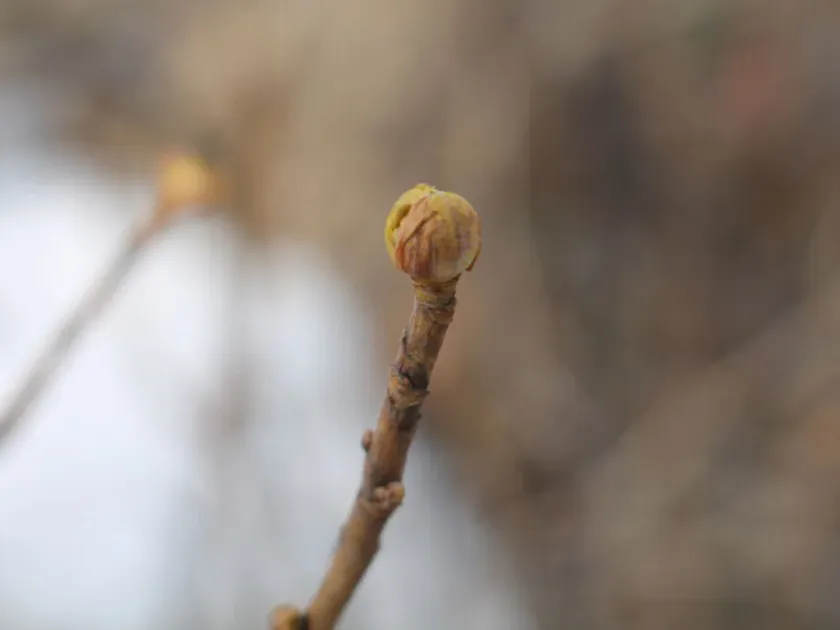
The most visible symptom of infestation is the development of «big buds». These buds look rounded, enlarged, and swollen, often resembling miniature cabbages.
In spring, these infected buds fail to open normally. If they do produce growth, it consists of weak, stunted, and chlorotic leaves that do not contribute to the plant's productivity.
During the flowering stage, the difference between healthy, open buds and dormant, swollen gall mite buds becomes very apparent to the observer.
In cases of chronic infestation, the bush develops an uneven, sparse appearance, with many branches missing healthy terminal growth.
Microscopic examination of a swollen bud will reveal hundreds or thousands of white, translucent mites, confirming the diagnosis beyond any doubt.
Control measures
Manual removal of swollen buds is the most effective cultural control method. This must be done during the winter or early spring before the buds start to open and the mites migrate.
For bushes with a high level of infestation, the only practical solution is to prune out affected branches severely or dig up and burn the entire infected plant to prevent the spread to healthy bushes.
Chemical control focuses on the migration window of the mites. Acaricides are applied during the bud-burst and flowering phases to target the pests while they are exposed outside the buds.
Since migration happens over several weeks, repeat applications of approved pesticides are necessary to achieve sufficient population reduction.
- Always purchase certified, mite-free nursery stock for new plantings.
- Choose resistant cultivars that demonstrate tolerance to the mite.
- Sanitize pruning tools with disinfectant to avoid cross-contamination.
Taxonomy
- Latin name
- Vasates masseei
- Order
- Mites
- Family
- Eriophyidae
- EPPO code
- VASAMA
Discussion
No discussions yet — be the first.