
Apple rust mite
Vasates malivagrans
Description
How to identify
The Apple rust mite (Vasates malivagrans) belongs to the Acariformes order and the Eriophyidae family. These are microscopic pests, often referred to as gall mites, which are invisible to the naked eye.
Their bodies are elongated and worm-like, typically pale yellow or white. Because of their tiny size, they inhabit the underside of leaves and developing buds, making them very difficult to detect during the early stages of infestation.
The lifecycle involves several stages: egg, two nymphal stages, and the adult stage. The mites overwinter as fertilized females hidden within the bud scales or in bark crevices of the host tree.
As spring temperatures rise, the females migrate to the emerging leaves and buds to begin feeding and reproduction. The cycle repeats several times throughout the growing season.
The development rate of these mites is highly dependent on environmental conditions, with warm and dry weather significantly accelerating their reproductive capacity.
What it damages
This species primarily targets apple trees (Malus). The mites cause damage by feeding on the cellular contents of leaves and developing buds through their specialized piercing-sucking mouthparts.
The feeding process leads to a localized toxic reaction, which disrupts plant cell metabolism. This results in visual deformation and growth retardation of the affected plant parts.
Heavily infested trees often exhibit poor vigor. The loss of functional leaf area reduces the tree's ability to perform photosynthesis, directly impacting fruit size and quality.
Prolonged infestation can lead to premature leaf drop, which significantly weakens the tree, reducing its ability to survive harsh winter conditions or resist other pests.
In nurseries and young orchards, this pest can cause significant stunting, which may lead to the loss of entire batches of saplings if control measures are not taken.
Signs of infestation
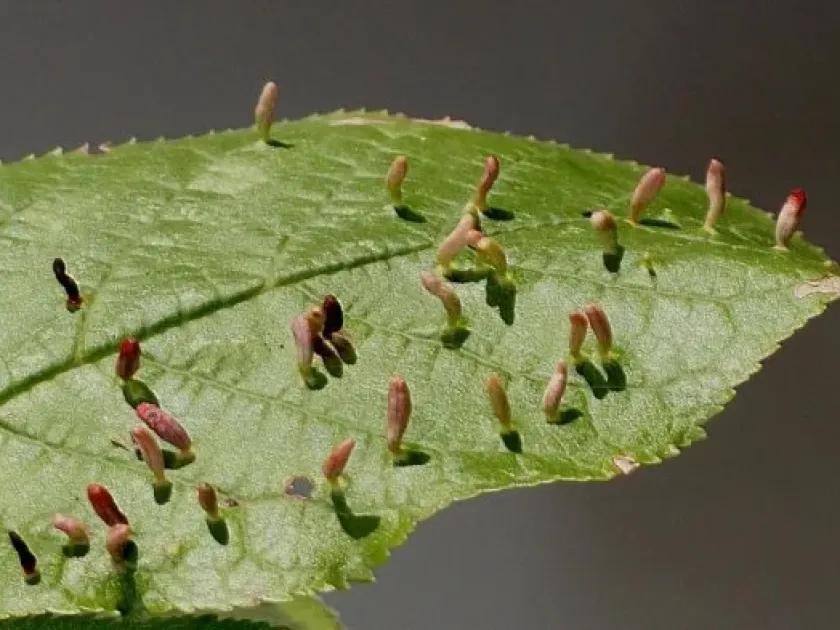
The most common symptom is the formation of galls, which appear as small bumps or mottled patches on the leaf surface. These patches may change color to brown, red, or yellow.
Leaves often curl, distort, or become brittle as a result of the mites' feeding. This distortion is a key diagnostic feature for early detection in the orchard.
In cases of severe infestation, the leaves may show signs of necrosis, turning brown and drying out prematurely, which leads to early defoliation of the tree.
Growth of terminal shoots is typically stunted. The leaves may become smaller than normal, and the overall canopy density may be visibly reduced.
- leaf curling and distortion
- presence of tiny discolored spots or galls
- stunted shoot development
- premature leaf drop
- reduced overall tree vigor
Control measures
Chemical control is the primary method for managing this mite. Applying specialized acaricides during the dormant or early green-tip stage is the most effective approach.
It is critical to rotate between different chemical classes of pesticides to manage potential resistance, as these mites can rapidly develop tolerance to frequently used products.
Integrated pest management (IPM) practices should be followed, including monitoring mite populations and encouraging the presence of beneficial predatory mites.
Cultural methods, such as regular pruning of heavily infested branches and ensuring the trees are well-watered, can help the tree remain resilient against stress.
Always follow local guidelines and safety instructions when applying any chemical treatments to ensure the safety of both the environment and the fruit harvest.
Taxonomy
- Latin name
- Vasates malivagrans
- Order
- Mites
- Family
- Eriophyidae
- EPPO code
- VASAML
Discussion
No discussions yet — be the first.