
Vallonia excentrica
Vallonia excentrica
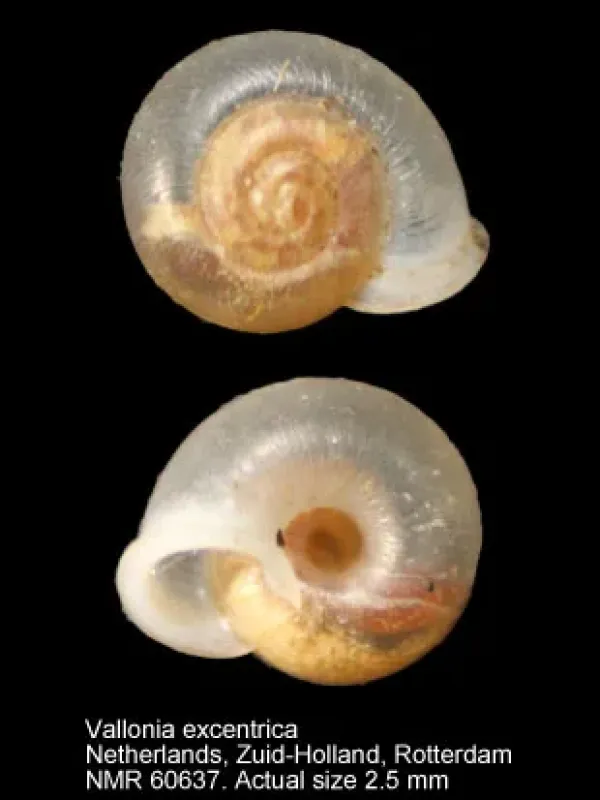
Description
How to identify
Vallonia excentrica is a small terrestrial pulmonate gastropod belonging to the family Valloniidae. The adult shell is minute, typically measuring no more than 2.5 millimeters in diameter.
The shell features a discoidal shape with approximately 3 to 3.5 whorls that increase gradually in size. The surface of the shell is marked by fine radial striations, appearing whitish or horny in color.
Taxonomically, this species is classified within the order Stylommatophora. Due to its microscopic size, it often evades detection during standard agricultural surveys and field scouting.
These snails thrive in moist, sheltered habitats. They typically reside within soil crevices, underneath leaf litter, or amidst thick vegetation, avoiding direct exposure to heat and desiccation.
Identification of the species in the field requires specialized equipment like magnifying lenses or stereomicroscopes, as they are easily confused with other small land snails.
What it damages
Vallonia excentrica primarily impacts young seedlings of vegetable crops, ornamental plants, and greenhouse transplants. Vulnerability is highest during the early stages of plant development.
The pests consume the delicate tissues of leaves, resulting in tiny, irregular holes. Such feeding damage weakens the plant, making it prone to stunted growth and secondary infections.
In addition to leaf damage, these mollusks can feed on the root collar of young seedlings, which may lead to the total collapse of the plant, especially in greenhouse conditions where moisture is constant.
High population densities can cause significant economic losses, particularly in greenhouses or under tunnels where the microclimate is ideal for snail reproduction and survival.
The damage is most apparent in crops with succulent tissues grown in densely planted areas where the lack of proper ventilation creates a humid environment favored by the pest.
Signs of infestation
The primary sign of an infestation is the presence of small, pinpoint feeding holes on the leaves closest to the soil level, often accompanied by faint, silvery trails of dried mucus.
When observing the site in the early morning, one might notice the mollusks near the base of the stems. If the soil surface is disturbed, empty, fragile shells may be visible.
- Small, ragged holes on cotyledons or young leaves.
- Visible, shiny mucus trails on the soil surface or plant stems.
- Unexplained wilting or death of young sprouts in high-moisture patches.
In cases of severe infestation, the feeding marks may show signs of decay, as the snails often harbor and spread pathogens during their feeding process.
Checking the underside of debris or monitoring the soil around the plant base at night or dawn is the most effective way to confirm the presence of this pest.
Control measures
Effective management of Vallonia excentrica involves an integrated approach focusing on sanitation and the reduction of excessive moisture in the growing environment.
Regular weeding and the prompt removal of crop debris are essential to eliminate the refuge sites that these small mollusks rely on to survive during the day.
Implementing proper irrigation practices, such as drip irrigation, helps minimize surface moisture in the topsoil layer, which significantly hinders the mobility and reproduction of land snails.
Chemical control options include the application of iron phosphate-based baits, which are generally considered environmentally safer and are effective against various gastropod pests.
Creating physical barriers using dry sand, gravel, or wood ashes around the stems can deter snails from reaching the foliage, as their soft bodies are sensitive to abrasive or drying substrates.
Taxonomy
- Latin name
- Vallonia excentrica
- Order
- Molluscs
- Family
- Valloniidae
- EPPO code
- VALLEX
Discussion
No discussions yet — be the first.