
Acanthinula aculeata
Acanthinula aculeata
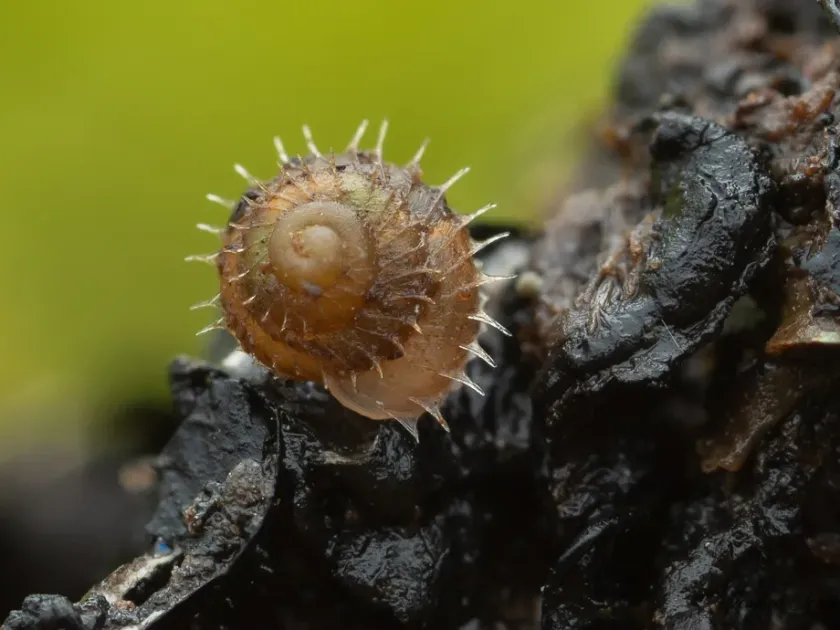
Description
How to identify
Acanthinula aculeata, commonly known as the prickly snail, is a tiny land snail belonging to the family Valloniidae.
The shell of this species is extremely small, typically measuring only 2 mm in both height and width, requiring a magnifying glass for proper identification.
The shell is conical and uniquely decorated with fine, prickle-like horns or spines, which gives the species its distinctive aesthetic and scientific name.
These snails inhabit moist environments, often found in leaf litter, shaded garden areas, and damp soil conditions throughout Europe and beyond.
Due to their cryptic lifestyle and diminutive size, they are often overlooked in garden surveys until population densities rise significantly.
What it damages
While not a primary agricultural threat compared to larger slugs, Acanthinula aculeata can cause notable damage in nursery and greenhouse settings.
They feed on organic matter but may shift their diet to young seedlings, causing small, irregular holes in leaves that hinder early plant development.
High populations can lead to severe stunting of delicate vegetable starts and ornamental plants, especially in high-humidity cultivation environments.
The damage often provides an entry point for secondary pathogens, leading to bacterial or fungal infections that further weaken the host plant.
In moist spring conditions, the collective feeding activity can result in significant economic loss for commercial growers producing young transplants.
When it appears
The activity of the prickly snail is highly dependent on environmental moisture, peaking during cool, damp weather conditions in the spring and autumn.
During the warmer months, they tend to burrow deeper into the soil or reside under dense mulching to avoid desiccation, becoming less active.
Breeding usually occurs when environmental conditions are optimal for moisture, leading to the deposition of eggs in damp substrate layers.
As temperatures begin to drop in late autumn, they prepare for winter dormancy, often seeking shelter within plant debris or organic matter.
Their life cycle involves multiple stages where moisture is critical, making them most visible and active during rainy seasons or heavy dew periods.
Signs of infestation
Visual signs of an infestation include the presence of small, scalloped lesions on the edges and surfaces of seedling leaves near the soil level.
Traces of dried, mucous secretions on the soil surface or plant stems are definitive markers of recent snail activity in the area.
Small, brown, conical shells, approximately 2 mm in diameter, can often be found by carefully inspecting the leaf litter around affected plants.
Abrupt wilting or necrotic spots on the base of young stems indicate that the snails have been feeding on the plant tissue at the soil interface.
Using damp cardboard or wooden boards as bait traps during the night can reveal the presence of the population, even if they are hidden during the day.
Control measures
Effective management begins with sanitation; removing weeds, excess mulch, and decaying vegetation reduces the habitat suitable for their survival.
Improving drainage in garden beds and ensuring adequate air circulation discourages the humid microclimate required by these land snails.
Physical barriers such as crushed eggshells or wood ash can create a dry, abrasive surface that deters the snails from approaching sensitive plants.
- Application of iron phosphate-based molluscicides for safe, targeted control.
- Evening hand-picking during moist conditions to lower population numbers.
- Encouraging natural predators such as frogs, toads, and ground beetles.
Integrated pest management strategies focusing on reducing soil moisture levels remain the most sustainable long-term solution for controlling Acanthinula aculeata.
Taxonomy
- Latin name
- Acanthinula aculeata
- Order
- Molluscs
- Family
- Valloniidae
- EPPO code
- AKNLAC
Discussion
No discussions yet — be the first.