
Thistle gall fly
Urophora stylata
Description
How to identify
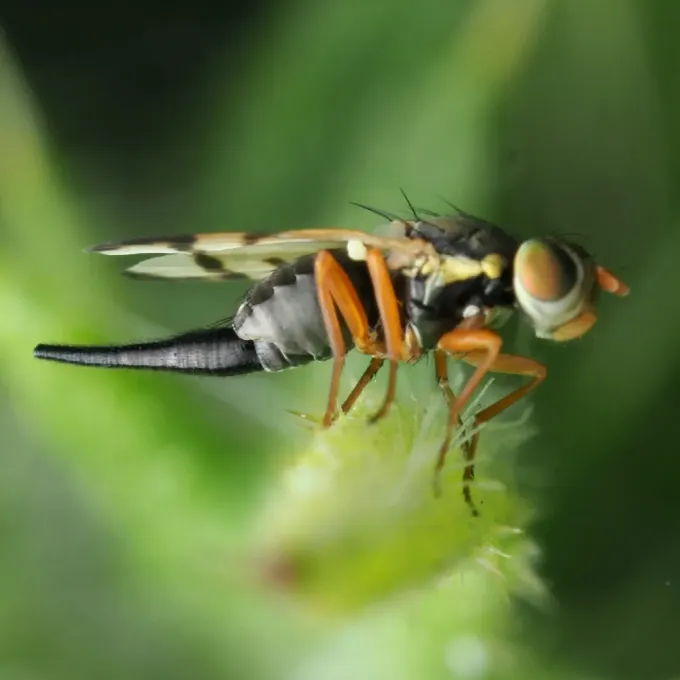
The thistle gall fly (Urophora stylata) is a member of the Tephritidae family, known for the intricate, net-like patterns on its wings.
Adults are small, brownish insects that rely on their cryptic coloration to blend into the natural environment of their host plants.
Females are characterized by a long ovipositor, which is used to pierce developing flower buds and deposit eggs into the soft tissue of the receptacle.
The larvae are typically creamy-white, legless, and possess specialized mouthparts for feeding on plant tissues within the thistle heads.
Pupation takes place within the gall created by the larvae inside the flower head, providing a protective environment throughout the winter.
What it damages
This species primarily attacks thistles, most notably the spear thistle (Cirsium vulgare), utilizing the floral structures as its sole food source.
Larvae feed on the receptacle and the developing seeds, effectively destroying the plant's ability to reproduce and disperse seeds.
By consuming the internal parts of the flower head, the larvae inhibit the development of healthy seeds and can lead to the wilting of the bud.
While often seen as a pest of wild flora, the thistle gall fly is frequently categorized as a beneficial agent in biological weed control programs.
Significant infestations can lead to a drastic reduction in the seed bank of invasive thistle populations in natural and agricultural landscapes.
When it appears
The adult flies emerge in early summer, precisely when the thistle plants begin to produce their first flower buds.
After mating, females lay eggs inside the developing buds, ensuring the larvae have immediate access to food upon hatching.
Larval development occurs throughout the summer months as the flower heads grow and reach maturity.
The insect enters the pupal stage towards the end of the summer, remaining in the dry, dead flower heads throughout the winter period.
The cycle repeats the following spring as the adult insects emerge to find new, suitable host plants for their next generation.
Signs of infestation
The most distinctive sign of infestation is the formation of a woody, hardened gall where the flower head should be located.
Small, circular exit holes become visible on the surface of the thistle head once the adult fly has emerged from its pupal chamber.
When opened, the infested head will show hollow cavities and a lack of properly formed, viable seeds compared to healthy specimens.
The overall growth of the flower head may appear stunted or deformed, failing to open properly into a typical flower.
- Gall formation on the stem tip or flower head.
- Small circular holes on the surface of the thistle head.
- Presence of internal cavities with larval remains.
- Failure of the flower to bloom effectively.
Control measures
Physical removal and destruction of infested thistle heads before the adult flies emerge is the most reliable control method.
Regular mowing of the thistle stands prior to the onset of the flowering season helps to break the fly's life cycle.
Encouraging the presence of natural predators, such as parasitic wasps, is an effective strategy for long-term population management.
Chemical control is rarely recommended for this species, as it is often considered a biocontrol agent against invasive weeds rather than a garden pest.
Maintaining a healthy ecosystem with diverse plant life helps to keep the population of thistle gall flies in check naturally.
Taxonomy
- Latin name
- Urophora stylata
- Order
- Diptera (flies)
- Family
- Tephritidae
- EPPO code
- URORST
Discussion
No discussions yet — be the first.