
Thistle gall fly
Urophora cardui
Description
How to identify
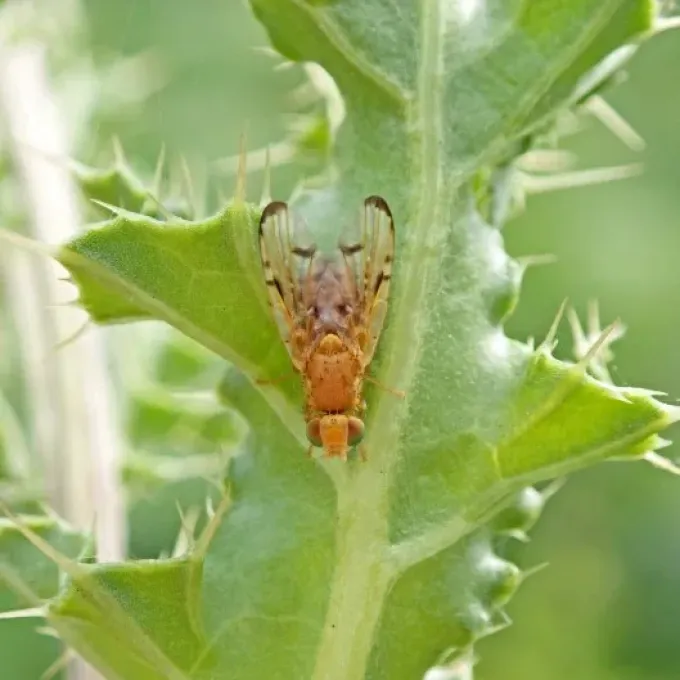
The thistle gall fly is a species of fruit fly belonging to the Tephritidae family. It is known for its distinct, patterned wings which aid in camouflage against plant tissues.
Adult flies are relatively small, measuring about 5 to 6 millimeters in length, with a greyish-brown body that blends well with the thistle stem environment.
The larvae are cylindrical and creamy-white in color. They spend their entire developmental period inside specific plant structures, which provides them with high security.
The life cycle encompasses four stages: egg, larva, pupa, and adult. Each stage is strictly synchronized with the phenology of the host plant, the creeping thistle.
This species is highly specialized, meaning it does not typically interact with other plant families, focusing its existence solely on the host it inhabits.
What it damages
The main host plant for the thistle gall fly is the creeping thistle (Cirsium arvense). The fly targets the young, actively growing parts of the plant for egg-laying.
Upon hatching, larvae burrow into the stem tissues, triggering the plant to form a gall. This gall is a complex, multichambered swelling that acts as both food and shelter.
By forming these galls, the insect redirects the plant's resources away from flower production and stem elongation towards maintaining the gall tissues.
While the gall may look significant, it rarely kills the entire plant, though it significantly reduces its overall vigor and ability to produce viable seeds.
Because the damage is restricted to the thistle, this insect is generally considered harmless to crops and can even act as a biological agent against the weed.
When it appears
Adult flies typically emerge in late spring or early summer, coinciding with the rapid vegetative growth phase of the creeping thistle.
Mating occurs shortly after emergence, and females search for suitable stems to lay their eggs, ensuring the larvae will have access to sufficient nutrients.
Larval development happens throughout the summer season within the safety of the expanding gall, which grows as the larva feeds inside.
Pupation occurs inside the gall at the end of the summer or in early autumn, where the insect remains throughout the winter months.
The cycle resets in the following spring as warmer temperatures trigger the emergence of the new generation of adults from the overwintered galls.
Signs of infestation
The most prominent sign of infestation is the presence of large, spindle-shaped or oval galls on the main stems or branches of the thistle plant.
Affected stems often appear deformed or stunted compared to healthy ones, and the foliage near the gall may show signs of abnormal growth patterns.
During the summer months, opening a fresh gall will reveal the larvae actively feeding on the succulent, internal plant tissues within their chambers.
As the season progresses, the gall hardens and turns brown, becoming more woody, which helps the larvae survive the colder winter conditions.
The lack of flowers or the presence of malformed flower heads on thistle stalks is another strong indicator that the population of gall flies is present.
Control measures
Since the thistle gall fly is not a threat to agricultural crops, chemical control specifically targeting this insect is rarely, if ever, necessary.
In many regions, the fly is actually encouraged as a natural biological control agent to limit the population and spread of the invasive creeping thistle.
Mechanical destruction of the thistle plants, such as mowing or tillage, is the most effective way to eliminate both the weed and the insect population.
There are no specific pesticide protocols for this insect, as it is classified as a beneficial insect in the context of weed management systems.
Maintaining healthy field borders and implementing crop rotation are sufficient strategies to prevent the overgrowth of thistles and the flies associated with them.
Taxonomy
- Latin name
- Urophora cardui
- Order
- Diptera (flies)
- Family
- Tephritidae
- EPPO code
- EURBCA
Discussion
No discussions yet — be the first.