
Umbonia
Umbonia
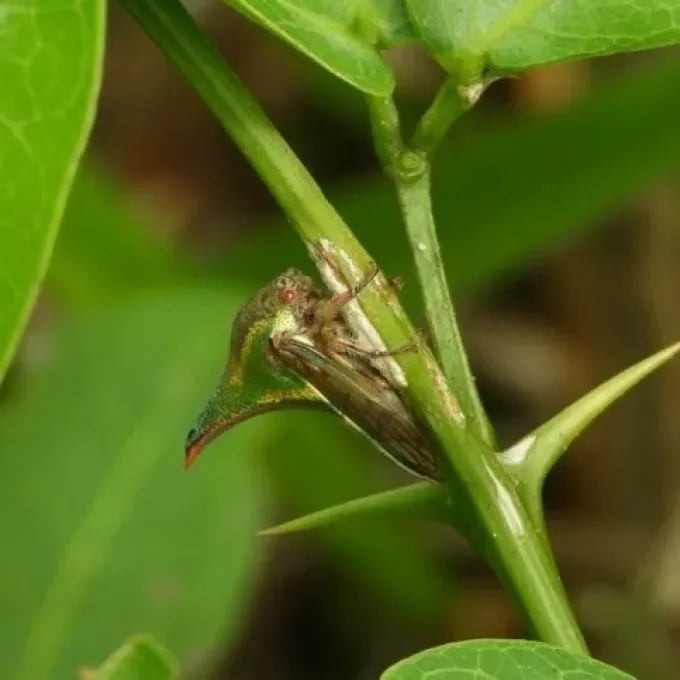
Description
How to identify
Umbonia is a genus of treehoppers belonging to the family Membracidae. These insects are instantly recognizable by the enlarged, thorn-like process on the pronotum, which gives them a distinctive silhouette.
Adults typically measure between 10 and 15 millimeters. Their colors range from vibrant greens to yellows and reds, providing effective camouflage against foliage and stems.
The nymphs (immature stages) lack the fully developed pronotal horn of the adults and often appear covered in small spines or filaments, which serve as a defense mechanism.
Social behavior is notable in this genus, as females often guard their egg masses and newly hatched nymphs, providing protection against predators and parasitoids.
These insects are predominantly found in tropical and subtropical regions of the Americas, where they inhabit various woody host plants.
What it damages
Umbonia species are phloem-feeders. They insert their mouthparts into the tender stems and shoots of plants to extract essential sap, which is rich in nutrients.
Feeding activities cause physical damage to the plant tissue, leading to stunted growth, leaf yellowing, and general plant decline due to loss of vital fluids.
The punctures made during feeding create entry points for secondary pathogens, such as fungi and bacteria, which can cause necrosis and branch dieback.
Like many treehoppers, they excrete honeydew, a sticky substance that promotes the growth of sooty mold, which blocks sunlight and reduces photosynthesis efficiency.
In cases of severe infestation, the cumulative stress on the plant can lead to the wilting of branches and a significant decrease in the overall productivity of the host.
When it appears
The lifecycle of Umbonia is highly dependent on ambient temperature and humidity. In tropical climates, reproduction can occur year-round without a distinct dormant phase.
The peak activity of nymphs usually coincides with the spring flush of new growth, as young, succulent shoots provide easier access for their feeding apparatus.
Overwintering typically occurs in the egg stage. Females deposit their eggs directly into the bark or woody tissue of host plants to protect them from environmental fluctuations.
Optimal development conditions involve warm temperatures and consistent moisture levels, allowing for rapid generation turnover in favorable environments.
The complete life cycle includes the egg stage, five nymphal instars, and the adult stage, with the duration of each phase being sensitive to environmental conditions.
Signs of infestation
The presence of egg nests, visible as neat rows of punctures in the bark, is a primary indicator of an established Umbonia population.
Sticky honeydew residues found on leaves and twigs, often accompanied by active ant trails, are classic signs of feeding activity by treehoppers.
A black sooty mold covering the plant surface is an indirect but common symptom of long-term infestation by sap-sucking insects.
Deformation, such as curling or bending of the terminal shoots, indicates areas where heavy feeding has disrupted the flow of sap and growth hormones.
The physical presence of nymphs or adults clustered along the petioles or branch nodes is the most definitive sign of an active infestation.
Control measures
Physical control involves the regular pruning and destruction of infested branches containing egg clusters to reduce the population density effectively.
Systemic insecticides may be used when infestations are severe, though they should be applied carefully to avoid harming beneficial pollinators in the area.
Promoting general plant health through proper irrigation and balanced fertilization strengthens the plant's ability to recover from minor insect damage.
Biological control strategies, including the encouragement of natural predators like wasps and predatory bugs, help maintain population balance in a garden setting.
- Monitor young trees regularly during the growing season.
- Use horticultural oils to smother overwintering eggs on bark.
- Remove weeds that may serve as alternative hosts for the pests.
Taxonomy
- Latin name
- Umbonia
- Order
- Hemiptera (bugs, aphids, leafhoppers)
- Family
- Membracidae
- EPPO code
- UMBOSP
Discussion
No discussions yet — be the first.