
Aconophora
Aconophora
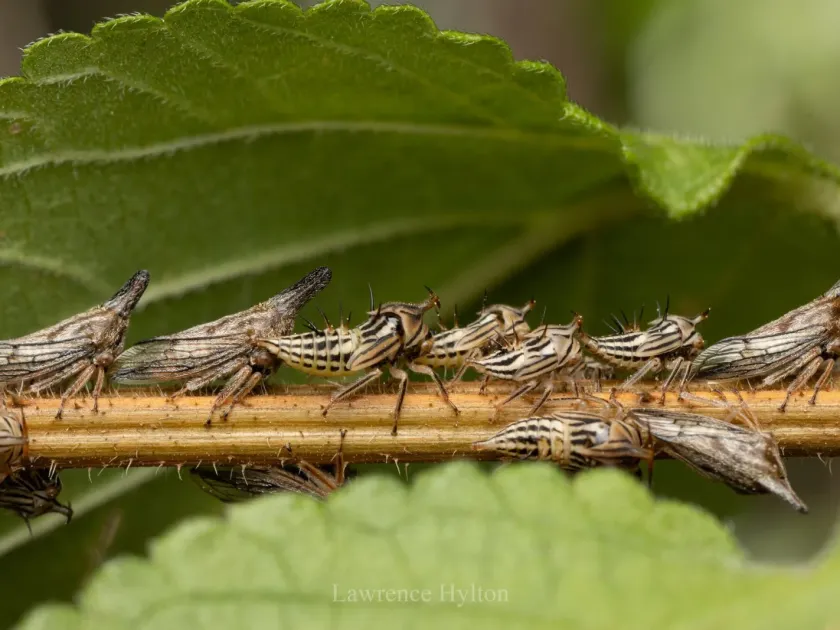
Description
How to identify
Aconophora belongs to the treehopper family (Membracidae), order Hemiptera. These insects are easily recognized by the enlarged pronotum, often shaped like a horn or spine.
Adults possess cryptic coloration, which provides excellent camouflage against tree bark or foliage, making them difficult to spot in dense vegetation.
Nymphs differ significantly from adults, usually featuring a flatter body shape and prominent protrusions or spines to aid in concealment on stems.
For accurate identification, agronomists rely on close observation of young shoots where these insects congregate to feed on plant sap.
Careful inspection for specific egg-laying sites, which females deposit inside slits cut into the bark or plant tissue, is essential for early detection.
What it damages
Aconophora causes significant damage to a wide range of woody plants and shrubs, including Lantana species, as well as various fruit and ornamental crops.
The insects feed by piercing plant stems with their stylets to extract sap, which leads to reduced plant vigor and stunted growth of young shoots.
Heavy infestations can cause deformation of branches, resulting in twisted or curled growth patterns that compromise the aesthetic and structural integrity of the plant.
Lesions formed in the bark during egg-laying provide entry points for secondary infections, including fungal pathogens and bacterial necrosis.
In cases of severe damage, young saplings may suffer from interrupted nutrient transport, leading to dieback or total plant death.
When it appears
The life cycle of Aconophora is strictly synchronized with the plant growing season, with activity starting as temperatures rise in the spring.
Population peaks typically occur during summer months, corresponding with the development of nymphs and the reproductive phase of adults.
In regions with mild climates, Aconophora may produce multiple generations within a single season, significantly increasing the pressure on host plants.
Overwintering usually occurs in the egg stage, with females depositing their clutches under the bark or deep within the tissue of annual shoots in late autumn.
Monitoring should begin in early May, focusing on the examination of young green shoots for any signs of feeding or recent egg-laying activity.
Signs of infestation
The primary sign of Aconophora presence is the appearance of distinct scars or ridges on branches resulting from the female's oviposition process.
Affected plants often display signs of chlorosis, with leaves turning yellow and dropping prematurely due to the continuous depletion of plant fluids.
The accumulation of honeydew produced by the insects on leaves creates a substrate for sooty mold, which blocks photosynthesis.
- Deformation and twisting of apical shoots.
- Visible bark damage or scarring from egg deposition.
- Sticky residue or honeydew on the leaf surface.
- General decline and lack of new vegetative growth.
- Visible congregations of adult insects or nymphs on stems.
Because they are adept at camouflage, small populations often remain unnoticed until the symptoms of damage become severe.
Control measures
Effective management of Aconophora requires an integrated approach that combines cultural practices with targeted chemical treatments.
Sanitary pruning and destruction of infested branches are critical to removing egg clutches and reducing the potential population size for the next season.
Systemic insecticides are generally the most effective way to manage these sap-sucking pests by targeting them directly during their feeding phase.
It is recommended to rotate chemical agents with different modes of action to prevent the development of resistance within the Aconophora population.
Encouraging biological control by protecting natural predators, such as lady beetles and parasitic wasps, can help mitigate infestations naturally.
Taxonomy
- Latin name
- Aconophora
- Order
- Hemiptera (bugs, aphids, leafhoppers)
- Family
- Membracidae
- EPPO code
- ACOOSP
Discussion
No discussions yet — be the first.