
Cinnabar moth
Tyria jacobaeae
Description
How to identify
The Cinnabar moth (Tyria jacobaeae) is a day-flying moth belonging to the family Erebidae. The adult moth features a distinct wing pattern with dark greyish-black forewings adorned with vibrant red stripes and spots.
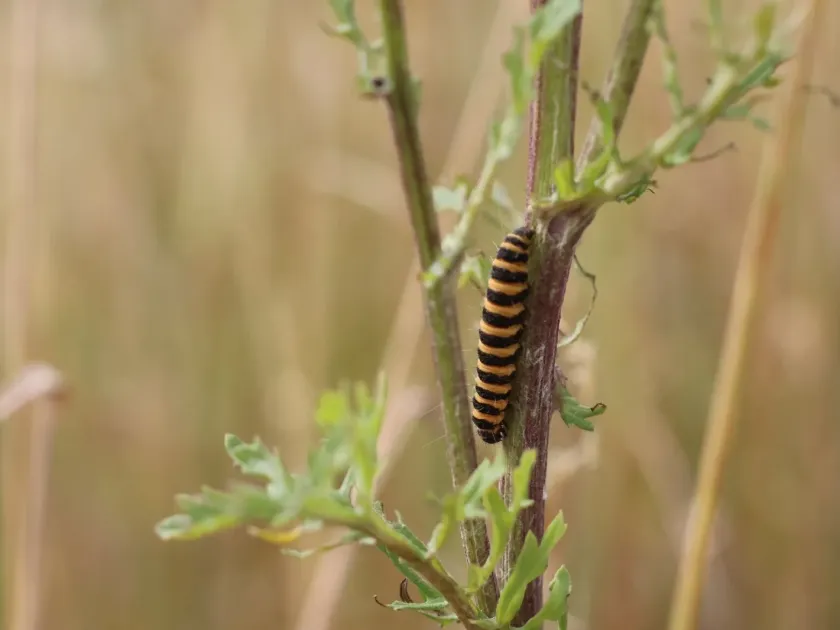
Its larvae are famously conspicuous, displaying bold alternating yellow and black bands. This aposematic coloration serves as a warning to potential predators that the larvae are unpalatable.
The life cycle encompasses four stages: egg, larva, pupa, and adult. The moths typically emerge from their overwintering pupal stage in late spring to begin the reproductive cycle.
Unlike many other moth species that are nocturnal, the Cinnabar moth is diurnal, making it easy to spot during sunny days in the garden.
The pupae reside in the soil or under leaf litter, which provides necessary protection against winter temperatures and environmental stressors.
What it damages
The primary food source for Cinnabar moth larvae is common ragwort (Jacobaea vulgaris). In garden settings, they can also affect related ornamental species within the Asteraceae family.
During outbreaks, larvae can be extremely voracious, often stripping plants entirely of their foliage and leaving only bare, skeletonized stems.
This heavy defoliation significantly impairs the plant's ability to undergo photosynthesis, leading to stunted growth, reduced vigor, and poor seasonal development.
While often seen as a beneficial insect for controlling invasive ragwort in wild meadows, their presence in cultivated flower beds can be detrimental to aesthetic goals.
The larvae accumulate alkaloids from the host plants, rendering them toxic. This evolutionary defense mechanism allows them to thrive and expand their population rapidly.
When it appears
Adult moths are typically active from late May through June, during which time they mate and deposit eggs on the undersides of host plant leaves.
Eggs hatch into small larvae that begin their feeding cycle in early summer, usually becoming most noticeable in July.
The larval stage is the period of greatest activity, with rapid growth occurring throughout the months of July and August as the larvae feed continuously.
By late August or early September, the mature larvae descend to the ground to pupate in the soil, entering their overwintering phase.
The species usually completes one generation per year, making the seasonal timing of their lifecycle relatively consistent across temperate regions.
Signs of infestation
The most visible sign of an infestation is the sudden appearance of skeletalized leaves and stems on plants of the genus Jacobaea or Senecio.
The larvae themselves are very easy to identify due to their brightly colored yellow and black striped bodies, which remain visible while they feed.
Accumulated larval excrement (frass) at the base of the plant is another clear indicator of high larval activity and feeding presence.
In cases of heavy infestation, plants may appear completely defoliated, which often occurs very rapidly as the colony progresses through larval stages.
Observing the distinct red-patterned adult moths flying around host plants in early summer confirms that a breeding population is present in the area.
Control measures
Manual removal of the larvae is the most recommended approach for small gardens, as the caterpillars are large and easy to spot and collect.
Aggressive weeding and removal of host plants like ragwort will significantly reduce the local population of the moth by eliminating their breeding ground.
Biological controls, such as products containing Bacillus thuringiensis, can be applied early in the season if a large population threatens sensitive plants.
Chemical intervention is rarely required but may be considered for high-value ornamental landscapes if the caterpillars pose a significant risk to plant health.
Promoting a healthy garden ecosystem can help balance insect populations, though the toxicity of the larvae limits the effectiveness of many natural predators.
Taxonomy
- Latin name
- Tyria jacobaeae
- Order
- Lepidoptera (butterflies)
- Family
- Erebidae
- EPPO code
- TYRIJA
Discussion
No discussions yet — be the first.