
Cinnabar moth
Tyria
Description
How to identify
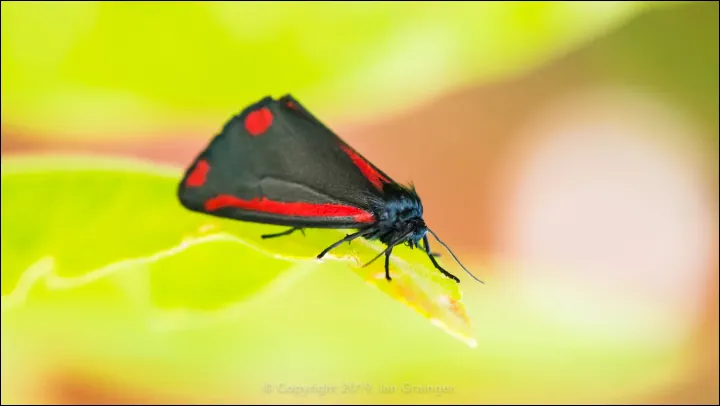
The Cinnabar moth (Tyria jacobaeae) is a day-flying moth belonging to the family Erebidae. The adult moth is characterized by dark greyish-black forewings with distinctive red stripes and spots, and bright red hindwings.
The larvae, or caterpillars, are easily recognizable by their bold yellow and black transverse bands. This warning coloration indicates to potential predators that they are unpalatable due to the alkaloids they ingest.
The life cycle undergoes complete metamorphosis, passing through egg, larva, pupa, and adult stages. The wingspan of the adult moth typically reaches about 45 millimeters.
Native to Europe and Western Asia, this species has been introduced into other parts of the world, such as North America, specifically to control the spread of invasive ragwort.
Cinnabar moths thrive in open habitats including grasslands, pastures, and roadsides, where their primary host plant, the ragwort, is abundant.
What it damages
The damage is caused exclusively by the larvae, which feed on the leaves and flowers of the ragwort (Senecio jacobaea). In some cases, they can strip entire plants bare.
While often considered a pest in garden contexts, the Cinnabar moth is frequently beneficial in agricultural settings because it helps suppress toxic ragwort on grazing lands.
It does not typically pose a threat to commercial crops, as its host range is strictly limited to members of the Senecio genus and related weeds.
The economic impact of the larvae is usually considered positive in regions where ragwort is problematic for livestock health, as the larvae prevent the weed from spreading.
Mass infestations are sporadic and depend largely on the availability of the host plant and favorable weather conditions for larval survival.
When it appears
Adult moths emerge in late spring, usually between May and June. During this time, they mate and lay eggs in clusters on the underside of host plant leaves.
Larval feeding occurs primarily during the summer months, from June through August, when they grow rapidly and increase their food intake significantly.
Pupation takes place in the soil or beneath leaf litter, where the moth enters a dormant state to survive the winter months, protecting the pupa from freezing.
The species is univoltine, meaning it completes only one generation per year, with the emergence timing highly synchronized with the flowering of its host plant.
Environmental factors such as soil temperature and moisture levels are critical for the successful emergence of adults the following year.
Signs of infestation
The most prominent sign of infestation is the presence of yellow and black striped caterpillars feeding openly on ragwort foliage during the summer.
Heavy defoliation of the host plant, leaving only the stem and major veins, is a hallmark of an active colony of larvae.
Small dark frass (droppings) observed around the base of the plant indicates the presence of larvae actively feeding in the canopy above.
The disappearance of flower buds and early stage leaves on ragwort is often an early indicator of larval pressure in a specific area.
In cases of high density, entire patches of ragwort may appear severely skeletonized, significantly reducing the vigor of the weeds.
Control measures
Control measures are rarely necessary since the Cinnabar moth is often viewed as a beneficial biological agent rather than a crop pest.
In managed gardens, hand-picking the larvae is the most effective and eco-friendly method for reducing their numbers on unwanted ragwort plants.
Chemical control is strongly discouraged as it disrupts the local ecosystem and harms beneficial insects that may contribute to overall pest suppression.
Mechanical control, such as pulling or mowing ragwort before the larvae reach their final instars, is an effective way to manage the host plant population.
Natural predation by birds and parasitic wasps plays a significant role in keeping Cinnabar moth populations in balance with their environment.
Taxonomy
- Latin name
- Tyria
- Order
- Lepidoptera (butterflies)
- Family
- Erebidae
- EPPO code
- TYRISP
Discussion
No discussions yet — be the first.