
Tomato leafminer
Tuta
Description
How to identify
The tomato leafminer (Tuta absoluta) is a destructive pest belonging to the order Lepidoptera and the family Gelechiidae. It is a major global threat to solanaceous crops.
The adult moth is about 6–7 mm long, with a wingspan of approximately 10 mm. It has a distinctive greyish-brown color with characteristic black spots on its forewings.
The life cycle encompasses four stages: egg, larva (caterpillar), pupa, and adult. The entire development can occur in as little as 30 days under optimal warm conditions.
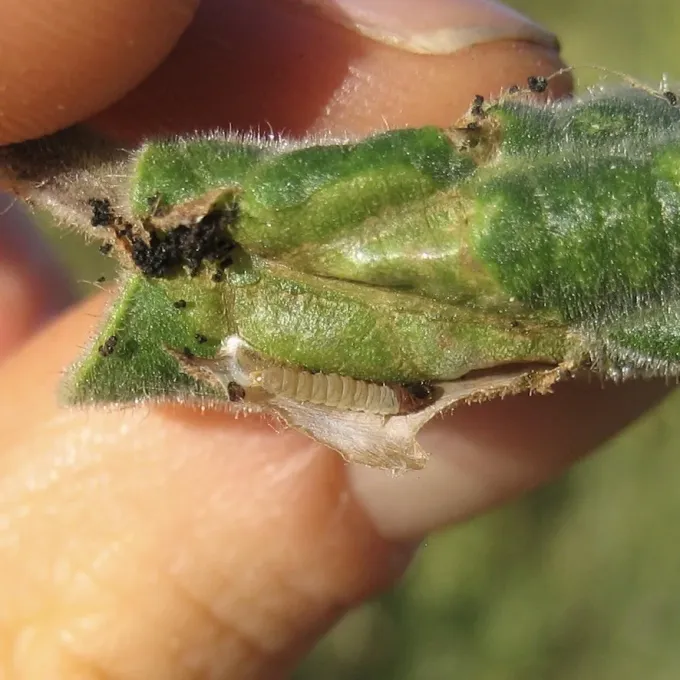
The larvae, which cause the most damage, are initially cream-colored with a black head, later turning greenish or pinkish as they mature and feed on plant tissues.
Due to its high reproductive potential, the moth can produce up to 10–12 generations per year, making it a persistent challenge for farmers and greenhouse managers.
What it damages
Although it primarily targets tomatoes, the tomato leafminer also feeds on potatoes, eggplants, peppers, and various wild solanaceous host plants.
The larvae mine into the leaves, creating galleries that destroy the photosynthetic tissue. This severely reduces the plant's ability to produce energy and grow.
The pest also burrows into stems and fruits. Fruit damage is particularly severe as the entry holes provide pathways for secondary pathogens and bacteria.
Infested fruits lose all market value, causing significant economic losses for commercial tomato producers who must discard damaged produce.
If not managed correctly, the infestation can lead to a total loss of the crop within a very short period during the peak growing season.
When it appears
The tomato leafminer thrives in warm climates, with temperatures between 25°C and 30°C being ideal for rapid population growth and development.
In greenhouses, the pest can persist throughout the entire year, taking advantage of controlled temperatures to maintain continuous breeding cycles.
Field infestations typically begin as weather warms up, when adult moths migrate from nearby greenhouses or protected areas to open field crops.
Monitoring is crucial throughout the summer months when the population growth is at its peak and the risk to the tomato crop is highest.
During the off-season, pupae may survive in the soil or plant debris, serving as a source for the next season's infestation if sanitation is neglected.
Signs of infestation
The most recognizable symptom is the presence of irregular, translucent "mines" on the leaves, which eventually turn necrotic and brown.
Inside these galleries, one can observe frass (insect excrement) as small black granules, a clear indicator distinguishing this pest from other leaf-mining species.
Fruits show visible entry holes, often located under the calyx, leading to localized rotting and deterioration of the fruit tissue surrounding the tunnel.
Adult moths are nocturnal and rarely seen during the day, so their presence is usually detected through the use of pheromone-baited traps.
- Yellowing and premature death of leaves.
- Wilting of stems due to larval mining.
- Deformed fruits with internal damage.
- Visible pupae attached to leaves or hidden in soil cracks.
Control measures
Effective management relies on Integrated Pest Management (IPM), which emphasizes a combination of cultural, biological, and chemical techniques.
Cultural practices include removing and destroying all infested plant residues, maintaining field hygiene, and using certified pest-free seedlings.
Biological control involves the introduction of natural enemies, such as predatory bugs like Macrolophus pygmaeus, and the use of bacterial biopesticides.
Mass trapping using pheromone lures is an essential tool to monitor population density and to physically reduce the number of male moths in the field.
Chemical control should be applied using a rotation of insecticides with different modes of action to prevent the development of pesticide resistance in the population.
Taxonomy
- Latin name
- Tuta
- Order
- Lepidoptera (butterflies)
- Family
- Gelechiidae
- EPPO code
- TUTASP
Discussion
No discussions yet — be the first.