
Vinegar eel
Turbatrix
Description
How to identify
The vinegar eel, biologically classified as Turbatrix aceti, is a free-living microscopic nematode belonging to the family Panagrolaimidae.
These organisms are part of the order Rhabditida and are characterized by their slender, thread-like bodies, usually measuring between 1 and 2 millimeters.
Unlike parasitic nematodes that infect roots, vinegar eels are saprobionts that thrive by feeding on bacteria and yeast in fermenting liquids.
They possess a remarkable ability to survive in environments with low pH levels, commonly found in vinegar, rotting fruit, and vegetable waste.
These nematodes reproduce via live birth, which allows them to colonize substrates rapidly under optimal temperature conditions.
What it damages
The primary concern regarding the vinegar eel is its presence as a contaminant in food manufacturing and agricultural produce storage.
They do not cause damage to growing crops in the field; instead, they target harvested products that have begun the process of fermentation.
Infestation leads to accelerated spoilage, unpleasant odors, and the degradation of the product's texture, making it unsuitable for processing or sale.
In industrial vinegar production, high populations of these nematodes can interfere with fermentation processes and require costly sanitation measures.
Economic losses are mainly related to the rejection of batches of agricultural produce that show signs of contamination and secondary bacterial growth.
When it appears
Vinegar eels do not follow a strict seasonal cycle, as their presence is dictated by the availability of fermentable organic matter.
They are most active in warm environments, with an ideal temperature range between 20°C and 30°C for rapid population expansion.
In climate-controlled storage facilities or food processing plants, they can remain active throughout the entire year.
Seasonal fluctuations in crop harvesting increase the risk of infestation, as more organic waste becomes available for potential colonization.
While they can withstand cooler temperatures by entering a state of reduced activity, they do not necessarily perish during winter months in protected structures.
Signs of infestation
The first sign of an infestation is often a slight cloudiness or turbidity in liquids stored in containers.
On solid produce, you may notice softened spots that are accompanied by a sharp, acidic, or vinegar-like odor indicating fermentation.
- Clusters of small, worm-like organisms accumulating on the rims or surfaces of containers.
- Rapid softening and discoloration of vegetable tissue.
- A slimy surface film forming on stored fruits and vegetables.
Detection is best achieved through careful observation of stored batches, especially those kept in high-moisture conditions.
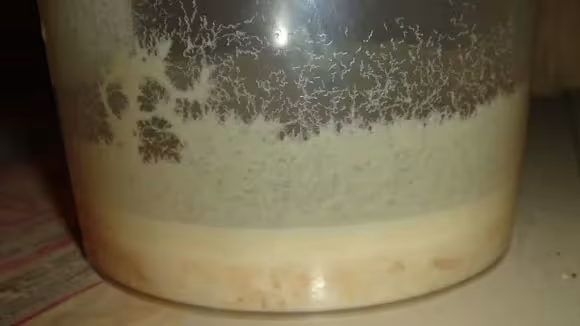
In advanced stages of contamination, the movement of masses of nematodes may become visible to the naked eye as a shimmering layer on the substrate.
Control measures
Effective control of vinegar eels relies heavily on maintaining rigorous sanitary standards in all areas where produce is handled or stored.
Regular cleaning and disinfection of storage containers, crates, and processing machinery are essential to prevent the establishment of colonies.
Controlling moisture levels and ensuring proper aeration in storage facilities can significantly inhibit the development of fermenting environments.
Promptly removing and disposing of rotten or damaged produce prevents the spread of nematodes to healthy batches.
Maintaining temperature stability in storage and avoiding contamination from untreated organic waste are the primary preventive strategies.
Taxonomy
- Latin name
- Turbatrix
- Order
- Nematodes
- Family
- Panagrolaimidae
- EPPO code
- TURBSP
Discussion
No discussions yet — be the first.