
Chrysanthemum leaf miner
Trypeta zoe
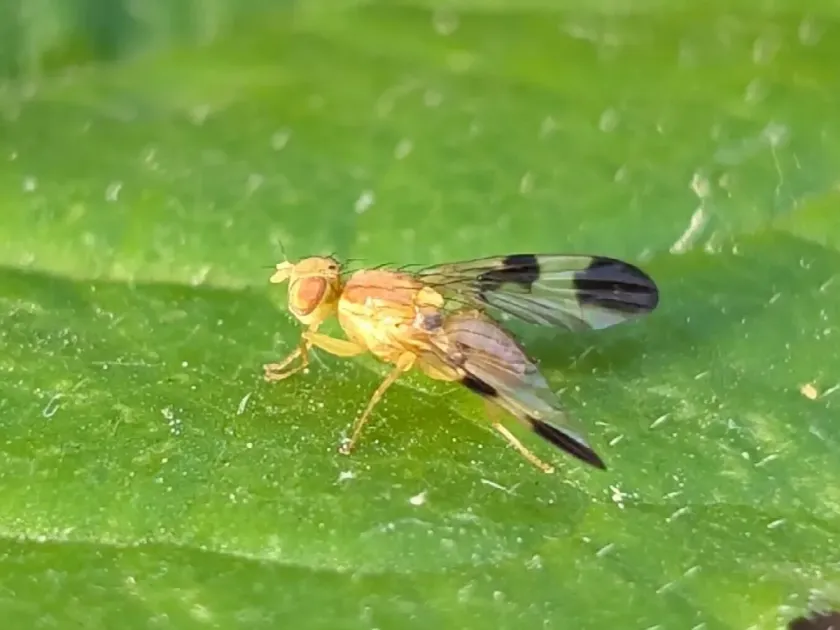
Description
How to identify
The chrysanthemum leaf miner (Trypeta zoe) belongs to the Tephritidae family, also known as the fruit fly or peacock fly family, within the order Diptera.
Adult flies are relatively small and characterized by patterned wings, which is a distinguishing feature of many species within this particular taxonomic group.
Their bodies are typically yellowish or brown, providing effective camouflage against the foliage of their host plants during the resting phase.
The larvae are apodous (legless) and possess a maggot-like body structure, perfectly adapted to live and tunnel within the soft internal tissues of leaves.
Correct identification often requires close inspection of the leaf patterns and, in professional settings, examination of the pupal stages to confirm the species.
What it damages
This pest primarily targets plants in the Asteraceae family, with cultivated chrysanthemums being the most frequent victims of infestation.
The larvae feed by creating winding tunnels, commonly referred to as mines, beneath the surface of the leaf epidermis.
As larvae consume the mesophyll tissue, they disrupt the plant's ability to perform photosynthesis, leading to reduced overall vigor and growth.
Heavy infestations can cause significant aesthetic damage, making flowers and foliage unsuitable for ornamental use or commercial sale.
If left unchecked, high larval density can lead to total defoliation of the plant, especially in young and sensitive horticultural varieties.
When it appears
Adult activity typically begins in late spring, following the emergence from overwintering pupae buried in the soil or plant debris.
The insects proceed through multiple generations during the growing season, provided that climate conditions remain conducive to their development.
In temperature-controlled greenhouse environments, the lifecycle can continue throughout the year without a distinct seasonal pause.
Females lay eggs on the undersides or surfaces of leaves, timing their reproduction with the availability of fresh vegetative growth.
Peak infestation periods often coincide with mild, humid weather patterns that promote both rapid plant growth and fly proliferation.
Signs of infestation
The most reliable sign of infection is the appearance of visible, serpentine white trails forming on the leaves of the host plant.
These mines start small but widen significantly as the larvae grow larger, eventually turning brown and necrotic as the leaf tissue dies.
- Winding, silvery trails on the upper leaf surface.
- Stunted leaf growth and curling of young foliage.
- Necrotic brown patches appearing where mines have been active.
- Small exit holes created by larvae when they drop to the soil to pupate.
- Overall decline in plant health and flower size.
Close inspection often reveals the larva inside the mine, particularly toward the end of the tunnel where it is feeding most actively.
Control measures
Sanitation is the first line of defense, which involves the removal and destruction of all infested plant material to prevent the next generation.
Yellow sticky cards are highly effective tools for both monitoring the presence of adult flies and trapping them to reduce overall population numbers.
Systemic insecticides are frequently required in professional floriculture to reach larvae that are protected inside the leaf tissues.
Promoting a healthy environment with proper plant spacing and airflow helps reduce the humidity levels that favor pest outbreaks.
Biological control agents, such as specific parasitic wasps, can be utilized in greenhouse settings to naturally manage leaf miner populations.
Taxonomy
- Latin name
- Trypeta zoe
- Order
- Diptera (flies)
- Family
- Tephritidae
- EPPO code
- EURBZO
Discussion
No discussions yet — be the first.