
Mugwort fly
Trypeta artemisiae
Description
How to identify
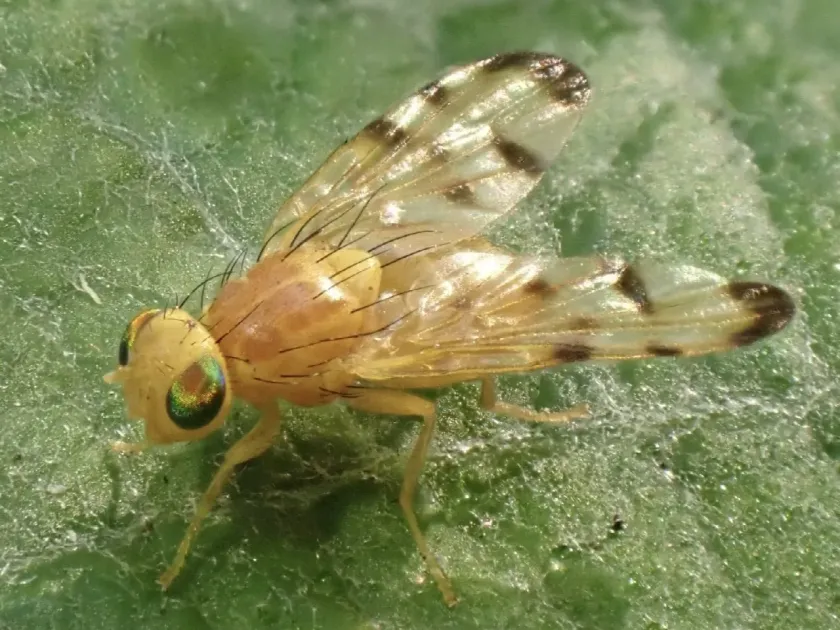
The mugwort fly (Trypeta artemisiae) belongs to the Tephritidae family, also known as fruit flies or peacock flies. Adults are recognized by their distinct wing patterns, which feature complex dark bands typical for this family.
These flies are small insects with bodies covered in fine hairs. Their coloration is usually muted, ranging from brownish to yellow, which helps them blend into the foliage of their host plants.
The larvae are endophagous, meaning they live and feed inside the tissues of host plants. They are typically cylindrical and legless, perfectly adapted to the narrow environment within a leaf.
The life cycle involves eggs being laid directly into the epidermis of the leaf. This biological strategy protects the offspring from external environmental fluctuations and many types of predators.
Pupation primarily occurs in the soil or within plant debris near the host. This overwintering strategy makes the species resilient to cold temperatures during the dormancy phase.
What it damages
The primary host for Trypeta artemisiae is the mugwort (Artemisia) genus. However, the pest can shift to other members of the Asteraceae family, potentially impacting decorative plants and agricultural herbs.
Damage is exclusively caused by the mining activity of the larvae. As they consume the leaf parenchyma, they create winding tunnels that disrupt the plant's ability to perform photosynthesis.
Economic damage is characterized by a reduction in plant quality. For medicinal or aromatic crops, even minor cosmetic damage caused by miners can significantly reduce the market value of the harvest.
Extensive mining leads to chlorosis and tissue necrosis. Once the leaf tissue is compromised, it becomes highly susceptible to secondary infections by fungi and bacteria.
In cases of high infestation, the plant's overall growth is stunted, and it may suffer from premature leaf drop, which severely drains the energy reserves of the perennial plant.
When it appears
The emergence of adult flies typically begins in late spring, following the onset of warmer temperatures that coincide with the active vegetative stage of host plants.
Multiple generations can occur throughout the growing season. This creates a prolonged risk period for susceptible crops, requiring ongoing observation and management.
Adult activity is highest on calm, warm, and sunny days. During these times, mating and oviposition (egg-laying) processes are most intensive, accelerating the infestation cycle.
The larval stage duration is highly dependent on ambient temperature and host plant vigor. Rapid development can lead to a quick succession of generations if conditions remain favorable.
As autumn approaches and temperatures drop, the final generation of larvae pupates, entering a period of diapause in the soil until the next spring season.
Signs of infestation
The most prominent sign of infestation is the appearance of leaf mines—tortuous, light-colored channels created by larvae beneath the upper leaf surface.
Close inspection of these mines often reveals small dark pellets, which are the excrement (frass) left by the larvae as they tunnel through the leaf parenchyma.
Affected leaves may show signs of wilting, yellowing, or distortion. In advanced stages, the damaged skin of the leaf may rupture, creating holes in the leaf lamina.
Plants under significant pressure will exhibit a lack of vitality, with leaves becoming brittle or dying off completely, which indicates that the larvae have destroyed too much green tissue.
Observing the presence of small flies hovering around the plants during the daytime is another indicator, especially during the active egg-laying season.
Control measures
Effective management requires an integrated approach that focuses on both preventive cultural practices and targeted chemical interventions when threshold levels are exceeded.
Sanitation is a critical preventive measure. Removing and destroying infested plant material prevents larvae from completing their life cycle and returning to the soil as pupae.
Chemical control usually involves the use of systemic insecticides. These are essential because they are absorbed into the leaf tissues, reaching the larvae that are protected within the mines.
Biological control options, such as encouraging natural parasitoids or using microbial-based insecticides, can be effective alternatives in organic or integrated farming systems.
- Implement a strict crop rotation schedule.
- Use yellow sticky traps to monitor adult fly populations.
- Ensure adequate soil cultivation to disrupt pupation sites.
Taxonomy
- Latin name
- Trypeta artemisiae
- Order
- Diptera (flies)
- Family
- Tephritidae
- EPPO code
- TRYEAR
Discussion
No discussions yet — be the first.