
Trypeta
Trypeta
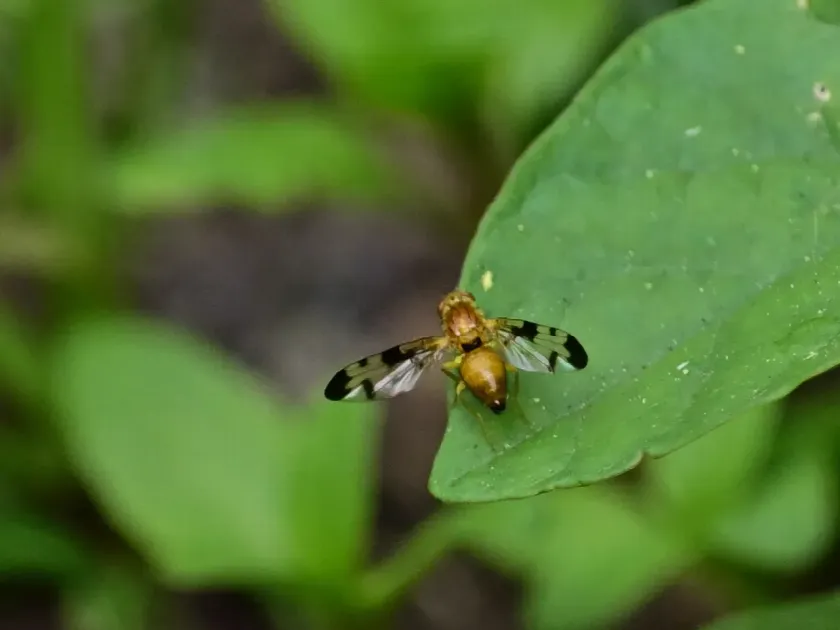
Description
How to identify
The genus Trypeta belongs to the Tephritidae family, commonly known as fruit flies or peacock flies, which are widely distributed worldwide. These insects are small flies with wings frequently adorned with distinctive dark patterns and spots.
Adult specimens possess a well-developed lapping-type mouthpart. A notable trait of the imagines is their manner of making short, jerky flights and a specific "dancing" gait, during which they frequently spread their wings.
Trypeta larvae have the typical morphology of dipteran maggots—they are legless, worm-like, and appear white or yellowish, with a pointed anterior end housing the mouth hooks used to feed on plant tissues.
The taxonomy of the genus encompasses numerous species, many of which have narrow dietary specialization. Identifying a specific species is often difficult due to the high morphological similarity among members of the group.
For accurate pest identification, entomologists perform detailed analysis of the imago, focusing on wing venation patterns and the structure of male genitalia, which is critical for developing effective management strategies.
What it damages
Members of the Trypeta genus specialize in damaging various plant species, including both ornamental flowers and certain agricultural crops, particularly within the Asteraceae family.
The larvae of most species are phytophagous, developing inside flower heads, stems, or fruits of the host plant. They consume internal tissues, which hinders the proper development of reproductive organs.
Significant economic losses occur during mass outbreaks, where damaged plants lose their decorative value, seed quality is compromised, or the entire harvest is destroyed.
Damaged plant tissues become highly susceptible to secondary infections, such as fungal diseases and bacterial rots, which spread through the tunnels created by the larvae.
In large-scale agricultural operations, this pest can spread over significant areas, creating infestation foci that require prompt intervention and strict quarantine monitoring.
When it appears
The development cycle of Trypeta is closely linked to the phenology of the host plant. These insects usually overwinter in the pupal stage in the soil or within dry plant debris, protected from harsh environmental conditions.
The mass emergence of adults coincides with the active growth and flowering periods of the target plants. Depending on the climatic zone, fly activity can be observed from late spring through mid-summer.
Females lay eggs directly into the tissues of buds or flower heads by piercing them with their sharp ovipositor, ensuring the larvae have immediate access to nutrient-rich organs.
The generation development takes from a few weeks to a month. Under favorable weather conditions and sufficient food availability, multiple generations of the pest can develop within a single season.
By autumn, the larvae complete their feeding and leave the host plants, entering the soil for pupation to prepare for the diapause period until the following spring.
Signs of infestation
The primary sign of infestation is the presence of characteristic punctures on the buds, often accompanied by flower deformation or premature wilting without visible external causes.
- Darkening and necrosis of tissues at larval entry points.
- Presence of excrement inside damaged flower heads.
- Delayed bud opening and asymmetrical growth.
- Detection of white larvae upon dissection of the flower head or bud.
- Premature petal drop upon minor mechanical disturbance.
Visual inspection of fields allows for the detection of adults on leaves and flowers during early morning or evening hours, when their activity levels reach a peak.
During systematic monitoring, yellow sticky traps are used in fields, which effectively attract the imagines and help estimate the size of the pest population.
Early detection of the first symptoms allows for significantly limiting the spread of the pest and avoids the need for intensive chemical treatments.
Control measures
The management system for Trypeta is based on an integrated approach, combining agrotechnical, mechanical, and, if necessary, chemical methods to suppress insect populations.
A key agrotechnical method is deep autumn plowing or soil cultivation in areas where pupae overwinter, which contributes to their destruction or freezing.
It is important to timely remove and destroy plant residues and infested flower heads before larval emergence to break the pest's life cycle for the current season.
The use of biological insecticides based on entomopathogenic fungi or bacteria allows for the reduction of adult numbers without causing significant harm to beneficial pollinators.
In cases where the economic injury level is exceeded, treatments with systemic insecticides are recommended during the peak flight of the flies, strictly adhering to dosage and application regulations.
Taxonomy
- Latin name
- Trypeta
- Order
- Diptera (flies)
- Family
- Tephritidae
- EPPO code
- TRYESP
Discussion
No discussions yet — be the first.