
Picture-winged fly
Trupanea femoralis
Description
How to identify
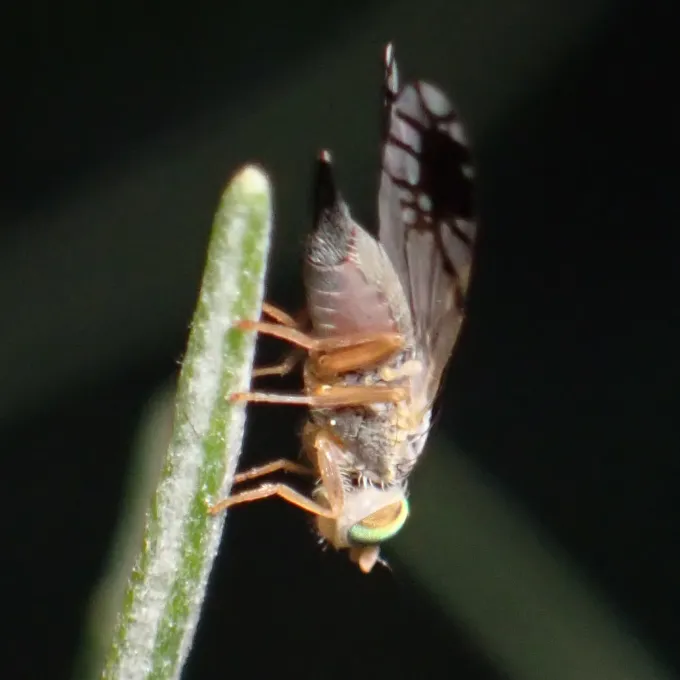
The picture-winged fly (Trupanea femoralis) belongs to the Tephritidae family, order Diptera. Adults are well-known for the intricate, net-like patterns on their wings, which give them their common name.
These flies are generally small, ranging from 3 to 6 mm in body length. Their coloration often ranges from pale yellow to dark brown, serving as camouflage on plants.
The larvae are typically maggot-shaped, white or creamy, and lack legs. They are specialized feeders adapted to living inside the tissues of host plants, particularly flower heads.
The life cycle involves four stages: egg, larva, pupa, and adult. Understanding this metamorphosis is key to timing interventions effectively during the growing season.
Field identification is challenging due to the large diversity within the Tephritidae family, often requiring microscopic examination of adult wing patterns for precise classification.
What it damages
The larvae of Trupanea femoralis primarily target plants within the Asteraceae family. They are known to infest the flower heads and developing seeds of these plants.
Damage occurs when larvae feed on the internal parts of the bud, causing deformation, rot, or the total failure of the flower to bloom properly.
Commonly affected plants include various ornamental species like asters, chrysanthemums, and various wild or cultivated sunflower species.
The economic impact is significant for seed producers and flower growers, as the damage ruins the marketability of the blossoms and reduces viable seed yield.
In cases of severe infestation, entire batches of flowers may be rendered unsellable due to poor development and signs of internal decay caused by larval feeding.
When it appears
Adult flies typically emerge in late spring or early summer, coinciding with the peak blooming period of their preferred host plants.
Females lay eggs directly into the buds, using their ovipositors to penetrate the protective layers of the flower head.
The duration of the developmental cycle depends heavily on temperature; warmer conditions can lead to multiple overlapping generations within a single season.
As the season progresses toward autumn, the population declines as the flies prepare to overwinter in the pupal stage, often buried in the soil.
Predicting the emergence based on local climate and plant phenology is essential for applying preventive treatments before the larvae settle inside the buds.
Signs of infestation
Initial signs of infestation often appear as stunted growth or irregular shape of the flower buds, which may look withered or prematurely darkened.
Upon inspecting the flower head, one may find small entry points or exit holes, indicating the presence of larvae or the emergence of adults.
Deformed petals and a localized lack of symmetry in the flower head are common symptoms, often accompanied by decay if secondary infections occur.
Infected plants may show signs of premature petal drop, as the internal structures that hold the flower together are compromised by the larvae.
- Darkened or brown spots on buds.
- Deformed or asymmetrical flower development.
- Presence of larval excrement in flower tissues.
Control measures
Manual removal and destruction of infested buds are the most effective non-chemical methods to reduce the fly population and prevent spread.
Chemical control should be timed to target adult flies before they deposit their eggs, as larvae protected within the flower heads are difficult to reach with sprays.
Soil cultivation at the end of the season can disturb the overwintering pupae, significantly reducing the pressure from the next generation the following spring.
The use of yellow sticky traps is a recommended practice to monitor adult populations and determine the precise timing for insecticide application.
Maintaining a weed-free zone around flower beds, specifically targeting wild Asteraceae species, helps break the life cycle and reduces infestation risks.
Taxonomy
- Latin name
- Trupanea femoralis
- Order
- Diptera (flies)
- Family
- Tephritidae
- EPPO code
- TRUPFE
Discussion
No discussions yet — be the first.