
Trupanea
Trupanea
Description
How to identify
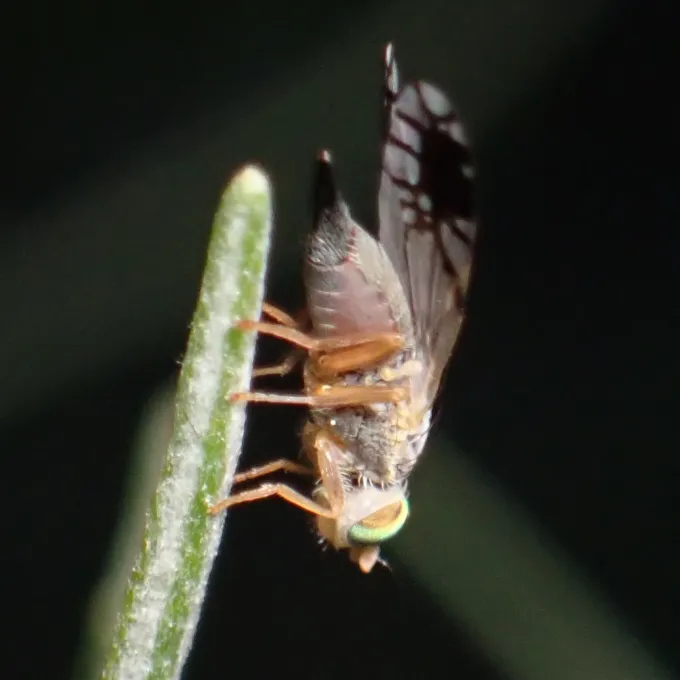
Trupanea is a genus of fruit flies belonging to the family Tephritidae. These insects are characterized by their intricate, often reticulated or spotted wing patterns, which serve both as camouflage and for signaling purposes.
Adult flies typically measure between 3 and 6 mm in length. Their body color ranges from yellowish-brown to nearly black, often covered with dense hair. The head is noticeably large in proportion to the body, featuring prominent compound eyes.
The insect's life cycle involves complete metamorphosis, consisting of four stages: egg, larva, pupa, and adult. This cycle is strictly tied to the development of plants within the Asteraceae family.
The larvae are legless, typical of tephritid flies, with a whitish or yellowish cylindrical body. They possess specialized mouth hooks that allow them to feed efficiently on plant tissues within flower heads.
Overwintering usually occurs in the pupal stage, buried within plant debris or the upper layer of the soil, which provides the necessary protection to survive the dormant season.
What it damages
The primary hosts for Trupanea species are plants in the Asteraceae family. This includes a wide range of ornamentals, wild species, and several field crops that are sensitive to seed damage.
The pest primarily targets flower heads, where larvae feed on developing ovules, seeds, and the receptacle tissue. This feeding behavior is particularly devastating for seed production fields.
Significant economic losses occur when fly populations reach high levels. Infested flower heads show poor seed set, reduced viability, and a decline in the aesthetic value of ornamental flowers.
Beyond direct tissue consumption, the entry holes created by larvae serve as infection sites for secondary pathogens, such as various types of bacterial soft rots and molds.
In cases of severe infestation, entire harvests of specific seed crops can be lost, emphasizing the importance of monitoring and intervention programs.
Signs of infestation
A visual indication of an infestation is the presence of small entry holes on the flower heads. Often, the tissue surrounding these punctures may appear darkened or necrotic.
Dissecting the flower head often reveals frass (larval excrement), which appears as dark, granular particles. Larvae are typically found hidden deep within the receptacle or internal floral parts.
Infested plants may exhibit deformed flower heads and premature wilting. The seeds within the infested heads are often shriveled, underdeveloped, or fail to form entirely.
Adult flies can be spotted on the surface of plants during sunny periods. They move actively across the flowers, searching for suitable sites to oviposit (lay eggs).
The growth of fungal infections on damaged tissues often results in visible mold, which serves as a secondary sign that the plant has been compromised by insect feeding.
Control measures
Crop rotation is the foundation of management. Avoiding the planting of susceptible Asteraceae crops in the same area for consecutive seasons helps prevent the buildup of pupae in the soil.
Deep plowing after the harvest (winter plowing) is an effective mechanical measure that buries plant debris and destroys the overwintering pupal sites of the fly.
Proper sanitation, including the removal and destruction of weeds belonging to the Asteraceae family around fields, helps reduce the local breeding population.
In cases of high infestation, insecticides with contact or systemic action may be required. Applications must be timed precisely with the flight of adult flies before larvae penetrate the flower heads.
Monitoring using pheromone traps or yellow sticky traps is essential to determine the population density and decide on the exact timing for chemical or biological control measures.
Taxonomy
- Latin name
- Trupanea
- Order
- Diptera (flies)
- Family
- Tephritidae
- EPPO code
- TRUPSP
Discussion
No discussions yet — be the first.