
Booklouse
Trogium pulsatorium
Description
How to identify
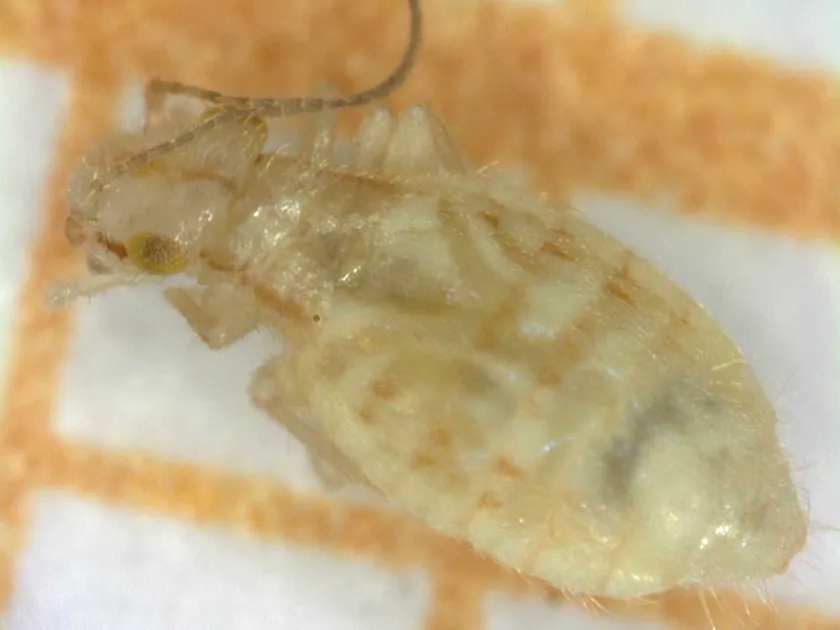
The booklouse, Trogium pulsatorium, is a small insect belonging to the order Psocoptera and the family Trogiidae, commonly found in damp environments.
Adults measure approximately 1–2 mm in length and have a soft, pale, translucent body that is often creamy-white or light yellow in color.
They possess long, thread-like antennae and well-developed hind legs, although they are wingless or have vestigial wings, preventing them from flying.
The development cycle consists of egg, nymphal stages, and adult, with development significantly accelerated by temperatures between +20°C and +30°C.
These insects are highly sensitive to humidity and tend to aggregate in areas where moisture levels are high enough to support fungal growth.
What it damages
Booklice are primary scavengers that feed on starch, glue, paper, and microscopic molds, often causing damage to stored organic products.
In agricultural settings, they infest grain and seed stocks, primarily feeding on the embryo or dust and debris, which reduces the quality of the seed.
They are notorious pests in libraries and museums, where they consume binding adhesives, paper fibers, and dried plant specimens in herbarium collections.
Their feeding activity leaves behind small holes and dust, compromising the integrity and aesthetic value of books and sensitive materials.
Additionally, their presence often indicates underlying moisture issues, as they thrive in environments where mold spores are abundant.
Signs of infestation
Visual detection of small, whitish insects scurrying across shelving units, packaging, or grain surfaces is the most common indicator of infestation.
Damage to documents or book spines, characterized by fine feeding marks and accumulated debris, points to established populations.
A musty or damp odor in a storage area often correlates with the presence of booklice, as they are drawn to high-humidity zones.
In grain silos, the presence of these insects can be identified by analyzing grain samples for the presence of live nymphs and cast skins.
In rare instances, males produce a rhythmic tapping sound by striking their abdomen against a surface, which can be heard in silent rooms.
Control measures
The most effective strategy for managing booklice is the reduction of environmental moisture, keeping relative humidity consistently below 60%.
Maintaining high standards of warehouse sanitation, including the regular removal of dust and spillages, eliminates essential food sources.
Improving air circulation and ventilation in storage areas prevents the buildup of humidity and the subsequent growth of the molds they feed on.
- Using dehumidifiers to lower atmospheric moisture levels.
- Sealing all entry points and gaps to control micro-environments.
- Applying targeted insecticides in cracks and crevices if necessary.
For severe infestations in stored commodities, professional fumigation is recommended to eradicate the population without damaging the goods.
Taxonomy
- Latin name
- Trogium pulsatorium
- Family
- Trogiidae
- EPPO code
- TROUPU
Discussion
No discussions yet — be the first.