
Booklouse
Lepinotus
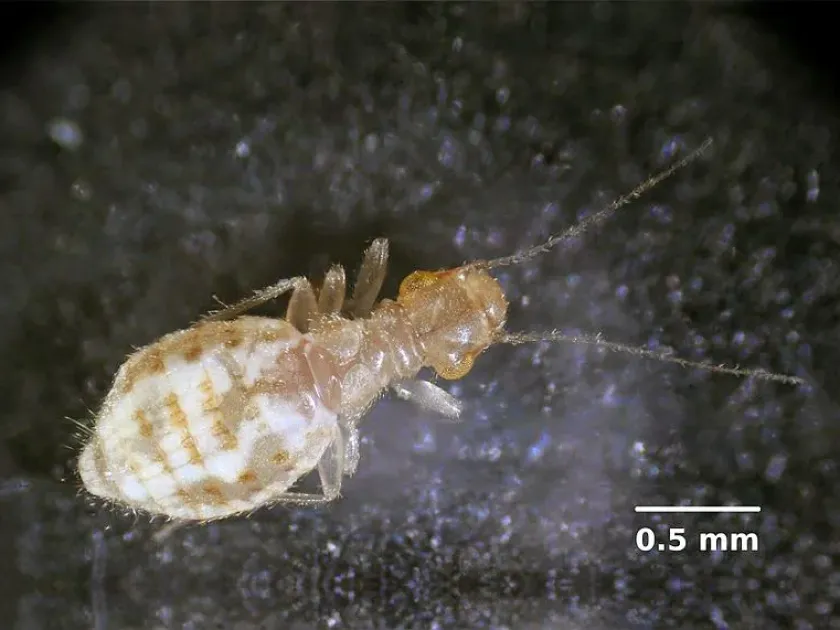
Description
How to identify
The booklouse (genus Lepinotus) belongs to the order Psocoptera and the family Trogiidae. These are tiny insects, typically 1 to 2 mm in length, characterized by a flattened, pale yellow to brown body.
A key diagnostic feature is the presence of reduced or vestigial wings, which renders the adults flightless and restricts their movement to crawling.
They possess chewing mouthparts designed to graze on microscopic particles, such as fungal spores and organic debris found in damp storage conditions.
The life cycle is simple, involving an egg stage, several nymphal instars, and the adult stage, which resembles the younger nymphs morphologically.
Booklice thrive in environments with high humidity and are highly sensitive to desiccation, causing them to reside in dark, hidden cracks and crevices.
What it damages
Booklice are considered pests of stored products, primarily infesting grain, flour, feed, and other dry goods that have been stored in damp conditions.
They do not usually attack healthy, dry grain, but they exploit grain that has begun to develop fungal growth, feeding on the mold and potentially damaging the seed coat.
Infestation causes quality degradation through contamination with waste products and cast skins, which can render the stored product unfit for commerce.
In seed stocks, heavy infestations can result in reduced germination rates if the insects feed upon the germ area of seeds that have softened due to moisture.
The presence of large populations of booklice is a strong indicator of storage management failures, particularly regarding moisture control and ventilation.
Signs of infestation
The most common sign of an infestation is the observation of tiny, rapidly moving insects on the surface of grain or within samples taken from storage facilities.
Infested areas often show a fine, dusty residue composed of frass and cast-off insect cuticles, which is noticeable upon close inspection of storage surfaces.
A musty or moldy odor emanating from the grain pile is a typical indicator of the high-moisture conditions that support booklouse survival and reproduction.
They are frequently found inhabiting dark corners, gaps in floorboards, beneath storage pallets, and in areas where grain debris has been allowed to accumulate.
- Presence of live insects during grain movement.
- Accumulation of fine dust and shed skins (exuviae).
- Musty, moldy smell from the storage pile.
Control measures
The primary control strategy is the management of moisture levels; maintaining grain moisture content below 13-14% makes the environment unsuitable for booklice.
Sanitation is critical; all spillages, dust, and debris must be removed from warehouses regularly to eliminate breeding grounds and hiding spots.
Active aeration systems should be used to regulate the temperature and humidity of the grain mass, thereby preventing the mold growth that serves as food.
For severe infestations, fumigation of the warehouse or stored product using registered phosphine-based chemicals is necessary to eradicate the population.
Proactive disinfection of empty storage bins and warehouses using aerosol or surface sprays prior to the new harvest is a mandatory step in integrated pest management.
Taxonomy
- Latin name
- Lepinotus
- Family
- Trogiidae
- EPPO code
- LEPNSP
Discussion
No discussions yet — be the first.