
Common grain psocid
Lepinotus reticulatus
Description
How to identify
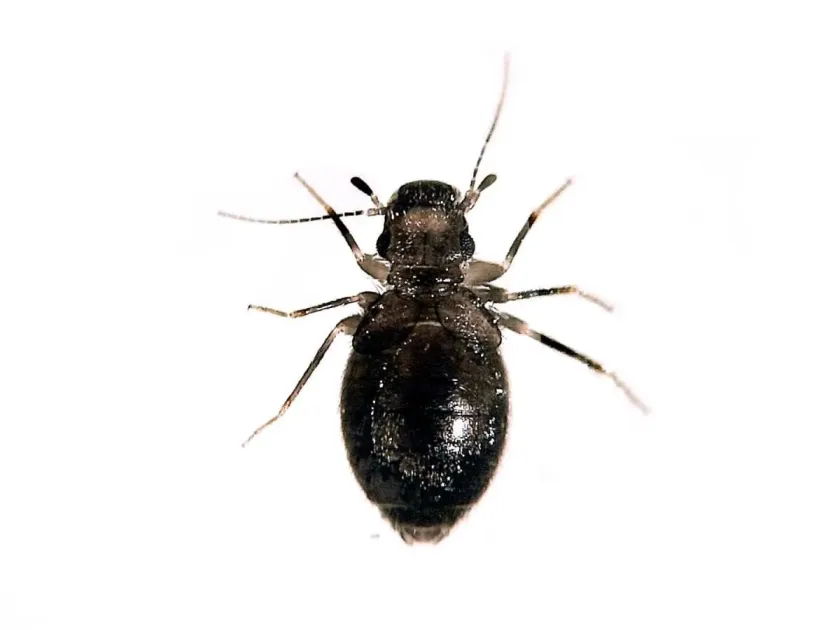
The common grain psocid Lepinotus reticulatus belongs to the order Psocoptera and the family Trogiidae. These insects are small, typically measuring 1.5 to 2 mm in length, and have a flattened, brownish body.
Adults possess long, filiform antennae and, in some cases, distinctive reticulated wings. They are highly active and move rapidly, which often makes them difficult to capture or observe closely without specialized equipment.
Nymphs are similar to adults in appearance but are smaller and lack fully developed reproductive organs. They go through several molting stages, shedding their skins, which can be found in infested grain.
This species is highly dependent on environmental conditions, particularly humidity levels. They thrive in environments where mold and fungal growth occur due to moisture accumulation.
The life cycle involves incomplete metamorphosis. Eggs are laid in protected cracks and crevices of storage facilities, ensuring the survival of the next generation in hidden areas.
What it damages
The primary diet of Lepinotus reticulatus consists of microscopic molds and fungi growing on stored products. Therefore, they are considered indicator pests of poor storage conditions.
They infest various agricultural products, including cereal grains, flour, and animal feed, especially when moisture levels rise above the safe limit for storage.
While they rarely cause direct physical damage to healthy, dry grain, their presence leads to sanitary contamination, including the accumulation of fecal matter and cast skins.
Their activity facilitates the spread of fungal spores throughout the grain pile, potentially causing localized heating and further spoilage of the stored commodities.
Beyond grain stores, they are notorious pests in museums and libraries, where they feed on mold growing on books, paper archives, and glue used in bindings.
When it appears
As a synanthropic species, the common grain psocid is active year-round in temperature-controlled storage facilities, provided humidity levels remain sufficient for mold growth.
Increased activity is typically observed during periods of high ambient humidity or when improper ventilation leads to condensation within the storage environment.
Development is most rapid in warm temperatures between 20°C and 25°C. In unheated warehouses, population growth slows down significantly during winter months but does not necessarily collapse.
Seasonal monitoring is crucial, especially in early spring, when temperature fluctuations between the inside and outside of the storage bin often cause moisture issues.
Persistent infestations often correlate with seasonal storage patterns, where old grain residues are left over, providing a habitat for the population to survive until new stock arrives.
Signs of infestation
The first sign of infestation is usually the visual sighting of numerous tiny, fast-moving insects on the surface of grain bags, walls, or cleaning equipment.
A "dusty" appearance on product surfaces, caused by the accumulation of excrement and shed skins, is a strong indicator of an established colony.
- Presence of a musty or moldy odor within the storage unit.
- Visual detection of insects in dust accumulated in corners or behind equipment.
- Localized heating of grain bulk.
- Damage to packaging labels or paper materials caused by mold feeding.
In cases of heavy infestation, movement on the surface of stored grain can look like a shimmering film, which is caused by thousands of psocids moving simultaneously.
Frequent inspections of dark, damp corners and areas with poor air circulation are essential for early detection of these pests.
Control measures
The most effective management strategy for Lepinotus reticulatus is the strict control of moisture and humidity levels within storage facilities.
Maintaining grain moisture content below 12–14% prevents the development of the molds that these insects rely on as a primary food source.
Good warehouse hygiene, including the removal of grain spills, dust, and debris, is critical to eliminate potential breeding sites between storage cycles.
If an infestation reaches economic thresholds, professional fumigation or the application of residual insecticides may be necessary to suppress the population.
Proper building maintenance, such as sealing structural cracks and improving ventilation systems, significantly reduces the likelihood of psocid establishment.
Taxonomy
- Latin name
- Lepinotus reticulatus
- Family
- Trogiidae
- EPPO code
- LEPNRE
Discussion
No discussions yet — be the first.