
Trirhithrum senex
Trirhithrum senex
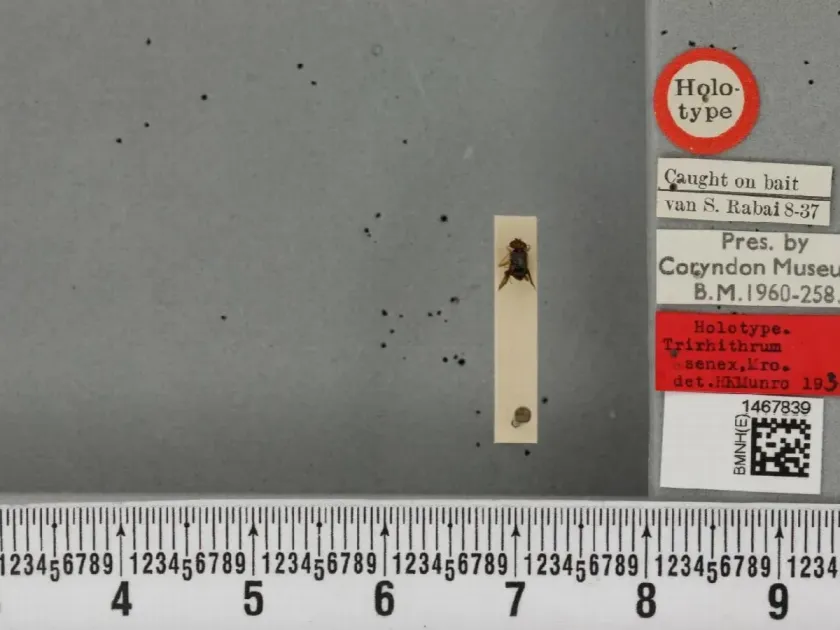
Description
How to identify
Trirhithrum senex is a member of the Tephritidae family, order Diptera. These fruit flies are known for their distinct wing patterns and specific host plant associations.
Adults are small insects that often blend into their surroundings, making them difficult to detect during the early stages of an infestation.
Larvae are typically legless maggots, equipped with specialized mouthparts for feeding within the succulent tissues of host fruits.
Accurate field identification often requires specialized expertise, as the species shares morphological traits with other regional fruit flies.
Entomologists rely on examining wing venation and male genital structures to definitively distinguish this species from related ones.
What it damages
The primary damage is caused by the larval stage, which feeds on the internal tissues of the fruit, leading to rapid decay.
Various tropical and subtropical fruit crops serve as hosts, significantly impacting their agricultural value in affected regions.
Secondary infections, such as bacterial or fungal rot, often follow the initial larval damage, rendering the fruit completely unmarketable.
Infested fruits frequently drop from the tree before reaching maturity, causing a direct reduction in total crop yield for farmers.
Even if the fruit remains on the branch, the presence of puncture marks and internal larval galleries destroys its quality for export.
When it appears
The lifecycle of Trirhithrum senex is highly dependent on the maturation schedule of their specific host plant varieties.
Adult females utilize their ovipositor to insert eggs into the fruit flesh, timing this with the availability of suitable host conditions.
After feeding, mature larvae exit the fruit and drop to the soil, where they undergo pupation to continue their developmental cycle.
Activity peaks are generally observed during warmer, more humid periods that favor both fly reproduction and fruit development.
Depending on the climatic conditions and host availability, multiple generations can occur within a single calendar year.
Signs of infestation
Visible puncture marks on the fruit skin are the earliest indicator of female oviposition activity during the fruit ripening stage.
Discoloration or bruising around these puncture points often signals that larval development has commenced inside the fruit tissue.
Softening of the fruit pulp, often accompanied by an unpleasant odor of decay, is a hallmark sign of advanced larval infestation.
Premature fruit drop is a critical red flag, alerting growers to a potential infestation that requires immediate scouting and intervention.
Opening an affected fruit typically reveals larvae tunneling through the flesh, confirming the presence of this specific pest.
Control measures
Effective management requires an integrated approach that focuses on reducing pest populations through sanitation and monitoring.
Sanitation practices, such as the rapid removal and destruction of fallen fruit, are essential for disrupting the insect's life cycle.
- Deploying pheromone-based monitoring traps in plantations.
- Utilizing protein-based bait sprays to attract and kill adult flies.
- Applying strict phytosanitary protocols for fruit transport.
- Encouraging natural biological control agents in orchards.
- Tilling the soil beneath trees to expose and destroy pupae.
Chemical control, if necessary, should be applied with precision to minimize environmental impact and adhere to safety standards.
Regular monitoring of pest levels is vital for timing interventions correctly and protecting the overall harvest quality.
Taxonomy
- Latin name
- Trirhithrum senex
- Order
- Diptera (flies)
- Family
- Tephritidae
- EPPO code
- TRRUSE
Discussion
No discussions yet — be the first.