
Trirhithrum inscriptum
Trirhithrum inscriptum
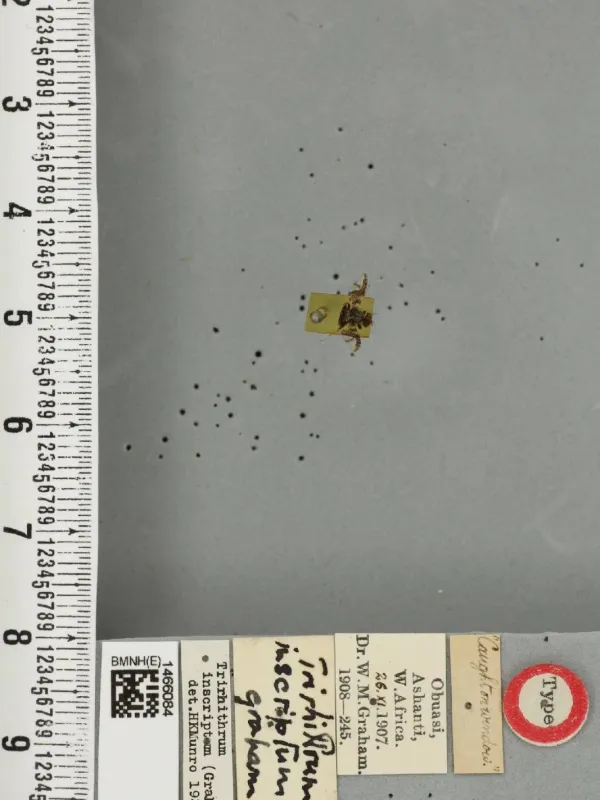
Description
How to identify
Trirhithrum inscriptum is a species of fruit fly belonging to the family Tephritidae. These insects are well-known in tropical regions for their potential to impact agricultural production and international trade in fresh produce.
Adult flies possess specific wing patterns which are characteristic of this genus. These patterns are essential for accurate field identification by agricultural inspectors and entomologists when surveying for pest presence.
The morphology of the adult fly is adapted for rapid flight and searching for host plants. Females have a specialized ovipositor designed to pierce the skin of fruits and deposit eggs beneath the surface.
Larvae are typical of fruit flies: creamy-white, legless, and conical in shape. They remain protected within the fruit for the duration of their development, making them difficult to target with direct sprays during their feeding stage.
Taxonomically classified under the order Diptera, this species is closely related to other serious pests like the Mediterranean fruit fly. Continuous monitoring and identification are vital to distinguish this species from harmless look-alikes.
What it damages
The primary hosts for Trirhithrum inscriptum include species of coffee (Coffea), where the larvae bore into the developing berries. This leads to the destruction of the coffee beans, rendering the harvest useless.
In addition to coffee, this fly may attack various tropical fruits. By feeding on the internal tissues, the larvae cause the fruit to decay rapidly, making it impossible to market or export the produce.
Damage often manifests as softening of the fruit flesh and internal breakdown. This causes significant yield losses and creates massive economic challenges for farmers operating in endemic areas.
The pest creates tunnels within the host tissue, which facilitates the invasion of secondary pathogens. This often leads to severe fruit rot, which can spread quickly through a plantation if not managed correctly.
Due to the risk this pest poses to international trade, many countries impose strict quarantine regulations on produce originating from areas where Trirhithrum inscriptum is present.
Signs of infestation
The earliest signs of infestation are the tiny entry points on the fruit skin, known as oviposition stings. These are often barely visible to the naked eye but can sometimes be identified by slight discoloration around the puncture.
As the larvae grow, the internal damage results in the fruit becoming discolored or mushy. The integrity of the fruit surface may eventually collapse as the larvae consume the internal pulp.
A major indicator is the premature ripening or dropping of fruit from the tree. If fallen fruit is collected and found to contain small, white maggots, it is a definitive sign of an active infestation.
Deformation of the fruit, such as unusual bumps or sunken areas, can occur due to the disruption of the normal growth of the tissue caused by the larval feeding process.
Increased adult activity around host trees is a key sign that a new generation of flies is emerging. This is often the time when farmers must be most vigilant to prevent further egg-laying.
Control measures
Sanitation is the most critical cultural control method. Fallen fruit must be gathered and destroyed—usually by burying it deeply or composting it properly—to kill the larvae before they emerge to pupate in the soil.
Monitoring is achieved through the use of synthetic pheromone traps or food-based attractants. These tools help farmers determine exactly when adult populations reach a threshold that necessitates control interventions.
Insecticide applications are primarily focused on the adult stage. Applying bait sprays, which combine a feeding attractant with a small dose of insecticide, is an efficient way to target the flies while minimizing environmental impact.
Biological control involves the introduction or conservation of natural enemies, such as parasitic wasps that attack the larvae of the fly. This can significantly reduce pest pressure in stable agricultural ecosystems.
Integrated Pest Management (IPM) is essential for long-term success. By combining cultural, chemical, and biological methods, producers can keep pest levels below the economic injury threshold while maintaining farm sustainability.
Taxonomy
- Latin name
- Trirhithrum inscriptum
- Order
- Diptera (flies)
- Family
- Tephritidae
- EPPO code
- CERTIN
Discussion
No discussions yet — be the first.