
Trirhithrum culcasiae
Trirhithrum culcasiae
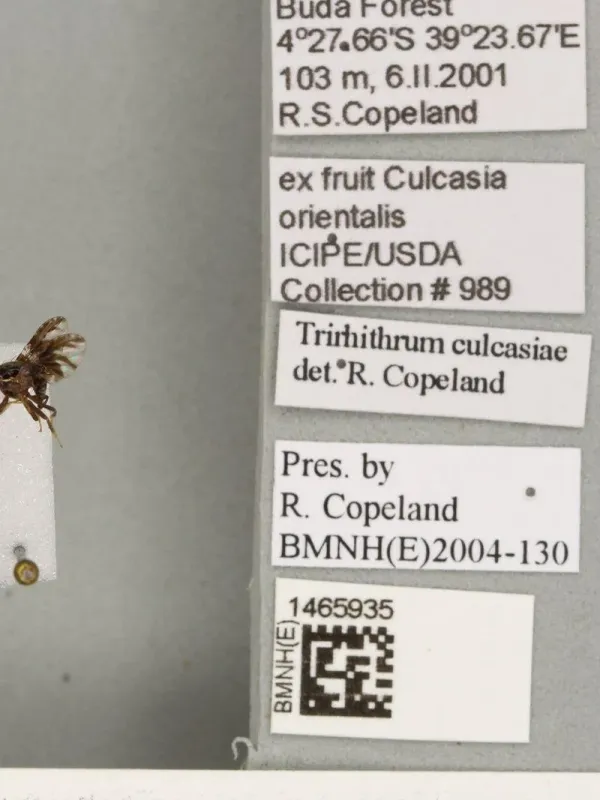
Description
How to identify
Trirhithrum culcasiae is a species of fruit fly belonging to the family Tephritidae. These insects are characterized by distinct wing patterns, which are common among members of the Trirhithrum genus.
Adult flies are relatively small and possess a specialized ovipositor. This organ is adapted for piercing the epidermal layers of host fruits to deposit eggs directly into the pulp.
The larvae are typically creamy-white, maggot-like creatures that develop within the fruit. They go through several larval stages while feeding on the internal fruit tissues.
Pupation generally occurs either in the soil or within the decaying fruit residue, depending on environmental factors like humidity and the host plant type.
Adults are primarily active during daylight, and their survival is highly dependent on climate conditions such as temperature and the presence of suitable host trees.
What it damages
The primary hosts for Trirhithrum culcasiae are plants within the Araceae family, particularly species of the genus Culcasia. The larvae feed on the developing pulp, causing direct damage.
Infested fruits undergo rapid degradation as the internal pulp is destroyed. This damage makes the fruit unmarketable and highly prone to secondary fungal infections.
Economic losses are significant, as large percentages of fruit crops may drop prematurely before maturity due to larval feeding activity.
The presence of larvae compromises the physiological development of the fruit, leading to stunted growth and poor fruit quality in commercial harvests.
Even moderate infestations can render an entire yield unfit for processing, as the internal decay spreads rapidly throughout the affected fruits.
Signs of infestation
Visible signs of infestation include small, dark punctures on the fruit surface. These are the entry points created by the female's ovipositor during egg-laying.
Around the puncture sites, the fruit often shows localized softening and discoloration, signaling that the pulp inside is beginning to break down.
When an infested fruit is opened, one can observe larval tunnels and a mass of decaying tissue mixed with larval excreta, which may emit an unpleasant odor.
Premature fruit drop is a strong indicator of an active pest population. Finding fallen fruit scattered under the canopy is a signal to inspect remaining fruit.
Mold growth or secondary rot often develops around the puncture holes, making the signs of infestation more obvious to the casual observer in the field.
Control measures
Sanitation is the most effective cultural control method. Removing and destroying fallen or visibly infested fruits prevents larvae from entering the soil to pupate.
The use of monitoring traps, such as pheromone or protein bait traps, helps track population levels and timing for potential intervention.
Biological control agents, including specific parasitoid wasps that target tephritid larvae, can be used to naturally manage population densities in stable ecosystems.
Chemical applications should be reserved for high-infestation scenarios and timed to coincide with the adult flight period to interrupt the mating cycle.
Tilling the soil under the host plants can disturb pupating larvae, significantly reducing the emergence of the next generation of adults in the upcoming season.
Taxonomy
- Latin name
- Trirhithrum culcasiae
- Order
- Diptera (flies)
- Family
- Tephritidae
- EPPO code
- TRRUCU
Discussion
No discussions yet — be the first.