
Trinoton
Trinoton
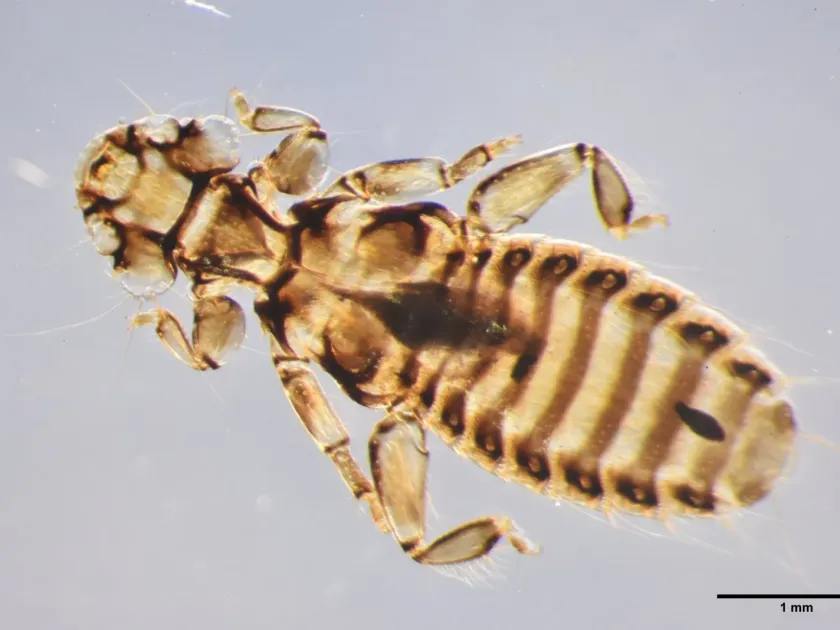
Description
How to identify
Trinoton is a genus of bird lice belonging to the order Phthiraptera and the family Menoponidae. These are specialized ectoparasites adapted for living within the plumage of their avian hosts.
The insects possess a flattened body structure designed for rapid movement between feather barbs. They have a broad head equipped with well-developed mandibles for chewing.
Adult specimens typically measure between 3 and 7 millimeters in length, making them some of the largest members of the suborder Amblycera. Their coloration ranges from brown to yellowish, providing effective camouflage against bird feathers.
The entire lifecycle occurs on the host, identifying them as obligate ectoparasites. They remain on the bird throughout their existence, progressing through egg, nymph, and adult stages.
Breeding is continuous as long as the bird maintains a stable body temperature. Females deposit eggs (nits) that are firmly cemented to the base of the feathers using a specialized adhesive secretion.
What it damages
Trinoton species cause direct harm to domestic and wild waterfowl, particularly ducks and geese. Their diet consists of feather fragments, skin particles, and dried blood secretions.
Unlike other louse species, this genus is known to feed on soft tissues and may consume blood from skin abrasions. This behavior makes them dangerous parasites that cause significant skin irritation and inflammation.
Severe infestations lead to the destruction of the feather structure, which is critical for waterfowl. Damaged feathers lose their waterproof properties, potentially leaving the bird vulnerable to hypothermia.
Constant irritation from these parasites negatively affects the overall health of the bird. Reduced appetite, stunted growth in young poultry, and decreased egg production are common outcomes of persistent stress.
In large-scale poultry facilities, mass reproduction of these pests can trigger outbreaks. Parasites transmit easily through close physical contact between birds in enclosures or at communal watering sites.
Signs of infestation
The first indicator of infestation is restless behavior. Birds may frequently preen, intensely nibble at their feathers with their beaks, and show signs of localized itching.
Upon inspecting the plumage, one may notice damaged feather vanes, which appear chewed or ragged. This is a direct consequence of the parasites' feeding activity.
In advanced cases, inflammation, scratching, and dried blood may be visible on the skin. These lesions serve as entry points for secondary bacterial infections.
The insects themselves can be spotted by parting the feathers, especially in areas with thinner skin such as under the wings or near the tail. They exhibit active movement when exposed to light.
Parasite eggs appear as tiny, pale or brownish oval objects firmly attached to the feather shafts. High concentrations of these eggs are frequently found around the abdomen and neck areas.
Control measures
The primary control method involves timely insecticidal treatment of the affected birds. Products based on permethrin, pyrethroids, or other approved active substances are standard in poultry management.
Sanitary maintenance of poultry housing is essential. Disinfection of bedding, feeders, and perches is necessary to eliminate any parasites that have fallen off the host.
Strict quarantine measures for new additions to the flock are mandatory. All new birds must undergo thorough inspection and, if necessary, prophylactic treatment before integration.
Providing opportunities for natural "dust bathing" in dry mixtures (sand and wood ash) acts as an effective secondary preventative. Dust baths help birds physically remove a portion of the ectoparasite population.
Regular health monitoring is vital for early detection. If signs of infestation are found, the affected bird should be isolated immediately, and the entire flock should be treated to prevent further spread.
Taxonomy
- Latin name
- Trinoton
- Family
- Menoponidae
- EPPO code
- TRNOSP
Discussion
No discussions yet — be the first.