
Chicken louse
Menopon
Description
How to identify
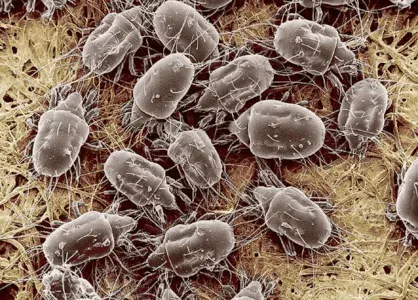
The chicken louse, scientifically known as Menopon gallinae, belongs to the order Mallophaga and the family Menoponidae. It is a small, wingless insect, measuring 1.5 to 2 mm in length, well-adapted to living within bird feathers.
These parasites possess a flattened, yellowish-brown body. Their head is almost as wide as the thorax, equipped with robust chewing mouthparts designed to scrape off skin scales and feather fragments.
Their life cycle consists of three distinct stages: egg (nit), nymph, and adult. The entire life cycle occurs on the bird's body, making the host essential for their survival.
Females attach eggs to the base of feathers using a fast-hardening secretion. Under favorable conditions, the cycle from egg to adult is completed in approximately three to four weeks.
They are highly active insects, capable of moving quickly across the host's skin, which complicates manual removal and facilitates rapid colonization of the entire flock.
What it damages
The primary hosts for these lice are chickens, but they can infest other poultry species including turkeys, ducks, and various game birds if living conditions are cramped.
Although they do not feed on blood, the damage is caused by the irritation of the skin. They continuously graze on epidermal tissue, causing severe discomfort and stress to the host.
Infestation, known as mallophagosis, leads to significant welfare issues. Birds show reduced vitality and, in severe cases, may develop secondary skin infections due to scratching.
For laying hens, the continuous stress significantly reduces egg production. Furthermore, the birds prioritize the relief of itching over feeding, which often leads to poor body condition and growth retardation in young birds.
Economic losses in poultry farming are substantial due to decreased productivity, poor plumage quality, and the costs associated with mandatory pest control measures.
Signs of infestation
Visible signs of infestation include restlessness and excessive preening. Birds may be seen rubbing against surfaces or aggressively pecking at their own feathers to relieve the intense itch.
On inspection, lice are commonly found around the vent, under the wings, and on the thighs. The skin in these areas may appear inflamed or irritated.
The feathers lose their structure and shine, appearing ragged or broken. One may notice clumps of eggs at the base of the feathers near the skin line.
General weakness, loss of weight, and a pale appearance of the comb in laying hens are key clinical indicators that require immediate veterinary or agronomic attention.
- Presence of lice and nits on feathers
- Excessive preening and self-pecking
- Feather damage and breakage
- Significant drop in egg production
Control measures
Effective control requires a two-pronged approach: treating the infested birds and disinfecting the poultry housing environment to eliminate environmental reservoirs.
Use approved insecticidal sprays, powders, or spot-on treatments specifically formulated for poultry. Always follow the manufacturer’s guidelines regarding egg withdrawal periods.
Implement sand and wood ash baths in the coop. This is a traditional and highly effective method that allows chickens to groom themselves and prevent the establishment of louse populations.
Maintain high standards of hygiene by regularly replacing bedding and cleaning coop crevices where debris accumulates, as these are ideal hiding spots for parasites.
Implement strict quarantine measures for any new birds introduced to the flock to ensure that existing healthy birds remain free from infestation.
Taxonomy
- Latin name
- Menopon
- Family
- Menoponidae
- EPPO code
- MENNSP
Discussion
No discussions yet — be the first.