
Chicken louse
Menopon gallinae
Description
How to identify
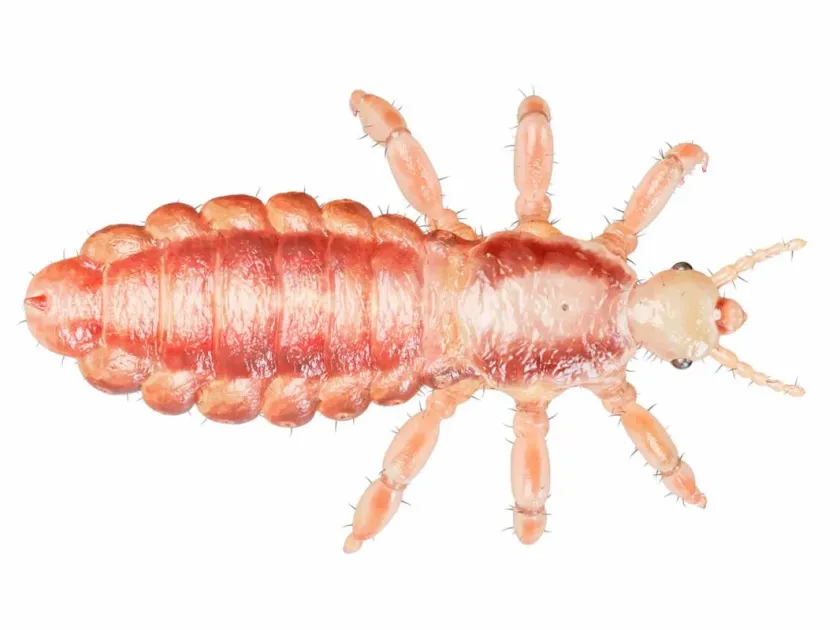
The chicken louse (Menopon gallinae) is a species of chewing louse belonging to the order Mallophaga and the family Menoponidae. It is a small, wingless insect typically measuring 1.5 to 2 mm in length.
Its body is flattened and yellowish-brown, allowing it to move rapidly between the feathers and skin of the host. The insect possesses a strong, biting mouthpart designed to feed on skin debris, feathers, and secretions.
The entire life cycle of this parasite occurs on the host bird. The female louse glues her eggs to the base of the feathers, often in the vent area, under the wings, or on the thighs.
The development involves incomplete metamorphosis, where nymphs resemble smaller versions of adults. They progress through three nymphal stages before reaching sexual maturity within a few weeks.
These lice cannot survive for long periods away from their host. Therefore, transmission occurs primarily through direct contact between birds or via contaminated equipment and litter.
What it damages
The primary hosts for Menopon gallinae are domestic chickens, though they can also infest turkeys, guineas, and other poultry species. They cause significant irritation and damage to the skin.
As the louse feeds on feathers and epidermal tissue, the bird experiences severe itching, leading to restless behavior, excessive self-preening, and feather pulling.
Heavy infestations can result in stunted growth, anemia, and reduced productivity in laying hens. The constant irritation prevents the birds from resting properly, impacting their overall health.
Young birds are particularly vulnerable; high parasite burdens can lead to significant physical distress, weakened immune systems, and susceptibility to secondary diseases.
Damage to the plumage also reduces the bird's ability to maintain body temperature, which is especially critical in colder climates or environments with poor housing.
Signs of infestation
Signs of infestation include the presence of the lice themselves, which can be seen by parting the feathers, especially in the vent, breast, and thigh areas.
Birds infested with lice will show signs of agitation, frequently scratching themselves and pecking at their plumage, often resulting in bald patches and skin lesions.
Plumage examination reveals ragged or broken feathers, as the lice feed on the barbs, weakening the structure of the feather vane.
An accumulation of crusty material at the base of the feathers and the presence of egg clusters on the feather shafts are definitive indicators of an active infestation.
A general decrease in health, weight loss despite normal feed intake, and a lack of luster in feathers are common systemic signs in affected flocks.
Control measures
Control strategies involve the application of approved veterinary insecticides, including powders, sprays, or systemic treatments that target the external parasites.
It is essential to treat all birds within the flock simultaneously to eliminate the reservoir of parasites and break the life cycle effectively.
Environmental management is equally important; this includes thorough cleaning of the poultry house, removal of old litter, and disinfection of all nesting boxes and perches.
- Regular monitoring of the flock for signs of lice.
- Maintaining dry, sanitary conditions in the coop.
- Implementing quarantine for new birds before adding them to the flock.
A second treatment is typically required after 7–10 days to ensure the destruction of nymphs that have emerged from eggs that were resistant to the initial chemical application.
Taxonomy
- Latin name
- Menopon gallinae
- Family
- Menoponidae
- EPPO code
- MENNGA
Discussion
No discussions yet — be the first.