
Trichopria
Trichopria lonchaearum
Description
How to identify
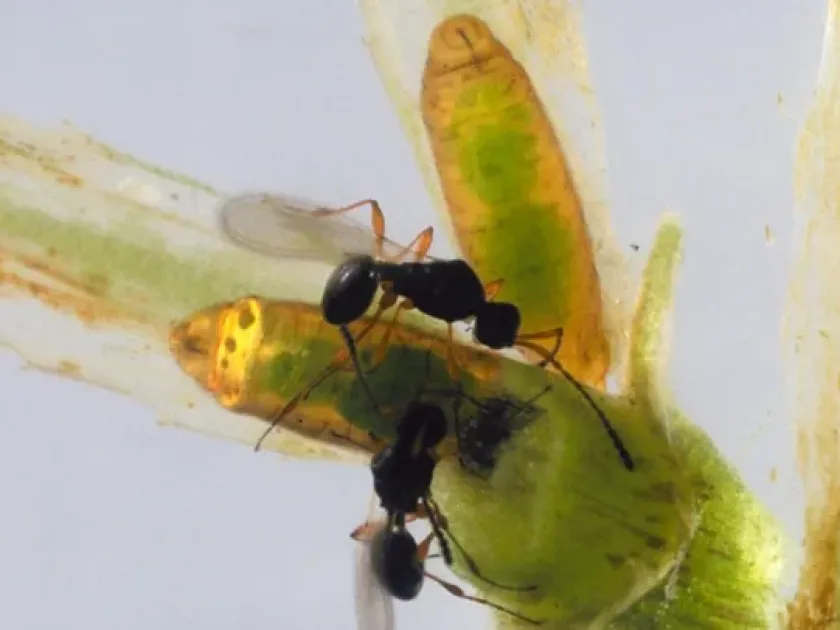
Trichopria (Trichopria lonchaearum) is a small insect belonging to the order Hymenoptera and the family Diapriidae.
These wasps are characterized by their compact, dark-colored bodies, well-developed wings, and sensitive antennae used to locate hosts.
Despite their diminutive size, they are highly effective parasitoids, specifically targeting the pupae of various fly species.
Identification often requires specialized laboratory equipment and entomological expertise due to their microscopic and often inconspicuous nature.
Their biology is deeply integrated into the lifecycle of their hosts, making them a significant factor in the population dynamics of dipteran insects.
What it damages
The impact of Trichopria is multifaceted, as it acts as a parasitoid that consumes the internal tissues of its host pupae.
While often beneficial for reducing populations of pestiferous flies, they can also interfere with biological control programs by parasitizing beneficial species.
Damage to the host is absolute, as the developing larva of the wasp kills the pupa from within, preventing the emergence of the adult fly.
In intensive cultivation, understanding the role of this wasp is crucial to prevent the accidental disruption of natural pest management cycles.
The primary concern regarding this species is its potential to affect the ecological stability of greenhouses by influencing the population of various flies.
When it appears
The activity patterns of Trichopria are highly sensitive to environmental factors, particularly ambient temperature and host availability.
In greenhouse settings, they can remain active throughout the growing season, provided there is a continuous supply of host pupae for reproduction.
Peak emergence typically corresponds with the lifecycle of the host flies, with activity increasing during the warmer months of the year.
Overwintering usually occurs in the pupal or adult stage, allowing the population to emerge rapidly when favorable conditions return.
Soil moisture levels are essential for successful pupation and the subsequent search for new hosts by adult females.
Signs of infestation
A notable sign of Trichopria presence is a significant reduction in the number of adult flies within a controlled environment.
Examination of collected pupae often reveals small, circular emergence holes that indicate a wasp has successfully matured and exited.
The use of sticky traps provides an effective way to monitor the presence of these wasps, assisting in overall population assessment.
Reduced evidence of larval fly damage on foliage suggests that parasitoid activity is likely suppressing the initial infestation.
Entomologists often use these signs to differentiate between natural population decline and effective biological control by parasitoids.
Control measures
Effective management involves balancing the presence of Trichopria to ensure it does not negatively impact beneficial insect populations.
Sanitation practices, such as the removal of organic debris and old substrate, are critical to limiting the availability of host pupae.
Avoiding broad-spectrum insecticides is essential, as these chemicals often harm parasitoids more than the targeted fly pests.
Integrated Pest Management (IPM) strategies should prioritize the use of selective biological agents and rigorous monitoring programs.
- Sanitize greenhouse environments to reduce overwintering sites.
- Deploy sticky traps for consistent population monitoring.
- Implement crop rotation to break host breeding cycles.
- Avoid non-selective chemical treatments to protect beneficials.
Taxonomy
- Latin name
- Trichopria lonchaearum
- Order
- Hymenoptera
- Family
- Diapriidae
- EPPO code
- TRIRLO
Discussion
No discussions yet — be the first.