
Coptera occidentalis
Coptera occidentalis
Description
How to identify
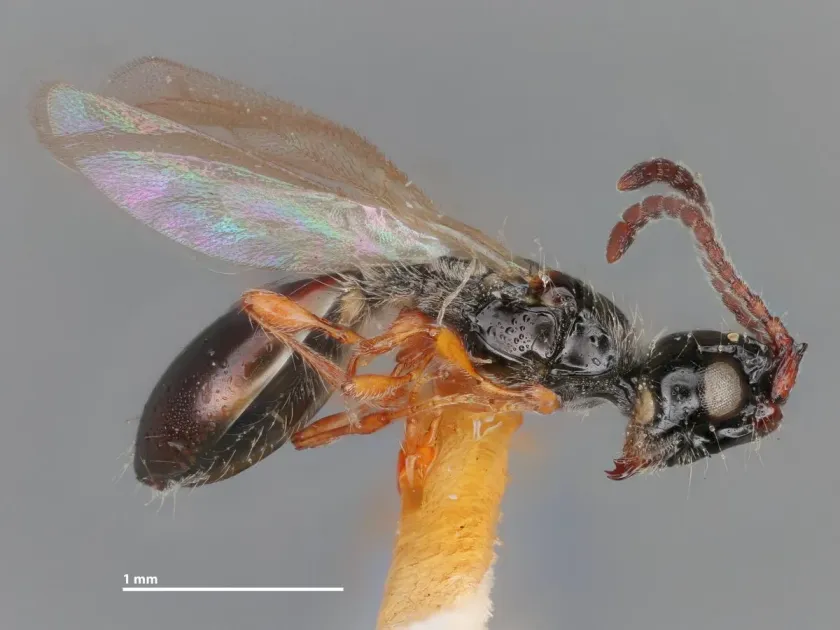
Coptera occidentalis is a species belonging to the order Hymenoptera and the family Diapriidae. These insects are small wasps that are often overlooked in the field due to their modest size and obscure lifestyle.
Adult individuals are characterized by a dark, shiny body with a specific morphology that distinguishes them from other parasitic hymenopterans found in agricultural ecosystems.
The wings exhibit a unique venation pattern, which is a key diagnostic feature for taxonomists identifying this specific species within the Diapriidae family.
The antenna structure of Coptera occidentalis is highly specialized, aiding the insect in locating suitable hosts for its offspring within the soil profile.
In various agro-climatic zones, the presence and abundance of this species correlate with soil moisture levels and the availability of primary insect hosts.
What it damages
The damage caused by Coptera occidentalis is primarily indirect, involving the disruption of plant root systems and the introduction of pathogens through physical wounds.
Crops such as cereals and certain vegetables are particularly susceptible when the population density reaches high levels during the early development stages.
Feeding or developmental activities of the larvae within the root zone can cause wilting, stunted growth, and a significant reduction in overall crop vigor.
Secondary damage often occurs when the plant tissue, compromised by the insect, becomes a target for soil-borne fungal diseases and bacterial rots.
The cumulative effect of this damage can lead to uneven crop stand and reduced yields, which is particularly detrimental in high-intensity farming systems.
When it appears
The seasonal activity of Coptera occidentalis begins in spring when adult wasps emerge from their overwintering sites in the soil as temperatures rise.
The peak emergence usually overlaps with the germination and early vegetative phases of crops, making these stages the most vulnerable to infestation.
Throughout the growing season, the species can undergo multiple generations, with their development rate heavily dependent on ambient soil temperature and moisture.
As the season progresses toward autumn, the insects transition into a resting stage, burying themselves deeper into the soil profile for the winter months.
Local weather patterns, especially unseasonal rains or drought, can significantly affect the timing of emergence and the survival rates of the population.
Signs of infestation
Early identification of an infestation involves detecting adult wasps near the base of the stems during the cool hours of the early morning.
Visual symptoms on plants include a gradual yellowing of the foliage, often starting from the lower leaves, which is indicative of root zone disturbances.
If the root system is examined, subtle necrotic lesions or abnormal tissue degradation may be observed, distinguishing it from damage by larger soil pests.
Reduced plant height and inconsistent field development compared to neighboring plots are strong indicators of significant pest pressure in the soil.
The presence of secondary fungal infections on the lower parts of the stem often points to prior physical damage caused by the larvae.
Control measures
Integrated pest management strategies are crucial for controlling Coptera occidentalis, with crop rotation serving as the primary deterrent.
Deep tillage and mechanical soil preparation in the autumn help expose overwintering stages to harsh conditions, significantly lowering spring populations.
Biological control agents, such as entomopathogenic fungi, have demonstrated efficacy in suppressing larval populations within the top layer of the soil.
Chemical intervention should only be utilized as a last resort, strictly adhering to economic threshold levels to avoid unnecessary environmental impact.
- Regular field scouting using pheromone or sticky traps.
- Maintenance of soil health to promote plant resilience against minor damage.
- Elimination of weeds that may harbor alternative hosts for the pest.
Taxonomy
- Latin name
- Coptera occidentalis
- Order
- Hymenoptera
- Family
- Diapriidae
- EPPO code
- COPEOC
Discussion
No discussions yet — be the first.