
Spilomicrus
Spilomicrus
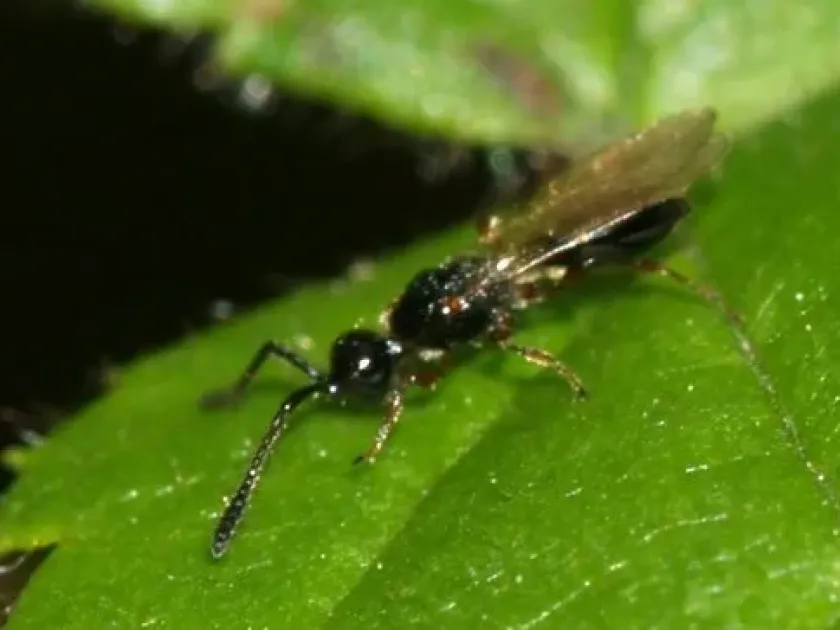
Description
How to identify
Spilomicrus is a genus of parasitoid wasps belonging to the family Diapriidae. These tiny insects play a crucial role in agricultural ecosystems by acting as natural enemies to various species of dipterous flies.
Adult Spilomicrus are small, typically black insects with distinctive elbowed antennae and narrow bodies. They usually measure between 2 to 3 millimeters, making them difficult to detect during standard field inspections.
The biological nature of this genus is defined by their specialization on the pupae of flies that reside in soil or decaying plant matter. They act as parasitoids, completing their life cycle within the puparium of the host.
The life cycle involves egg, larva, pupa, and adult stages. The female uses her ovipositor to pierce the outer shell of the host's puparium and lay an egg directly inside, ensuring the developing larva has a food source.
The parasitoid larva feeds on the contents of the host pupa, ultimately killing the potential pest. This mechanism effectively reduces the population density of harmful flies in agricultural fields, serving as a form of natural pest control.
What it damages
Spilomicrus specifically targets the pupae of agricultural pests, such as onion flies, carrot flies, and cabbage flies. While this is beneficial, their presence is highly dependent on the availability of host insects, making their populations fluctuate.
They do not consume plant tissues directly; however, their presence is essential for maintaining the ecological balance within the soil. A reduction in these parasitoids can lead to uncontrolled growth of pest populations.
In some scenarios, mass propagation of these wasps may occur, though they rarely disrupt the ecosystem significantly. The primary concern in agriculture remains the damage caused by the host flies rather than the parasitoid itself.
The actual harm to plants is caused by the larval stage of the flies, which feed on roots and bulbs. Spilomicrus acts as a late-stage regulator, stopping the next generation of pests from emerging as adults.
The level of pest pressure is significantly influenced by soil management practices. Intensive pesticide use often kills beneficial wasps before it affects the target flies, leading to secondary outbreaks of pest species.
Control measures
To preserve Spilomicrus populations, it is recommended to limit the use of broad-spectrum insecticides, especially during the active flight periods of these parasitoids, favoring targeted treatments instead.
Agricultural methods such as regular inter-row cultivation help disturb the pupation sites of flies, making them more susceptible to both environmental stress and the natural hunting of parasitoid wasps.
Proper crop rotation is essential to prevent the buildup of host populations in the soil. Diversifying crops disrupts the life cycle of target pests and ensures a more stable environment for beneficial insects.
Using cover crops and mulching maintains soil moisture and temperature, which is vital for the survival of entomophagous insects during hot summer months and provides shelter from extreme conditions.
- Avoid prophylactic chemical insecticide applications
- Maintain wildflower strips to support parasitoid nutrition
- Minimize deep tillage during adult wasp emergence windows
- Integrate biological control agents like entomopathogenic fungi
Taxonomy
- Latin name
- Spilomicrus
- Order
- Hymenoptera
- Family
- Diapriidae
- EPPO code
- SPLCSP
Discussion
No discussions yet — be the first.