
Trichopria cilipes
Trichopria cilipes
Description
How to identify
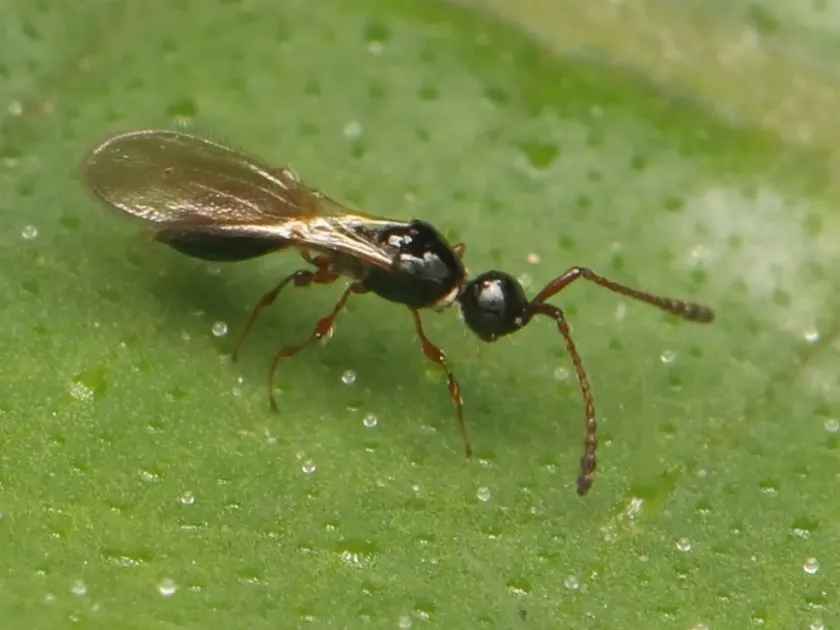
Trichopria cilipes is a species of hymenopteran insect belonging to the family Diapriidae. These insects are small parasitoid wasps that specialize in attacking the pupae of various dipteran flies.
Morphologically, these wasps are tiny, dark-bodied, and possess specialized antennae designed for detecting the chemical signals released by their host insects within the growing substrate.
The biology of Trichopria cilipes is obligately linked to the presence of host larvae, specifically fungus gnats (Sciaridae) and phorid flies (Phoridae), which are common pests in mushroom cultivation.
The female wasp locates a host puparium buried in the substrate, inserts her ovipositor, and lays a single egg inside. The developing larva of the wasp then consumes the contents of the pupa.
Under optimal temperature conditions, the lifecycle is relatively short, allowing the population of the parasitoid to respond quickly to outbreaks of the host insect population.
What it damages
The direct damage to mushroom crops is caused by the host flies (larvae), not the parasitoids themselves. However, the presence of these wasps indicates a significant infestation of pest flies.
Larval stages of fungus gnats destroy mushroom mycelium, bore into stipes, and cause the stunted growth of fruiting bodies, leading to substantial economic loss.
The role of Trichopria cilipes is complex; while it acts as a biological control agent by reducing fly populations, its appearance signals a severe sanitary failure in the facility.
In high-tech mushroom farming, the presence of any flying insect, including parasitoids, can result in health and safety violations or quality standard failures.
Economic damage is primarily measured by the total loss of yield attributed to the host fly infestation that this parasitoid is attempting to control.
Signs of infestation
The primary sign of infestation is the observation of numerous small flying insects around the growing beds and near artificial light sources within the mushroom house.
Careful examination of the substrate can reveal puparia of fungus gnats with small emergence holes, confirming that a parasitoid has successfully completed its cycle.
Monitoring with yellow sticky traps is a standard diagnostic method to estimate the density of both the host flies and the parasitoid wasp population.
Wilting mycelium and visible tunnels within the base of the mushrooms are clear indicators of high pest activity, requiring immediate sanitation efforts.
The wasp's activity is often correlated with warmer periods or seasonal spikes in fly reproduction that occur during improper environmental control.
Control measures
Integrated Pest Management (IPM) is the most effective approach, focusing on the destruction of host fly habitats within the mushroom production facility.
Proper substrate pasteurization and sterilization of the casing layer are crucial to eliminate pest pupae before they emerge or are parasitized.
Sanitation practices such as removing spent substrate and cleaning equipment prevent the buildup of fly populations that would otherwise attract Trichopria cilipes.
- Deployment of insect-proof netting on all ventilation windows and doors.
- Use of yellow sticky traps for continuous monitoring and suppression.
- Application of microbial insecticides based on specific entomopathogens.
Chemical control should be applied judiciously, ensuring that no residues remain on the fruiting bodies to meet food safety and regulatory requirements.
Taxonomy
- Latin name
- Trichopria cilipes
- Order
- Hymenoptera
- Family
- Diapriidae
- EPPO code
- TRIRCI
Discussion
No discussions yet — be the first.