
Tapestry moth
Trichophaga tapetzella
Description
How to identify
The tapestry moth (Trichophaga tapetzella) is a member of the Tineidae family. It is a cosmopolitan species frequently found in indoor environments, storage facilities, and warehouses.
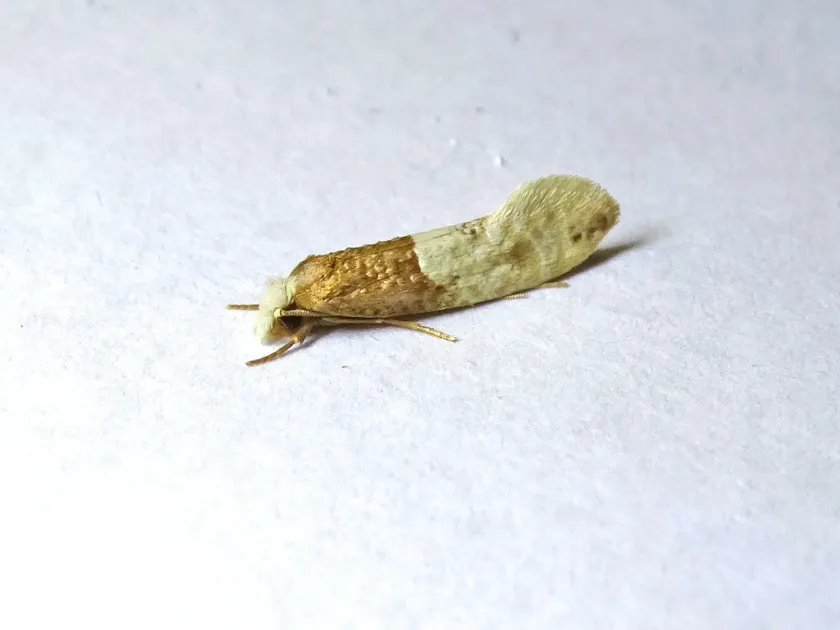
Adult moths have a wingspan of 18–24 mm. Their forewings feature a distinctive pattern with a dark brown basal portion and a paler, mottled apical area, making them easy to identify.
The larvae are approximately 15 mm long and possess a sclerotized head capsule. They are notable for building portable silken cases incorporating debris, which they carry during movement.
The life cycle consists of egg, larva, pupa, and adult stages. Depending on the environmental temperature, the species can complete its development in a few months.
Unlike some other moth species, Trichophaga tapetzella often thrives in damp conditions, frequently utilizing decaying organic matter as a supplementary food source.
What it damages
The damage is caused exclusively by the larvae, which feed on keratin-based materials. This includes wool, fur, feathers, and sometimes processed animal hides.
In warehouses and storage areas, these larvae cause significant damage by boring through textiles, creating unsightly tunnels, and destroying the structural integrity of fabrics.
Beyond the direct consumption of material, the larvae contaminate goods with silk webbing, excrement, and cast-off skins, rendering affected items useless for trade.
The pest is known for its ability to damage various household items, including carpets and upholstered furniture, especially if they are stored in damp environments.
Economic losses are significant because damaged goods often cannot be salvaged or restored, leading to complete write-offs of stored inventory in commercial settings.
Signs of infestation
A primary sign of an infestation is the presence of silk-lined tunnels and portable cases attached to the surface of the infested fabric or stored material.
Visible damage appears as irregular holes, patchy thinning of wool, or destroyed surfaces on furs and textile items stored in dark, undisturbed corners.
Finding cast-off larval skins or pupal casings in cracks, crevices, or between folded layers of fabric confirms active development of the moth population.
Adult moths are often observed fluttering in low-light conditions near walls or stored goods, indicating that a breeding cycle is underway in the vicinity.
A musty odor in storage rooms combined with the presence of fine debris (frass) under or around items is a strong indicator of an active moth infestation.
Control measures
Effective management begins with rigorous sanitation, including the regular removal of dust, lint, and debris where larvae could potentially feed and hide.
Controlling moisture levels is critical; keeping storage areas dry significantly reduces the survival rate of the larvae and discourages new infestations.
Chemical control involves the use of residual insecticides applied to surfaces where moths congregate, as well as aerosol treatments for immediate knockdown of adults.
In professional settings, fumigation of storage spaces may be necessary to reach larvae hiding deep within large stacks of textiles or bulk raw materials.
Monitoring using pheromone traps is an essential component of an Integrated Pest Management (IPM) program to detect early activity and prevent population surges.
Taxonomy
- Latin name
- Trichophaga tapetzella
- Order
- Lepidoptera (butterflies)
- Family
- Tineidae
- EPPO code
- TRHOTA
Discussion
No discussions yet — be the first.