
Winter gnat
Trichocera regelationis
Description
How to identify
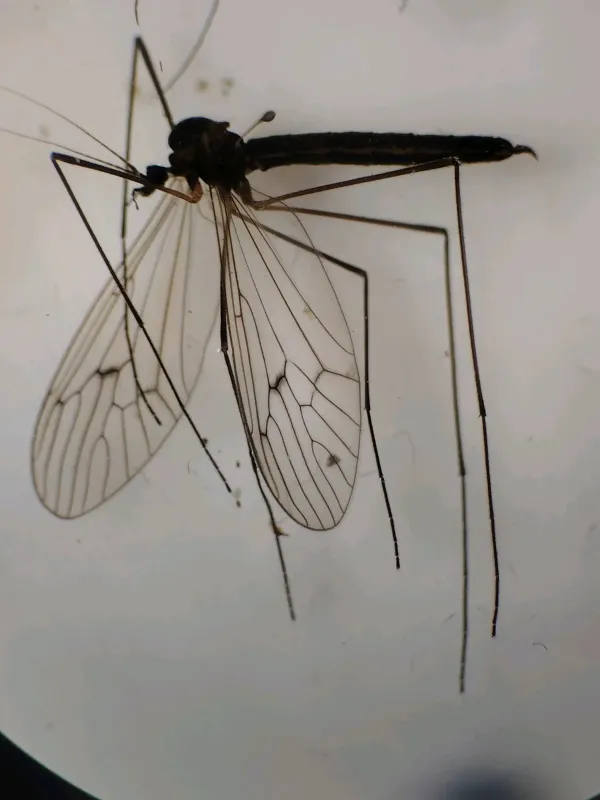
The winter gnat (Trichocera regelationis) is a member of the Trichoceridae family, belonging to the order Diptera. These insects are known for their remarkable ability to remain active in cold weather conditions, often during winter thaws.
Adult gnats resemble typical crane flies but are generally smaller, measuring 5 to 8 mm in length. Their body color ranges from yellowish-brown to dark gray, and their wings feature a distinct venation pattern.
The larvae have a characteristic worm-like shape with a prominent dark-colored head capsule. They live primarily in soil rich in organic matter or in decaying plant debris, where they thrive due to high moisture levels.
As a cold-tolerant species, they are frequently found in unheated greenhouses, cellars, and vegetable storage facilities. They are often seen flying in small clusters during warmer winter days.
The life cycle includes the egg, larval, pupal, and adult stages. The duration of development is heavily influenced by environmental temperature and moisture, allowing them to adapt to different conditions.
What it damages
While primarily acting as decomposers of organic material, winter gnat larvae can become pests in greenhouses and storage areas. They feed on plant tissues when their natural food source is limited or when populations reach high levels.
In greenhouses, the larvae target the roots and stems of young seedlings, causing stunted growth, wilting, and potential plant death. This is particularly problematic in overly damp soils.
In vegetable storage facilities, the larvae cause damage by burrowing into tubers and root crops like potatoes and carrots. These injuries create entry points for secondary pathogens like bacteria and fungi.
Secondary infections often lead to rapid decay of the entire vegetable, causing significant post-harvest losses. The presence of larvae is often a sign of poor storage hygiene or excessive humidity.
Young plants are most vulnerable during the initial stage after transplantation when they are establishing their root systems and are already stressed by environmental changes.
When it appears
The activity period for Trichocera regelationis is predominantly from autumn through early spring. Adult emergence typically occurs during cool weather, distinguishing them from most other insect species.
Larval development can be continuous in controlled environments like greenhouses, where temperatures remain relatively stable and food sources are consistently available.
Peak activity is often observed during winter thaws, when adults emerge to mate and lay eggs in available moist substrates. This period is critical for integrated pest management.
As spring transitions into summer, adult activity declines due to rising temperatures, but larvae may continue to exist in cool, damp soil environments, posing a lingering risk to seedlings.
Moisture availability throughout the year is the primary factor limiting or promoting the spread of the winter gnat, regardless of the season or external weather conditions.
Signs of infestation
The most immediate sign of infestation is the presence of adult gnats flying around greenhouses or storage facilities during cold weather or mild winter days.
Plant damage is visible as wilting or poor establishment of seedlings. Closer inspection of the stem base often reveals tiny entry holes or tunnels made by the feeding larvae.
Root crops in storage show surface pitting or deep tunneling, often accompanied by soft rot and a distinct musty odor originating from the decay sites.
- Adult gnats seen hovering near soil surfaces in greenhouses.
- Seedlings that fail to root properly or show yellowing without clear nutrient deficiency.
- Presence of decay and dark, worm-like larvae on stored vegetable roots.
The combination of these signs usually indicates a need to review the greenhouse's drainage system and the sanitation practices within storage units.
Control measures
Effective control starts with good cultural practices, specifically by removing all crop residues and organic waste that might serve as a breeding ground for the larvae.
Improving greenhouse ventilation is essential to lower humidity levels, making the environment less favorable for the survival and reproduction of the winter gnat.
Soil disinfection before transplanting seedlings can help reduce the population of larvae already present in the growing medium, protecting the young plants during their vulnerable phase.
Chemical control with soil-applied insecticides should be considered only as a last resort, ensuring that products are labeled for use on the specific crop and applied correctly.
Proper storage maintenance, including consistent monitoring of humidity and temperature, is the most effective way to prevent post-harvest damage caused by this pest.
Taxonomy
- Latin name
- Trichocera regelationis
- Order
- Diptera (flies)
- Family
- Trichoceridae
- EPPO code
- TRCERE
Discussion
No discussions yet — be the first.