
Trichocera fuscata
Trichocera fuscata
Description
How to identify
Trichocera fuscata, commonly known as a type of winter gnat, belongs to the family Trichoceridae. These insects are unique for their ability to thrive in colder temperatures compared to other flies.
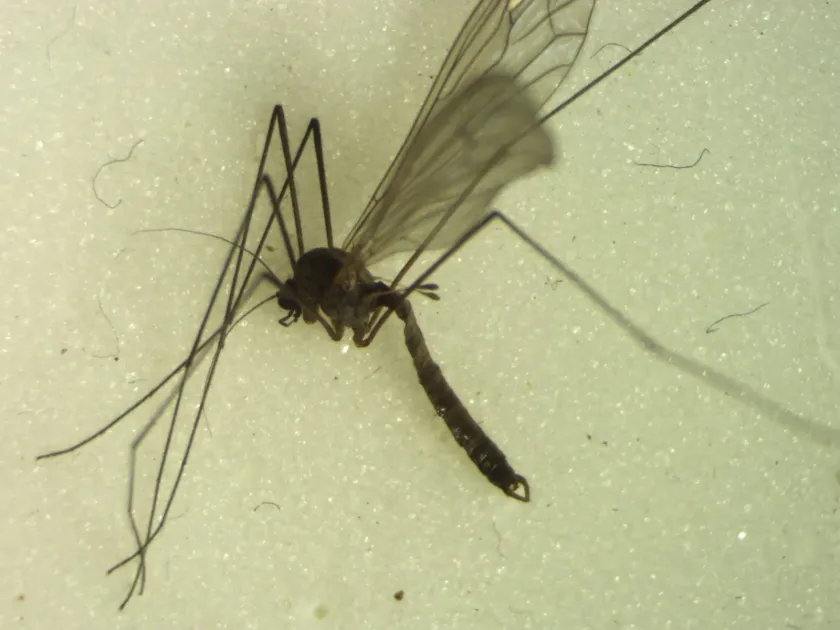
The adults are small, slender flies, typically 5–8 mm long, with a grayish-brown appearance. They possess delicate wings with distinct venation, which is a key identification feature for the family.
The larvae are apodous (legless), cylindrical, and have a dirty-white to yellowish body. A dark, well-defined head capsule is a prominent morphological trait.
The life cycle involves complete metamorphosis: egg, larva, pupa, and adult. This species is cold-adapted, allowing for activity during winter months and early spring.
Mating and oviposition often occur in cool, moist conditions, which differentiates them from most common agricultural pests that require warmer climates.
What it damages
The larvae primarily feed on decaying organic matter but can turn into pests in agricultural settings by damaging the roots of young plants and seedlings.
Greenhouse crops, particularly those grown in moist, organic-rich soil, are highly susceptible to larval feeding, which can cause significant growth stunting.
By tunneling into the root system, the larvae disrupt nutrient and water uptake, leading to visible wilting and sometimes the collapse of young transplants.
The damage caused by the larvae often creates entry points for soil-borne pathogens, leading to root rot and secondary infections that further stress the plant.
The economic impact is most pronounced in early spring when growing conditions are suboptimal and plants are struggling to establish themselves.
When it appears
Adults are typically active during late autumn, throughout winter during mild spells, and into early spring, earning them the name winter gnats.
Larval activity in the soil peaks during cool, humid periods, where they remain close to the surface to access plant roots or organic debris.
In greenhouse environments, the pest can maintain an active presence year-round if humidity and soil moisture levels remain consistently high.
Pupation occurs in the soil near the feeding sites, allowing for rapid emergence of the next generation of adults as temperatures fluctuate.
Seasonal management is critical during the pre-planting and early growth phases to prevent population build-up in the soil substrate.
Signs of infestation
A primary indicator is the unexpected wilting of greenhouse seedlings despite adequate irrigation and proper environmental management.
Physical inspection of the root zone often reveals the presence of small, legless larvae feeding on root tissue or root hairs.
Visible feeding tunnels on the stems or roots, along with necrosis or localized rotting, provide clear evidence of infestation.
Adult gnats may be seen resting on greenhouse interior surfaces, particularly on plastic films or rafters during damp or cloudy weather.
Chlorosis and poor vigor in plants without obvious fungal or nutrient deficiencies often point toward soil-dwelling pest damage.
Control measures
Effective management requires rigorous sanitation practices, including the removal of organic residues that may harbor the pest during the off-season.
Soil management, particularly ensuring proper drainage to avoid waterlogged conditions, is essential to minimize suitable habitats for larvae.
- Steam sterilization of greenhouse soil to eliminate eggs and larvae.
- Application of biological control agents such as entomopathogenic nematodes.
- Maintaining optimal moisture levels to prevent excessive soil wetness.
- Usage of selective soil-applied insecticides if threshold levels are exceeded.
Crop rotation and keeping greenhouse surroundings free of decaying vegetation are fundamental steps in preventing the establishment of the pest.
Taxonomy
- Latin name
- Trichocera fuscata
- Order
- Diptera (flies)
- Family
- Trichoceridae
- EPPO code
- TRCEFU
Discussion
No discussions yet — be the first.